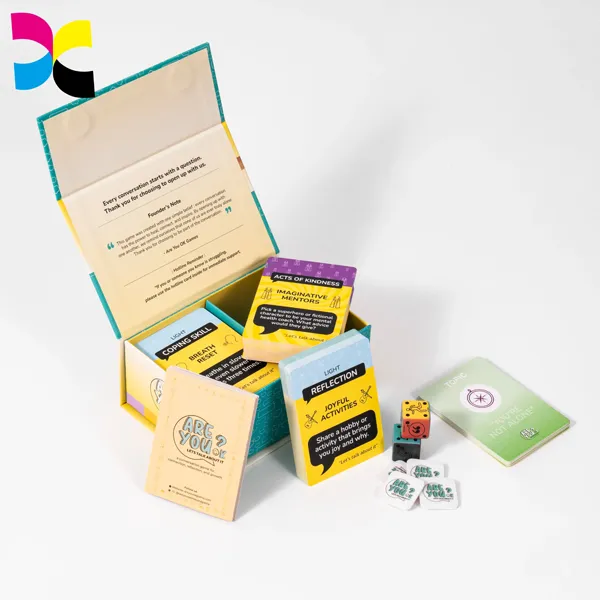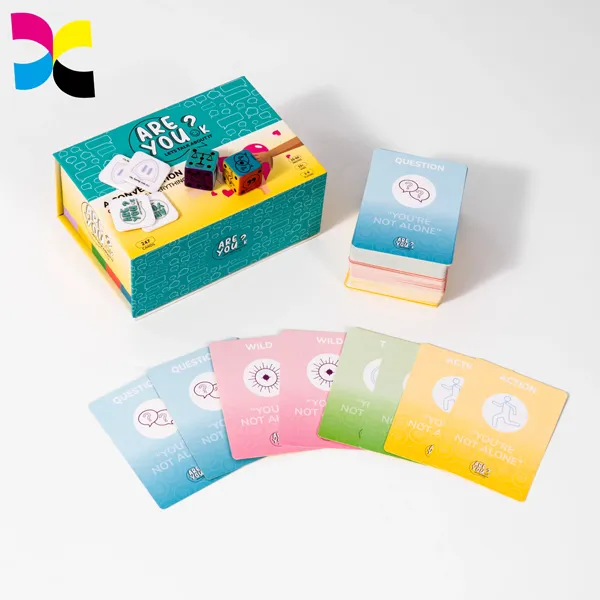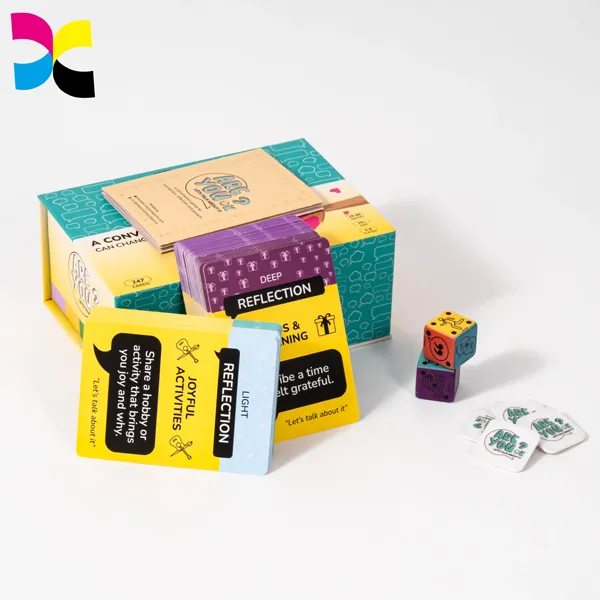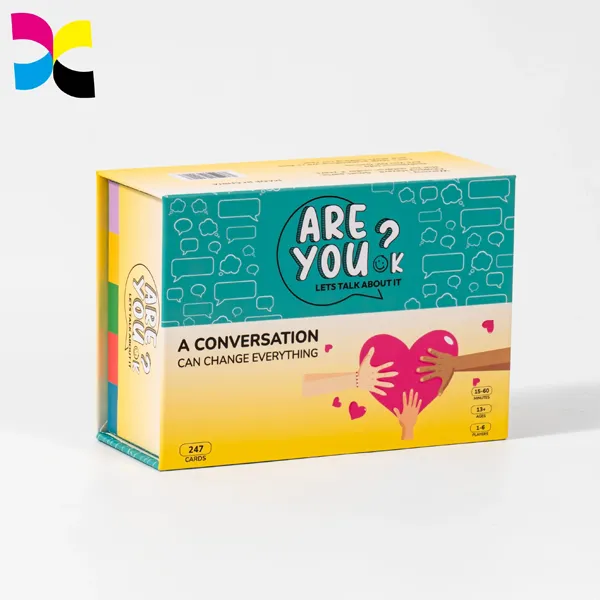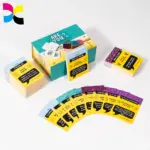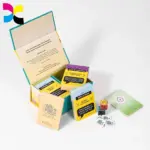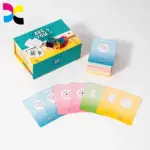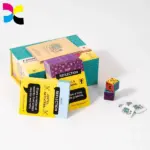
Science flashcards are not simply educational cards with scientific terms printed on them. For publishers, they are physical learning products that must balance scientific accuracy, visual clarity, durability, production cost, and user experience.
This guide explains how publishers can develop, print, and manufacture science flashcards, from content structure and visual design to material selection, printing, finishing, packaging, and quality control.
What Makes Science Flashcards Different From Standard Flashcards?
Science flashcards combine subject knowledge with visual learning, so publishers need to balance accuracy, readability, and physical usability across the entire deck.
Science Flashcards Need Clear and Accurate Information
A science flashcard may include a scientific term, definition, diagram, formula, or measurement. Each element needs to be accurate and consistent because even a small error can affect the learner’s understanding.
Publishers should review the complete deck before printing, with particular attention to:
- Scientific terminology: Keep terms, spelling, abbreviations, and naming consistent.
- Definitions and formulas: Check explanations, symbols, numbers, and units carefully.
- Diagrams and labels: Make sure every label matches the correct structure or position.
- Card sequence: Keep questions, answers, categories, and numbering in the intended order.
The content should also fit the physical card format. Long explanations can make a card difficult to read, so publishers should simplify wording or divide complex information across multiple cards rather than simply reducing the font size.
Visual Content Often Matters as Much as Text
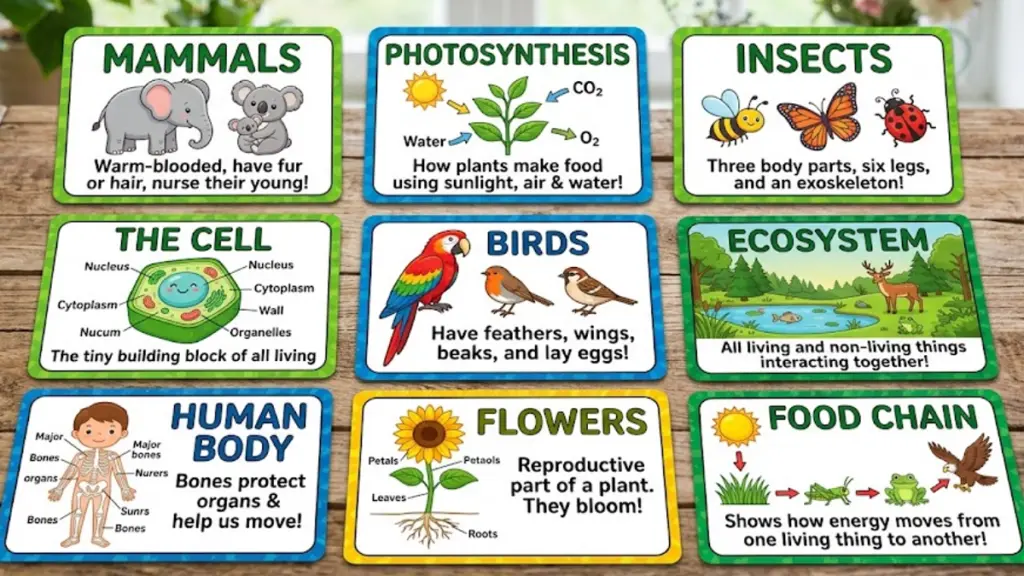
Many science flashcards rely on diagrams and illustrations to explain structures, processes, and relationships. Biology may use anatomy or cell diagrams, while chemistry and physics often depend on molecular structures, formulas, and technical illustrations.
These visuals must remain clear after printing. Fine lines, small labels, and similar colors can lose clarity when artwork is reduced to the final card size. Publishers should therefore consider print resolution, contrast, image scale, and safe areas during artwork preparation.
For visual education flashcards, a clear visual hierarchy also helps users understand which information to read first. The main image, labels, terms, and explanations should work together instead of competing for attention.
Different Science Subjects Need Different Card Structures
Science subjects place different demands on card design. A biology deck may need detailed illustrations, while chemistry requires precise symbols and formulas. The content structure should reflect these differences rather than force every deck into one standard format.
| Science Subject | Typical Card Content | Main Focus |
|---|---|---|
| Biology | Terms, anatomy, diagrams | Image clarity and readable labels |
| Chemistry | Elements, formulas, reactions | Accurate symbols and fine details |
| Physics | Formulas, concepts, diagrams | Clear equations and visual hierarchy |
| Earth Science | Processes, structures, classifications | Detailed illustrations and sequences |
| Environmental Science | Species, ecosystems, cycles | Visual comparison and information grouping |
The same principle applies to different age groups. Younger learners may need larger text and simpler visuals, while advanced learners can handle denser information. The final card format should always support the learning purpose.
How Publishers Should Structure Science Flashcard Content
A clear content structure helps learners review information faster while giving publishers a repeatable format for designing and producing complete science flashcard decks.
Choose a Consistent Front-and-Back Card Structure
Give the front and back of each card clear roles. The front can present a term, question, image, or diagram, while the back provides the answer, explanation, or supporting information.
For example, the front of a biology card can show an unlabeled cell diagram, while the back reveals the labels and key functions. A concept card can ask a question on the front and provide a short answer with a supporting illustration on the back.
The exact format may change by subject, but the basic learning pattern should remain consistent. This makes the deck easier to use and gives designers a clear template for typography, image placement, margins, and front-and-back alignment.
Use Biology Flashcards as a Model for Information-Dense Cards
Biology flashcards often combine terms, diagrams, labels, and explanations, making them a useful model for planning information-dense cards.
Rather than placing every detail on one side, publishers can divide the information between the front and back. For example, an anatomy card can show the main structure first and provide names and functions on the reverse side. This creates a simple recall-and-check process.
For biology study cards, keep the information hierarchy simple:
- Primary concept: The term, structure, or question to remember.
- Visual reference: The diagram or image that supports the concept.
- Key explanation: A short definition, function, or example.
The same approach can work for chemistry, physics, and other science flashcards. Each element should support the learning objective rather than simply fill available space.
Keep Scientific Content Consistent Across the Full Deck
A consistent visual system helps users recognize related cards and makes a large deck easier to navigate. Publishers should apply the same basic rules to typography, colors, illustrations, numbering, and category markers.
| Element | Recommended Approach | Purpose |
|---|---|---|
| Typography | Use a consistent text hierarchy | Make key information easy to scan |
| Color Coding | Assign colors to clear categories | Help users identify related topics |
| Illustrations | Keep the visual style consistent | Create a unified deck appearance |
| Numbering | Follow one numbering system | Keep the complete deck organized |
This consistency also makes it easier to expand a product line. New educational flashcards can follow the same visual rules, helping different decks from the same publisher maintain a recognizable product style.
Durable, Certified Flashcards at Industrial Scale.
How to Choose Science Flashcard Sizes, Paper, and Finishes
The physical specifications should match the content, target users, handling needs, and packaging format so science flashcards remain clear, durable, and practical.
Match Card Size to Content and Visual Detail
Card size should follow information density rather than a fixed standard. Simple terms and short questions can work well on compact cards, while detailed anatomy diagrams or other visual content may need more space.
For publishers, the main consideration is the balance between readability and handling. A larger card can provide more room for labels and illustrations, but it also uses more material and may require larger packaging. The final size should therefore support the learning task without making the deck inconvenient to use or store.
For common formats and custom dimensions, publishers can refer to Xinyi’s What Are the Right Dimensions of Flashcards Before Printing? when planning the final card size.
Select Paper for Durability and Print Quality
The paper or cardstock affects how the deck feels, handles, and reproduces detailed scientific content. Since educational flashcards often receive repeated use, the material should provide enough stiffness while supporting clear printing.
Key material factors include:
- Card thickness: Match stiffness to the expected frequency and type of use.
- Surface: Choose a surface that supports sharp images, fine lines, and comfortable handling.
- Opacity: Reduce show-through when both sides contain important information.
- Printability: Make sure the stock reproduces small text, diagrams, and colors clearly.
- Durability: Consider repeated handling, storage, and transportation.
- Finish compatibility: Confirm that the paper works well with lamination or other planned finishes.
There is no single paper weight for every educational flashcard project. Classroom decks, retail products, study cards, and premium learning sets may require different specifications. Publishers can also review Xinyi’s What Type of Paper Is Best for Flashcards? when comparing materials.
Choose Finishes Based on How the Cards Will Be Used
The finish should support the way users handle and read the cards. For frequently used study decks, lamination or other protective finishes can improve surface durability. Matte finishes can help reduce glare, while gloss finishes can make colorful images appear more vivid.
Decorative options such as foil stamping, embossing, debossing, and spot UV can add value to premium products or packaging. However, for most science flashcards, readability, surface protection, and practical handling should take priority over decorative effects.

How to Print and Produce Custom Science Flashcards
A controlled production workflow turns approved artwork into a consistent physical product, giving publishers clear checkpoints before the complete custom flashcard printing order begins.
Prepare Artwork for Double-Sided Flashcard Printing
Science flashcards often place important information on both sides, so artwork preparation must account for the final card size, bleed, safe area, color settings, image resolution, and cutting requirements.
Front-and-back alignment also deserves close attention. A diagram, border, or label placed too close to the trim line may shift slightly during cutting. Small scientific terms and fine diagram lines need sufficient resolution and contrast to remain readable after printing.
Publishers can prepare files internally or work with the printer during prepress review. Xinyi can check artwork and provide guidance on card layouts, dielines, bleed, and other printing requirements. Unlocking the Magic of Custom Flashcards: A Guide to Creating and Printing – Xinyi Boardgame also provides a useful reference for general file preparation.
Create and Review a Physical Prototype Before Mass Production
A digital proof can show whether the artwork looks correct on screen, but a physical prototype reveals how the complete product actually feels and performs.
For a flashcard printing project, the sample should be checked for:
- Print quality: Review text sharpness, image detail, and color reproduction.
- Physical feel: Check card stiffness, surface texture, and overall handling.
- Alignment: Confirm that both sides register correctly and cutting remains within the required area.
- Finishing: Inspect corners, coating, lamination, and other selected finishes.
This review is especially useful for science decks with detailed diagrams or small labels. If the sample shows a problem, publishers can adjust the artwork or specifications before mass production rather than correcting hundreds or thousands of finished cards.
Xinyi can provide digital proofs and customized samples so publishers can review the product before the full order enters production.
Choose the Right Production and Packaging Format
The final format should match how the deck will reach and serve its users. A classroom product may need simple, easy-to-open packaging, while a retail science learning set may require stronger protection and a more polished presentation.
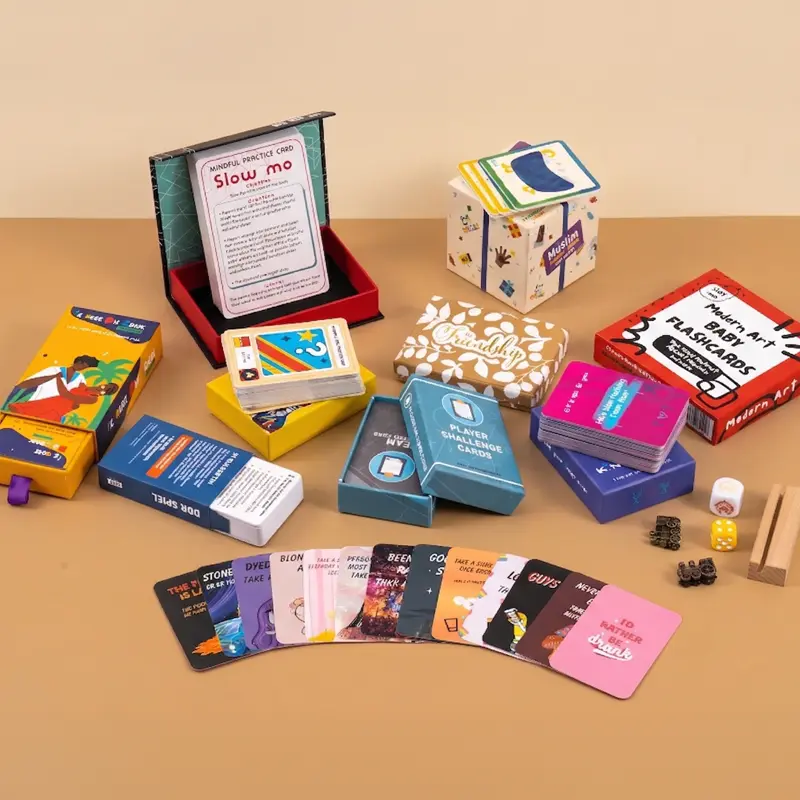
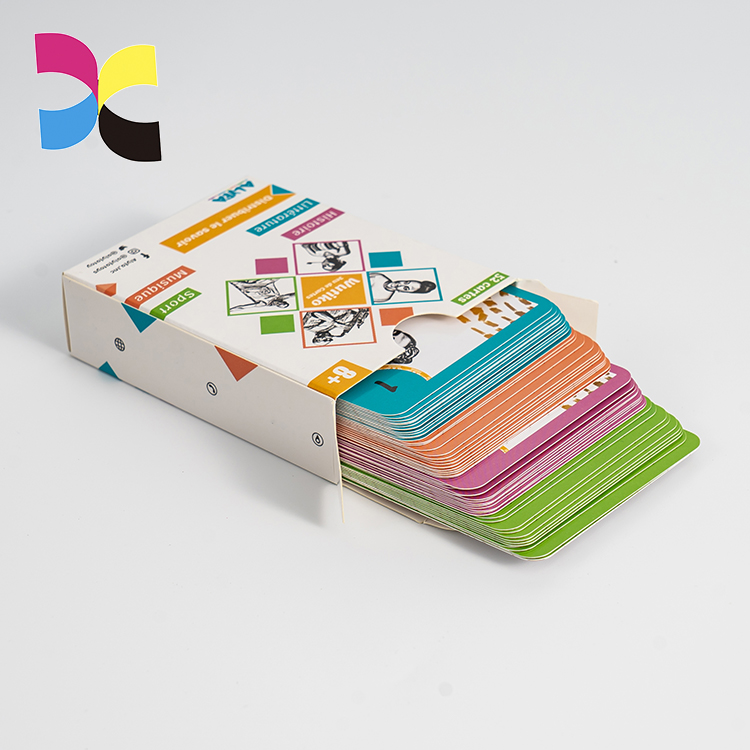
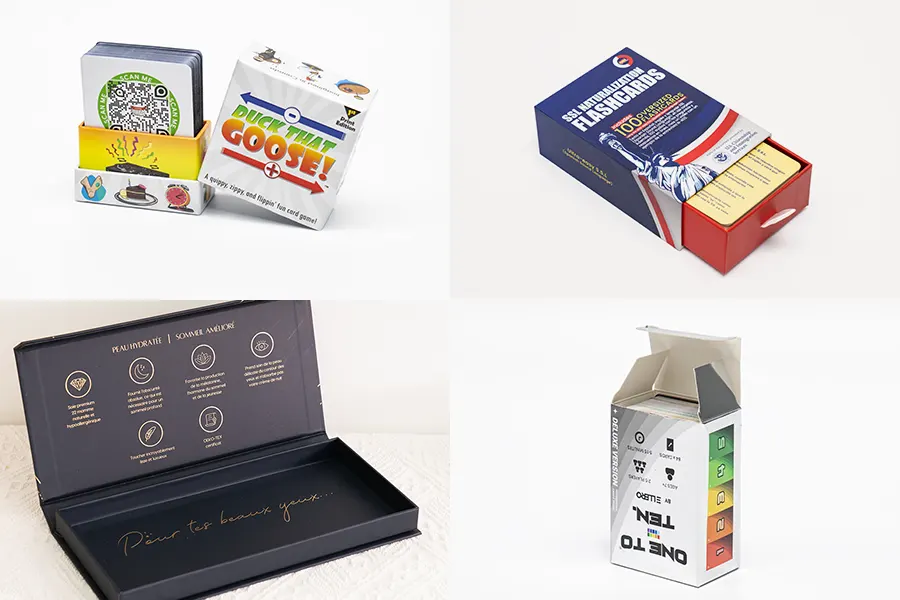
Common options include tuck boxes, rigid boxes, pouches, shrink wrapping, and instructional inserts. Packaging can also help organize cards by subject, level, or category when the deck contains multiple sets.
Xinyi can customize both printing flashcards and supporting packaging, including boxes, pouches, and inserts, so the cards and packaging can be developed as one complete product rather than separate components.
How to Test and Approve Custom Science Flashcards
A careful approval process helps publishers confirm that the printed deck matches the approved artwork, specifications, and packaging before mass production begins.
What to Ask a Flashcard Manufacturer Before Ordering
Before starting custom printed flash cards, publishers should confirm that the manufacturer can handle the complete project, from printing and finishing to sampling and packaging.
Key questions include:
- Customization: Can the manufacturer produce the required size, shape, material, and finish?
- Sampling: Can they provide physical samples before mass production?
- Print quality: Can they reproduce detailed diagrams, small text, and accurate colors?
- Packaging: Can they provide boxes, pouches, inserts, or other required packaging?
- MOQ and production: What is the MOQ and expected production schedule?
A manufacturer that can manage these requirements through one workflow can make the project easier to coordinate and reduce communication between multiple suppliers.
What to Check on a Science Flashcard Sample
A sample should be compared with the approved artwork and specifications rather than judged only by its appearance.
Check the content, print, and physical construction together:
- Content accuracy: Verify terms, labels, diagrams, numbering, and sequence.
- Print quality: Check small text, image sharpness, color consistency, and front-and-back alignment.
- Physical quality: Inspect thickness, cutting, corners, surface finish, and handling feel.
For science decks, small labels and detailed illustrations deserve particular attention because they can look clear on screen but lose readability after printing.
Approve the Complete Deck Before Mass Production
The final approval should cover the complete deck, not just one sample card. Confirm the total card count, sequence, front-and-back artwork, packaging, inserts, and other components before production starts.
This final check can help prevent missing cards, incorrect artwork, packaging errors, and costly reprints. Xinyi supports sampling, printing, finishing, assembly, packaging, and quality inspection for complete flashcard projects.

Why Choose Xinyi for Custom Science Flashcards?
Publishers often need more than card printing for a science flashcard project. Xinyi combines customization, printing, finishing, packaging, and production support in one workflow.
Flexible Customization for Different Science Flashcard Formats
Xinyi can produce custom flashcards for biology, chemistry, physics, anatomy, environmental science, and other educational subjects. Publishers can adjust the specifications to match the content and target market.
Options include:
- Card specifications: Custom sizes, shapes, cardstock, and rounded corners.
- Printing and finishing: Full-color double-sided printing, matte or gloss lamination, foil, UV, and embossing.
- Packaging: Custom boxes, pouches, inserts, and other presentation formats.
This flexibility allows publishers to develop different decks or product editions without being limited to a fixed card format.
Complete Flashcard Production From Prototype to Packaging
Xinyi supports the complete flashcard printing workflow, including artwork checking, sampling, printing, finishing, cutting, assembly, packaging, quality inspection, and shipping.
Working with one manufacturing partner can simplify communication and help maintain consistent specifications across large decks and repeat orders. For publishers planning a new science flashcard product, Xinyi provides a practical starting point for discussing card specifications, samples, packaging, and production requirements.
Frequently Asked Questions
What are science flashcards?
They’re study cards for learning science—facts, formulas, and diagrams for subjects like biology, chemistry, and physics. They can be physical cards or digital files. They work because they force you to actively recall information, which sticks way better than just rereading notes. Each card is designed to test one specific concept, like a single vocabulary term, one formula, or a part of a diagram.
How are science flashcards typically made?
Publishers take content from textbooks or a curriculum and break it down into small, testable questions. The front of the card asks a clear question, and the back provides a concise answer. For science topics, good cards include important context, like the units for a formula or the conditions for a biological process. The cards are then edited for clarity and accuracy.
Can I customize science flashcards?
Yes, customization is a standard feature in most flashcard tools. You can edit the text on questions and answers, add or replace images with scientific diagrams, and change formatting like colors and fonts. This lets you tailor cards to a specific lesson plan or focus on areas where you need more practice.
What materials are used to make flashcards?
Physical flashcards are usually made from index cards or thicker cardstock. For digital flashcards, the “materials” are the content inputs—text from class notes, PDF slides, or images of diagrams. For classroom use, many flashcard sets are designed as printable paper templates that can be distributed easily.
Where can flashcards be printed?
You have a few channels. Online design platforms often offer print-on-demand services. You can also go to specialist manufacturers that focus on producing custom card decks in bulk. For smaller jobs or personal use, general commercial printers are also an option.
How are educational cards manufactured?
The process starts with preparing the design file. The designs are printed on large sheets of cardstock. After printing, a protective finish like a laminate or coating is often applied for durability. The sheets are then cut into individual cards, and corners are often rounded. Finally, the cards are sorted into decks, assembled with any instructions, and packaged.