The global learning landscape has shifted dramatically over the past decade. EdTech platforms, mobile learning apps, AI-powered tutoring systems, and algorithm-driven spaced repetition tools have transformed how students consume information. From language-learning apps to professional certification platforms, digital solutions promise speed, automation, and efficiency. As screens increasingly dominate classrooms and self-study routines, many educators and brands are re-evaluating traditional printed materials.
So, in the debate of paper flashcards vs digital, which helps you remember better and learn faster?
The short answer: both can be effective—but physical flashcards often promote deeper memory retention, while digital flashcards offer greater convenience and scalability. The best choice depends on learning context, cognitive engagement, and long-term goals.
This article explores the differences between paper and digital flashcards from a scientific, practical, and business perspective—so you can make an informed decision.
Paper Flashcards vs Digital: What’s the Difference?
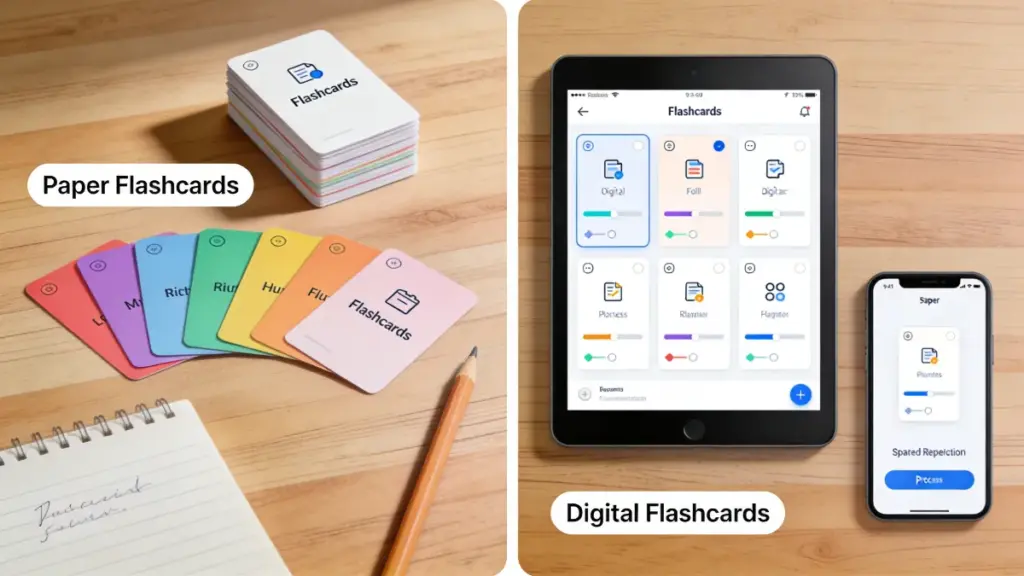
At its core, the comparison between paper flashcards vs digital flashcards is about interaction design and cognitive engagement.
Physical flashcards are tangible learning tools. They involve touch, motion, spatial organization, and visual focus. Digital flashcards exist within software environments, often enhanced by automation, multimedia, and progress tracking systems.
Below is a direct comparison to illustrate the key differences:
| Aspect | Paper Flashcards | Digital Flashcards |
|---|---|---|
| Format | Physical printed cards | App or web-based interface |
| Sensory Input | Tactile + visual | Primarily visual + audio |
| Memory Engagement | Strong kinesthetic reinforcement | Algorithm-driven repetition |
| Distractions | Minimal | Potential notifications / multitasking |
| Portability | Physical deck required | Accessible across devices |
| Customization | Fixed once printed | Easily editable and expandable |
| Production Cost | Printing + logistics | Development + hosting |
| Scalability | Economies of scale | Infinite duplication |
| Brand Value | High perceived tangible value | Digital service perception |
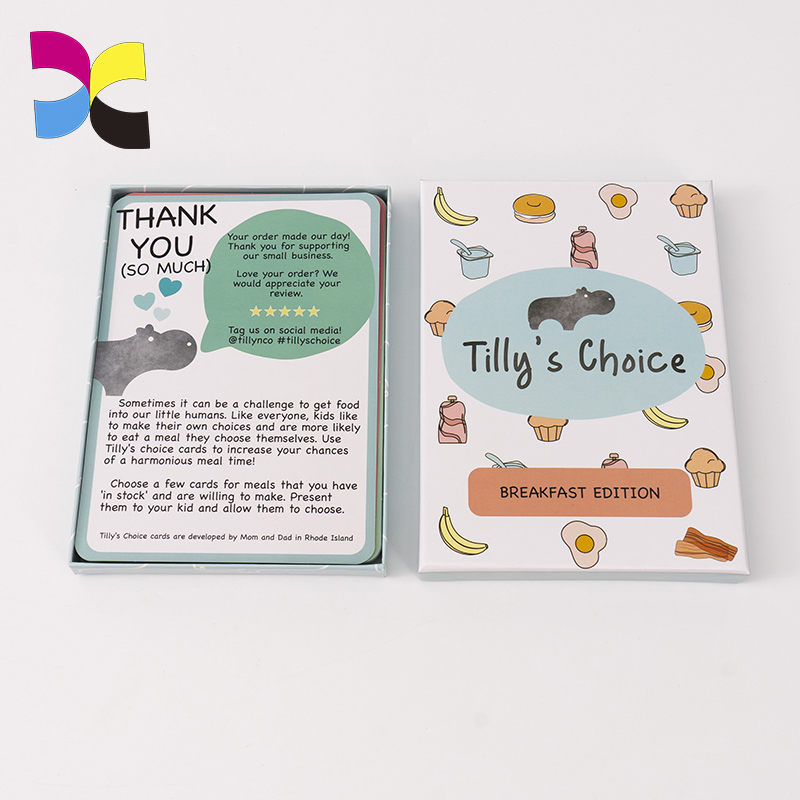
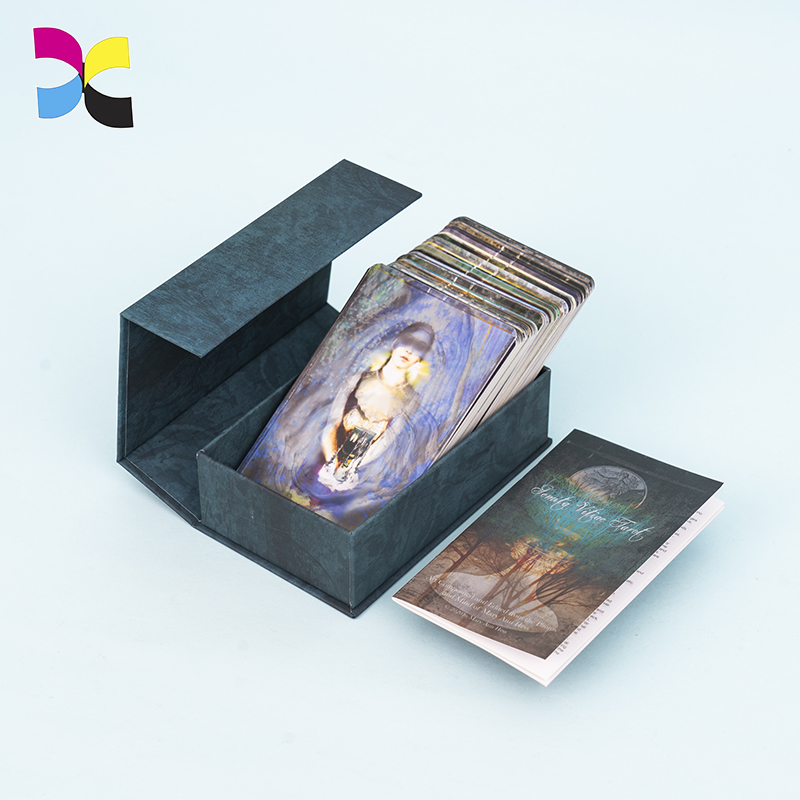
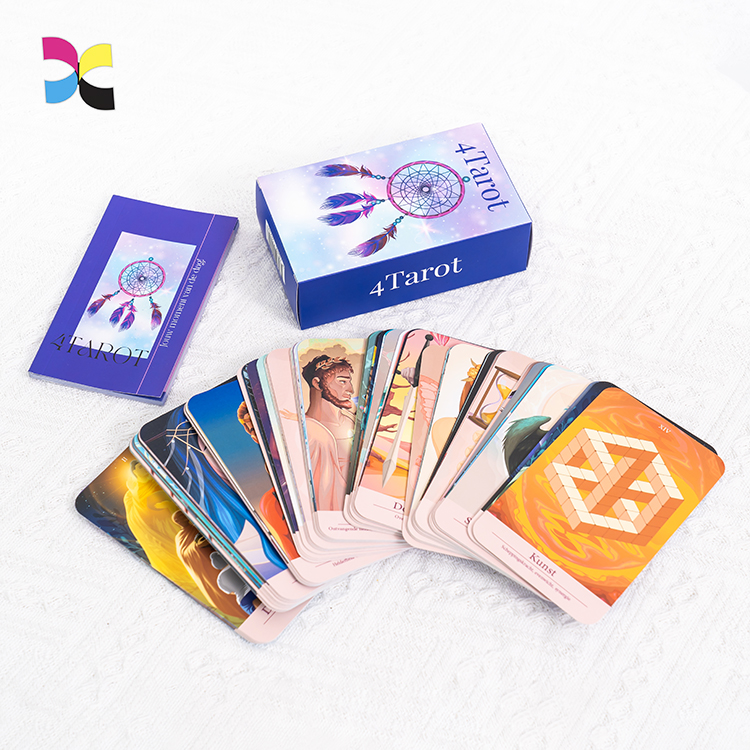
Printed flashcards come in various formats depending on their educational purpose. If you want to explore the different types of flashcards used in language learning, early education, and professional training, understanding these formats helps clarify why physical cards remain widely adopted.
Do Physical Flashcards Improve Memory Retention?

Physical flashcards naturally encourage active recall, a learning method where the brain retrieves information without cues. The act of flipping a card forces a pause—a moment of cognitive effort that strengthens neural pathways.
Several cognitive factors contribute to stronger retention with physical cards:
- Embodied cognition: Physical manipulation enhances encoding.
- Spatial memory cues: Learners remember card position and grouping.
- Reduced digital distraction: No alerts, no app switching.
- Manual spaced repetition: Sorting piles reinforces categorization.
Research in cognitive psychology shows that effective learning often involves “desirable difficulty,” a concept introduced by Robert A. Bjork. Tasks that require effortful retrieval—such as using flashcards—enhance long-term retention. Physically managing a deck and actively recalling answers increases cognitive effort, which strengthens memory consolidation and improves long-term recall. For children, this effect is even more pronounced. Fine motor development and sensory interaction are part of early learning. A printed vocabulary card does more than present information; it engages developmental processes.
Digital flashcards can replicate spaced repetition through algorithms, but they often reduce learner agency. When the system schedules reviews automatically, the user may become passive. In contrast, manually organizing physical cards reinforces intentional learning behavior.
Are Digital Flashcards More Convenient?
With a smartphone, learners can access thousands of cards instantly. Cloud synchronization allows seamless switching between devices. Progress tracking visualizes improvement, and adaptive algorithms optimize review intervals.
Digital flashcards offer advantages such as:
- Instant scalability
- Searchable databases
- Multimedia integration (audio, video, animation)
- Automatic spaced repetition scheduling
- Real-time progress analytics
For university students managing complex subjects or professionals studying for certifications, digital systems reduce administrative effort. There is no need to manually reorganize decks; the software handles scheduling.
However, convenience introduces trade-offs:
- Screen fatigue reduces focus.
- Multitasking temptation weakens attention.
- Learning sessions may become shorter and less deliberate.
Convenience improves accessibility—but does not automatically guarantee better learning outcomes.
When Are Paper Flashcards Better Than Apps?

There are clear contexts where physical flashcards outperform digital alternatives.
Early Childhood Education
Parents and educators often limit screen time. Physical cards integrate naturally into hands-on teaching methods, group activities, and classroom interaction.
Exam Preparation
Students preparing for standardized tests frequently prefer analog tools. Paper flashcards simulate non-digital exam environments and reduce online distractions.
Retail & Gifting Markets
Educational products purchased as gifts benefit from tangible packaging. A well-designed flashcard set conveys quality and value in a way digital downloads cannot.
Low-Tech Environments
In regions with limited internet access, printed flashcards remain reliable and independent learning tools.
Tactile Learners
Some learners simply retain information better when physically handling materials. While learning style theories are debated, user preference strongly influences motivation—and motivation drives consistency.
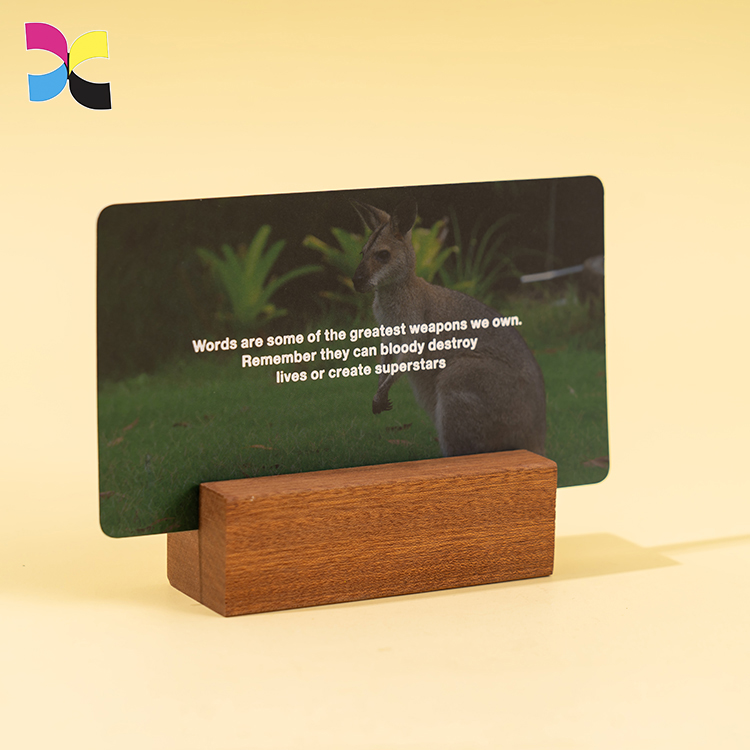
The physical size of a flashcard also impacts usability. Different dimensions of flashcards influence readability, portability, and how comfortably learners can handle the deck.
Cost Comparison: Printed vs Digital Flashcards
From a business standpoint, the cost comparison between paper flashcards vs digital flashcards is complex.
Digital products eliminate physical production costs but require:
- Software development
- Platform maintenance
- Hosting infrastructure
- Ongoing updates and support
Printed flashcards require:
- Cardstock material (e.g., 300–350gsm)
- Core layers (black or blue core to prevent transparency)
- Printing and coating
- Die-cutting and packaging
- Logistics and shipping
However, printed flashcards benefit from economies of scale. Larger production volumes significantly reduce per-unit costs. Additionally, premium finishes—such as linen texture, matte lamination, UV coating, or eco-friendly soy ink—enable higher retail pricing.
Digital products often rely on subscription models. Physical flashcards generate revenue through one-time retail sales or bundled educational kits.
For brands, the decision depends on revenue structure. For publishers and education retailers, physical flashcards remain highly monetizable.
Hybrid Learning: Combining Paper and Digital

Rather than asking which format will replace the other, many education brands integrate both:
- Physical flashcards with QR codes linking to audio content.
- Companion mobile apps for review tracking.
- Printed decks as primary tools, digital systems as supplements.
- Bundled physical products with premium online access.
This approach combines:
- Deep tactile engagement
- Automated spaced repetition
- Brand visibility through physical packaging
- Data tracking through digital platforms
Hybrid learning models allow brands to diversify revenue streams while delivering stronger educational outcomes.
The debate between paper flashcards vs digital is gradually shifting toward integration rather than opposition.
Why Education Brands Still Choose Paper Flashcards
Despite digital expansion, education brands continue investing in printed flashcards for strategic reasons.
Brand Perception
High-quality printed materials enhance credibility. Premium packaging, durable lamination, and professional design elevate brand identity.
Retail Compatibility
Physical products remain essential for bookstores, toy retailers, museum shops, and educational supply chains.
Durability & Safety
For children’s products, non-toxic ink, FSC-certified paper, and strong lamination ensure safety and longevity.
Price Positioning
Physical flashcards can be positioned as premium educational tools rather than low-cost digital downloads.
From a manufacturing standpoint, consistent thickness, accurate die-cutting, color precision, and long-term reorder stability are critical. Poor quality undermines learning effectiveness and brand trust.
For these reasons, printed flashcards maintain strong demand—even in digitally advanced markets.
Looking to Create High-Quality Custom Flashcards?
If you are developing an educational flashcard product, production quality determines market success.
Inconsistent thickness, color deviation, weak lamination, or imprecise cutting can damage both usability and brand reputation.
At Xinyi Card Printing (https://xinyicardprinting.com/), we specialize in manufacturing high-quality custom flashcards for education brands, retailers, publishers, and emerging learning startups worldwide.
We provide:
- Premium cardstock options (300–350gsm, black core, blue core)
- Matte, gloss, or linen finishes
- FSC-certified and eco-friendly materials
- High-precision color management
- Consistent batch production for long-term reorders
- Integrated packaging solutions (boxes, rings, instruction manuals)
Whether you are launching early childhood vocabulary cards, professional training decks, or language-learning products, we support both small MOQ pilot runs and scalable mass production.
Final Thoughts: Paper Flashcards vs Digital Flashcards
So, are physical flashcards still useful in the digital age? Absolutely.
In the comparison of paper flashcards vs digital, each format offers distinct advantages. Digital tools deliver automation and convenience. Physical flashcards promote deeper engagement, tactile reinforcement, and strong brand presence.
For learners seeking better retention, physical flashcards often provide stronger cognitive impact. For brands seeking scalable growth, combining both formats offers the greatest opportunity.
Technology has transformed education—but it has not eliminated the power of well-designed printed materials.