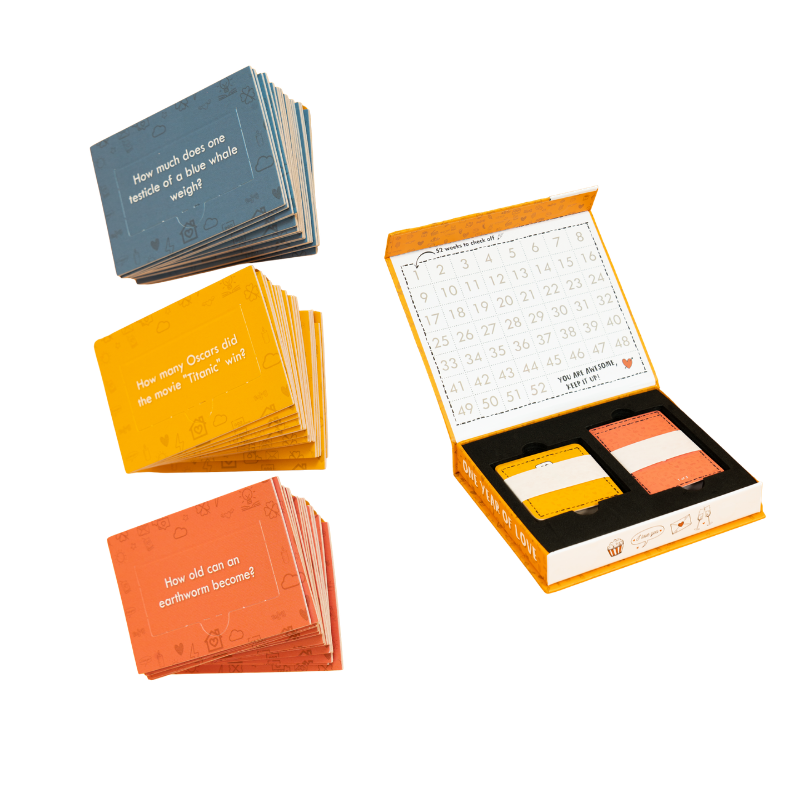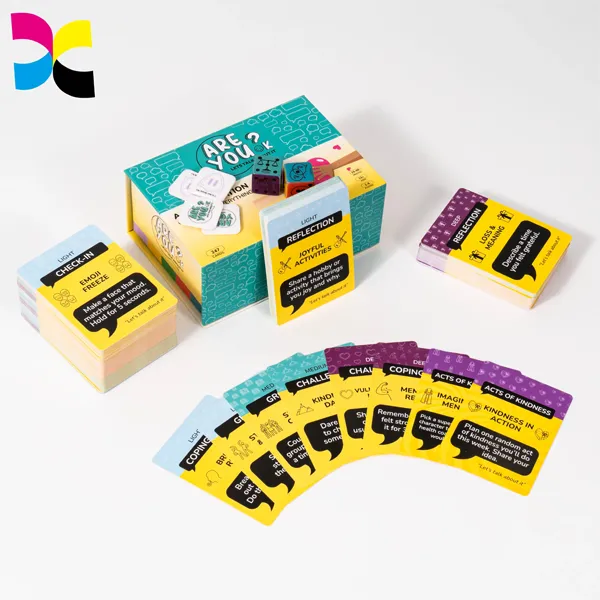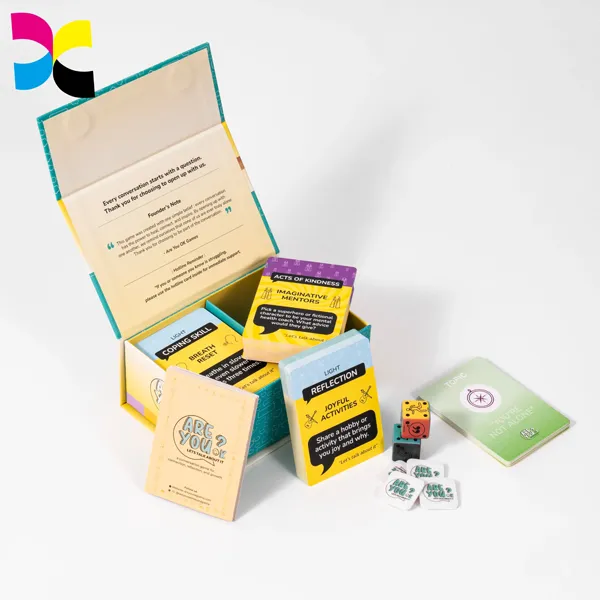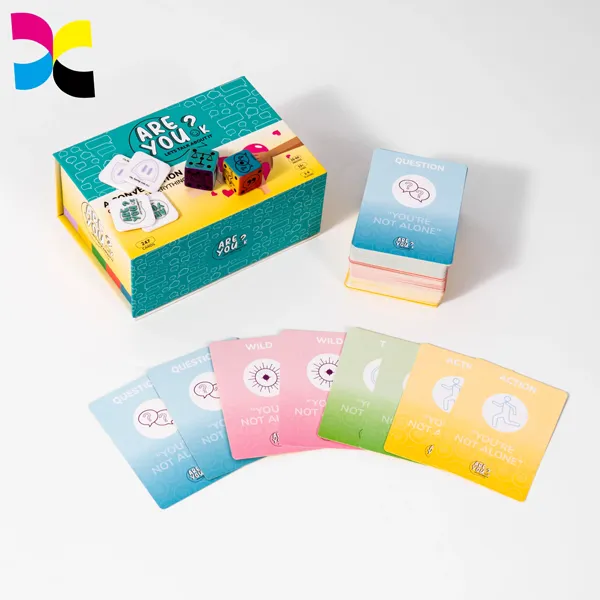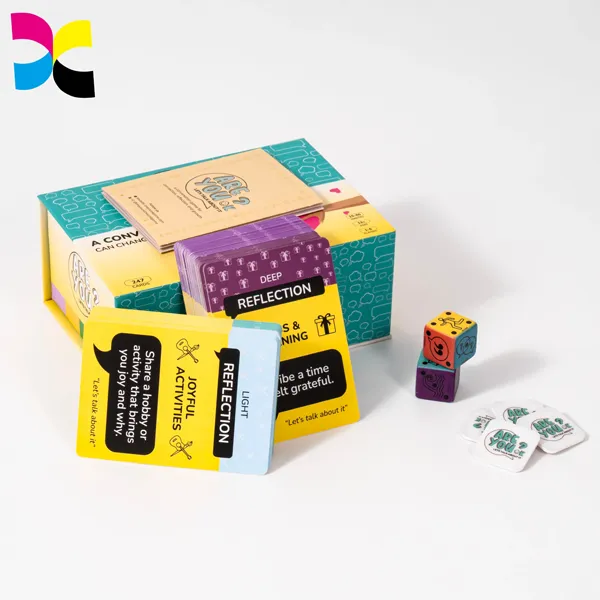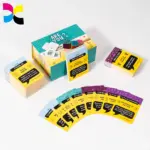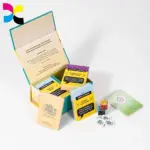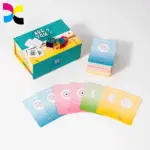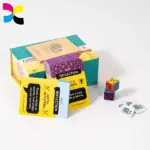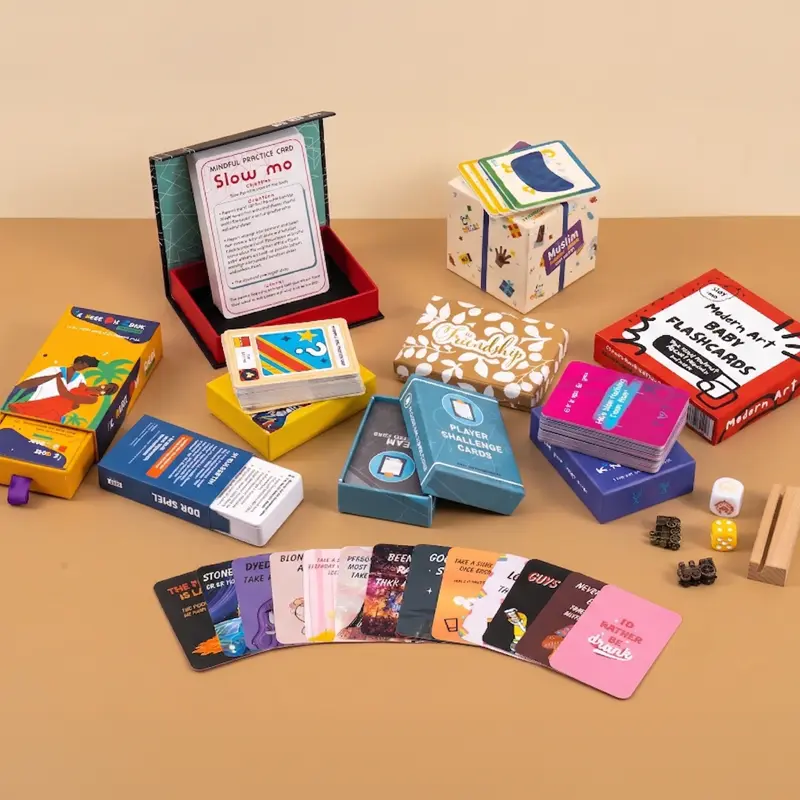
Custom scratch off cards hide a code, a prize, or a message under an opaque panel. The reader removes that panel with a coin or a fingernail to reveal what sits underneath. Le scratchcard reference describes the same form: concealed information revealed by scratching off a covering, used for lotteries, quizzes, and prepaid codes.
On this site the product is built for raffle cards, cartes de fête, et decks promotionnels, with rounded corners and a custom print. Le scratch off card page lists the order fields: deck quantity, cards per deck, paper type, finition, and packaging box. The minimum run is 200 ponts.
Those fields carry the whole order. Read together, they cover:
- Deck quantity and cards per deck, which fix the size of the run.
- Paper type, chosen from standard art, noyau bleu, noyau noir, or gold and silver stock.
- Finition superficielle, such as matte or gloss lamination, déjouer, Spot UV, ou gaufrage.
- Packaging box, from tuck-end and rigid formats to shrink wrap and booster packs.
- Your artwork file, built against the trim, saigner, and safe-area guides.
This guide works through those fields in order using the site’s own card game decks and support pages. It ends at the sample, where the scratch result is checked before a full run.

Pick the Card Size and the Core
Card size sets everything that follows. Le size reference lists finished formats in millimeters plus a corner radius. Mini measures 44 x 64 mm, poker 63 x 88 mm, tarot 70 x 120 mm, flash 77 x 127 mm, and square 100 x 100 mm.
R is that corner radius in millimeters, so R6 rounds a corner more than R3. The product page also names inch formats: mini 1.75 x 2.5 dans, poker 2.5 x 3.5 dans, jumbo 3.5 x 5 dans, and square 2.5 x 2.5 dans. Lock the finished size and radius before artwork begins, because the box and the scratch window are drawn to that number.
Core is the second decision. Le black core guide explains that a black core makes a card opaque, so printing on the reverse does not show through during use. Le game card printing page adds that this opacity suits high-security cards, with thickness typically above 300 GSM.
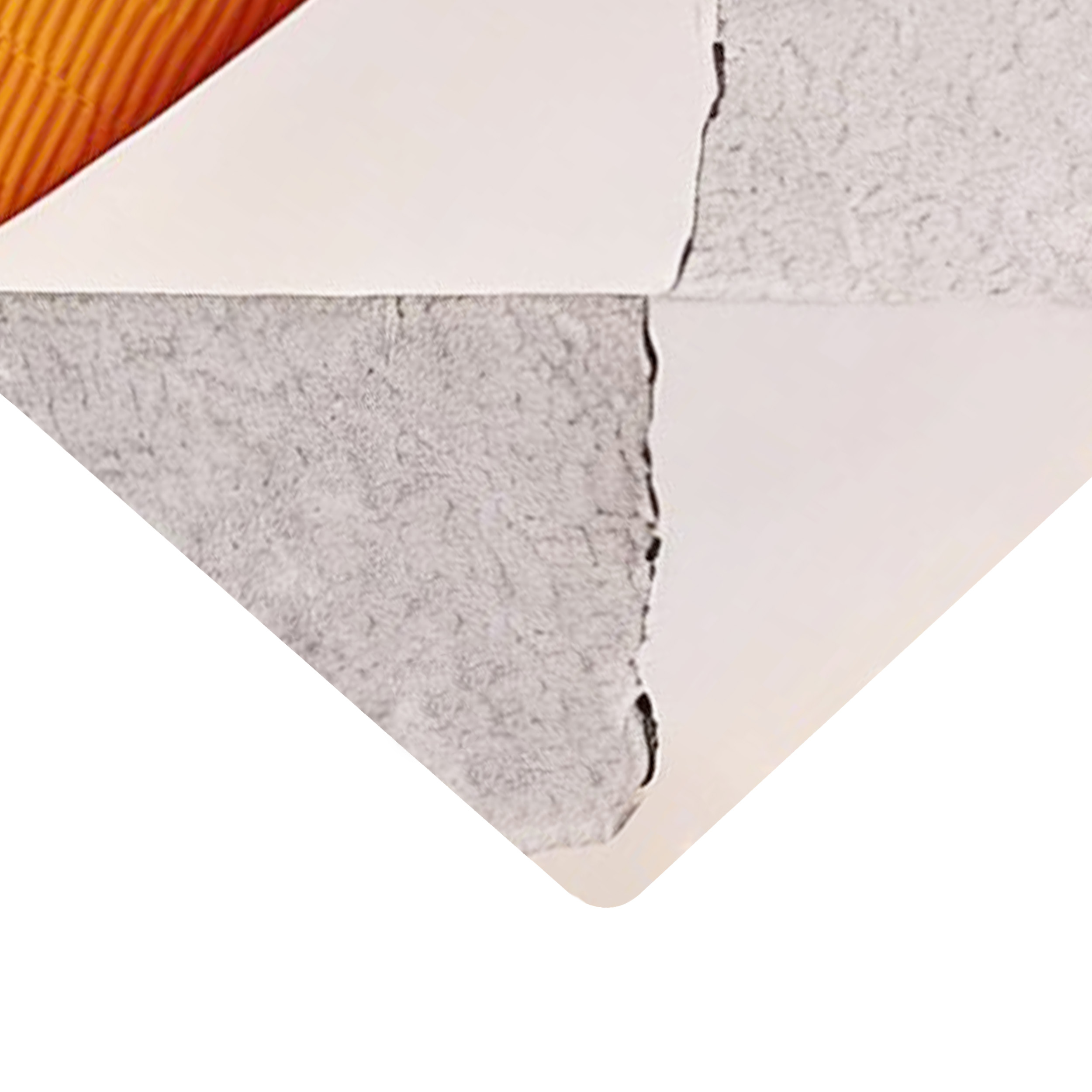
For a scratch card that opacity matters for the same reason it matters in poker. A player should not read the panel from the back. Choose a dark core when the concealed value is sensitive, and standard or blue core when the deck is a low-stakes party game.
The product page also lists gold and silver paper as a paper type. That colored face suits a premium prize card, and the option pairs with the foil and spot UV effects covered in the next section.
Choose the Finish Around the Scratch Panel
Le finishes page separates surface coating from selective effects. Gloss lamination gives vivid color with a wipeable barrier, matte lamination gives a low-glare surface that resists fingerprints, and soft-touch adds a velvety hand feel. Spot UV raises gloss on a chosen area, and embossing or debossing presses relief into the sheet.
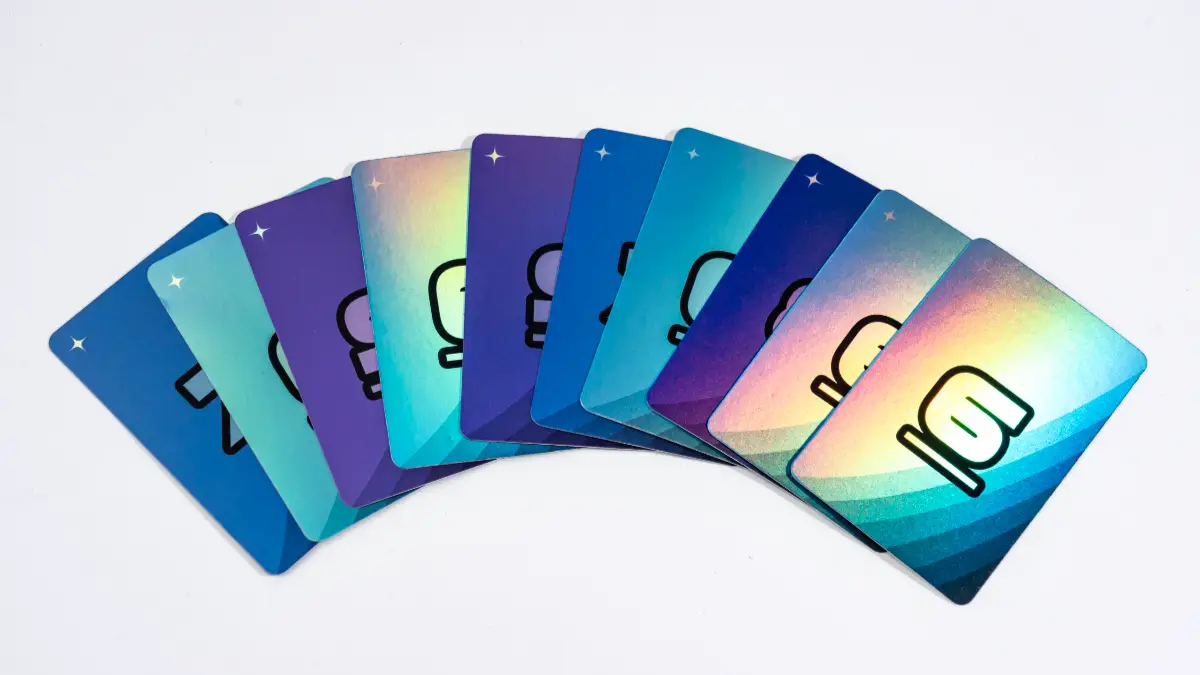
The scratch window is its own zone. Le file setup page states that selective finishes normally need a separate mask or artwork layer, and asks you to confirm the file structure before export. Treat the scratch panel the same way. It needs its own layer so the coating lands only where the value sits.
The same page warns against narrow uniform borders, because normal die-cutting movement can make thin borders look uneven. Keep the panel clear of the trim line, and let the surrounding artwork carry the design.
A hard coating belongs on the rest of the card, not on the window. The finishes page lists an anti-scratch film that resists scuffs on dark, high-use surfaces, which protects the printed face through handling. The scratch panel itself stays open so a coin lifts it, so the coating mask and the panel mask must agree on the same coordinates.
Add Codes and Variable Data
A promotional deck often needs each card to carry a different code. Le offset vs digital page describes digital printing as variable data printing, where each card can be customized without additional cost. The same page notes this suits small batches or single-card projects.
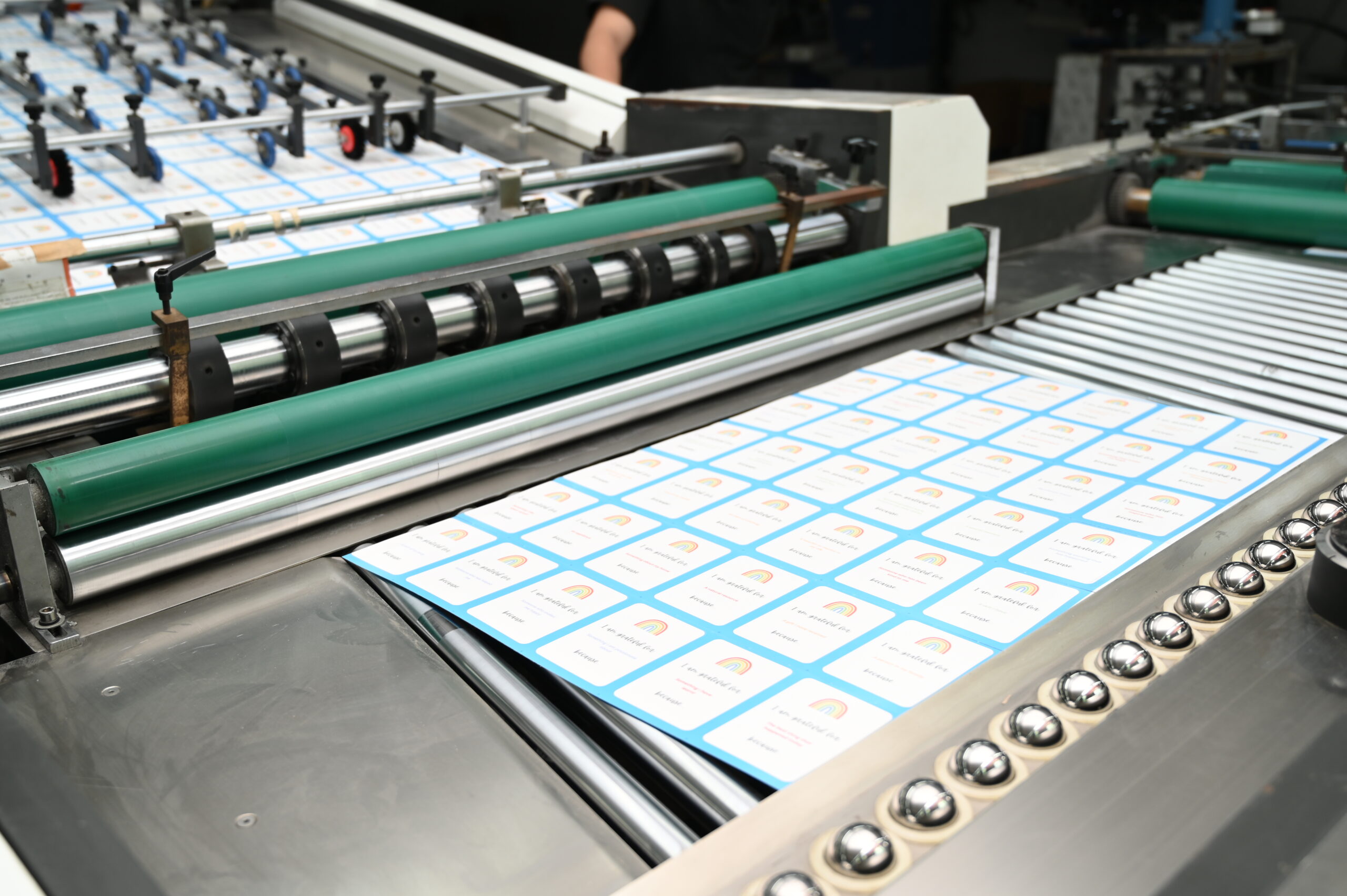
Offset is the opposite trade. It is cost-effective at high volume and reproduces PMS and CMYK color precisely, but its setup cost makes short runs expensive. A serial number is a unique identifier assigned in sequence, so the format, the digit count, and the prize logic come from your promotion rather than from the press.
Send the code list as data. On the proof, check that the panel hides the value and that the digits print inside the safe area. The print shop does not set your odds or your code rules. It prints the data you supply.
The route you choose also depends on volume. A small event run fits digital, where variable data is built in. A large retail release leans on offset, which the same page notes is cost-effective as quantity rises and reproduces PMS colors for matched brand tones. Many promo decks use both: offset for the shared artwork, digital for the unique panel.
Package the Deck for Retail and Freight
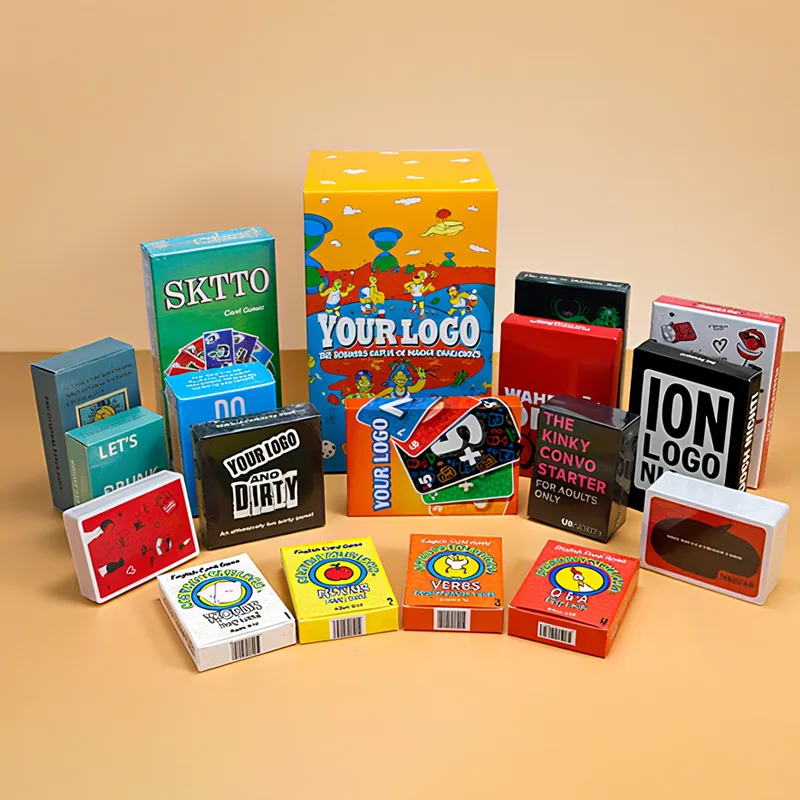
Packaging is part of the product. The product page offers tuck-end, magnetic rigid, lid and base, et boîtes à tiroirs, plus shrink wrap and booster packs. A tuck-end carton is the lightweight retail option, while shrink wrap seals a deck for handling and display. The page describes booster packs as compact sealed units built for surprise, which suits a collectible or promotional release rather than a boxed set.
Le packaging page sets the rule for these structures: define the finished card size, count, and opening style before the dieline, because each choice moves the tooling.

Export packing is measured, not guessed. Le shipping page specifies BC double-wall cartons around 6.5 à 7.5 mm with gross weight kept within 15 kg per carton, and palletized loads on ISPM 15-compliant pallets. Le customization page covers the matching tuck-end, magnetic, lid and base, drawer, and shrink-wrap structures, so the box and the wrap are quoted together.
Inside the carton the same page calls for void fill, internal corner protection, and a moisture barrier matched to the route. A sealed deck still needs that cushioning, because a scratched or dented panel cannot be re-covered once it ships.
Confirm the Scratch Before Mass Production
Le sampling page separates two proof routes. A PDF proof checks layout. A pre-production sample checks how the selected material, imprimer, finition, and packaging work together, and its confirmation list names finish alignment, box fit, component count, opening experience, and pack-out.

The scratch result is the one item a PDF cannot show. A sample is where you check that the panel is opaque, that a coin removes it cleanly, and that the code underneath reads correctly. A card deck with its box starts at 200 ensembles, a single loose design at 1,000 pieces, and a custom sample runs 5 à 7 working days as a reference.
Promotional rules sit outside the print job. Le sweepstakes reference describes a contest whose winners are chosen by chance, and notes that entry rules differ by jurisdiction, with some places requiring free entry. Confirm your promotion’s format with counsel. The print specification stays with us.
Lead times follow the structure. The shipping page publishes a production reference in working days by product and quantity band.
| Produit | Under 5K | Under 10K | Higher quantity |
|---|---|---|---|
| Cartes | 10 jours | 10 jours | +1 day / 10K |
| Cartes + folding box | 10 jours | 12 jours | +1 day / 3K |
| Cartes + boîte rigide | 12 jours | 15 jours | +1 day / 3K |
| Couvercle et boîte de base | 12 jours | 14 jours | +1 day / 3K |
| Boîte à tiroirs | 12 jours | 18 jours | +1 day / 3K |
Add roughly six more days for order processing, dielines, préparation du dossier, proofing, and scheduling after artwork confirmation.
Foire aux questions
Can I place my own scratch panel on the card?
Oui. The scratch window is a zone on the card, and the file setup page asks for a separate mask or layer for selective finishes. Send the panel position with your artwork and confirm the file structure before export.
Which core suits a scratch card?
A dark core is the opaque option, described on the black core guide as stopping reverse printing from showing through. Standard and blue core suit lower-stakes party decks where opacity is less critical.
Can each card carry a different code?
Oui. The offset vs digital page describes digital printing as variable data printing, where each card can be customized without additional cost. Send the code list, and the format and prize logic stay with your promotion.
What is the minimum order?
The product page lists a minimum of 200 ponts. A project printing one card design only starts at 1,000 pieces, and a custom sample runs 5 à 7 working days as a reference.
Do you create the codes or do I send them?
You send the data. The print team applies variable data printing to the list you supply, so the code format, the digit count, and the prize logic stay with your promotion. The sample is where you confirm the panel hides each value before the run.
Pensées finales
Good custom scratch off cards come from a fixed specification. Lock the size and core, place the scratch panel on its own layer, send the code data, and choose a box that survives the carton. Confirm the scratch result on a pre-production sample before the full run.
Send the finished size, cœur, code format, and packaging you have in mind through our contact page. We check them against the dieline and the sample before a mass run is scheduled.
Start a Scratch Card Quote