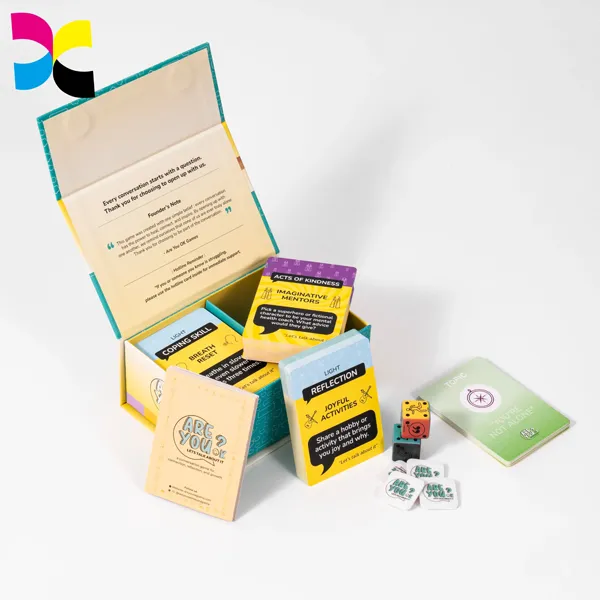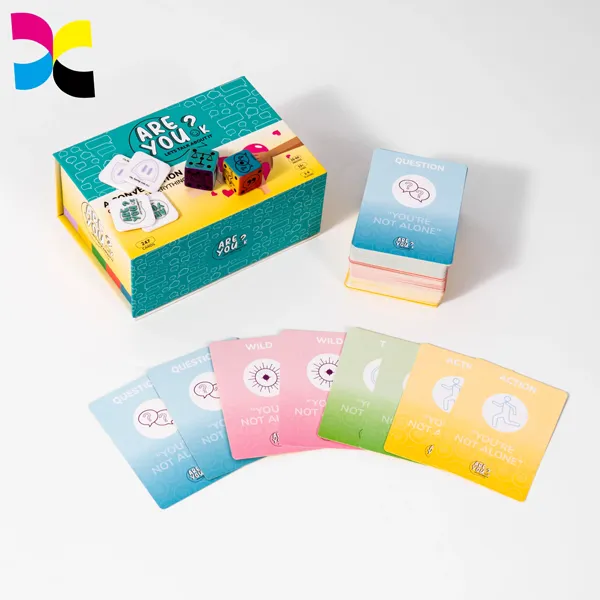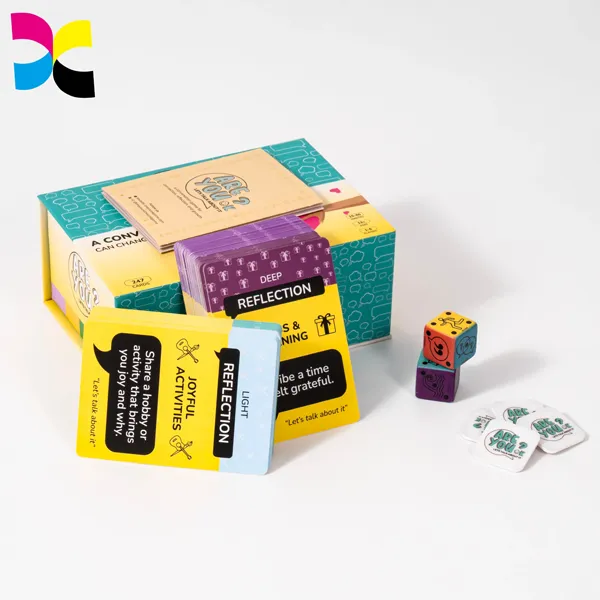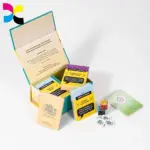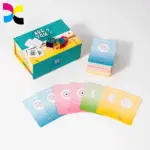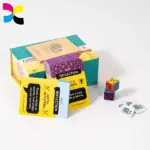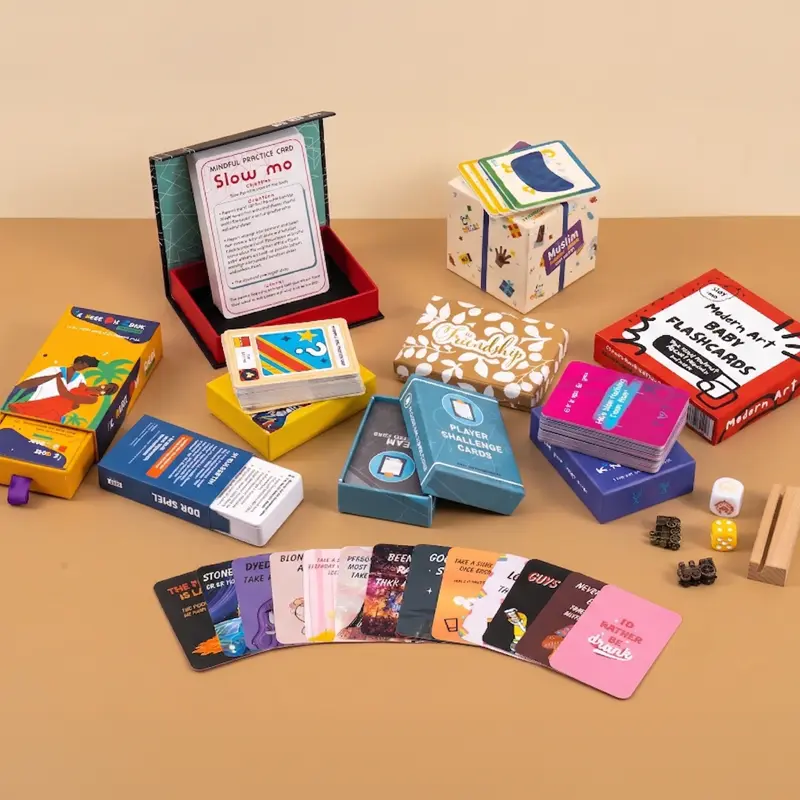
A board game is a system, and its cards are one part of it. Le board game reference describes a tabletop game built around a board and other components such as dice and cards. A publisher buys the whole set, not an isolated deck, so the cards must fit the box, the insert, and the rulebook that ship beside them.
This guide treats board game card printing as a fit problem. It covers the spec sheet, the bundled quote, the reprint and version checks, and the durability choice, each tied to the site’s own support and manufacturing pages.
Every number below comes from a published page. Where a value depends on your artwork or your factory, the text says so instead of guessing.
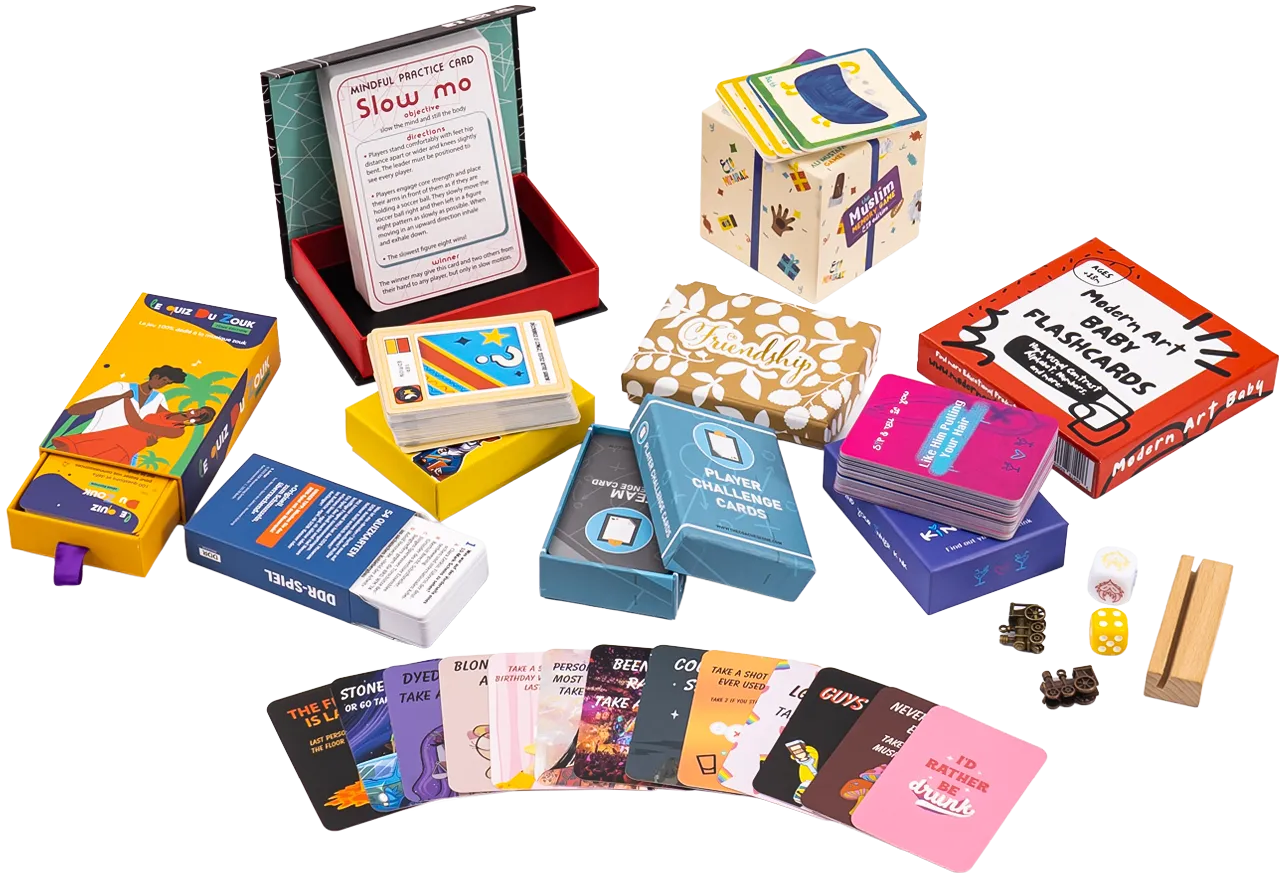
Cards Are One Component in the Set
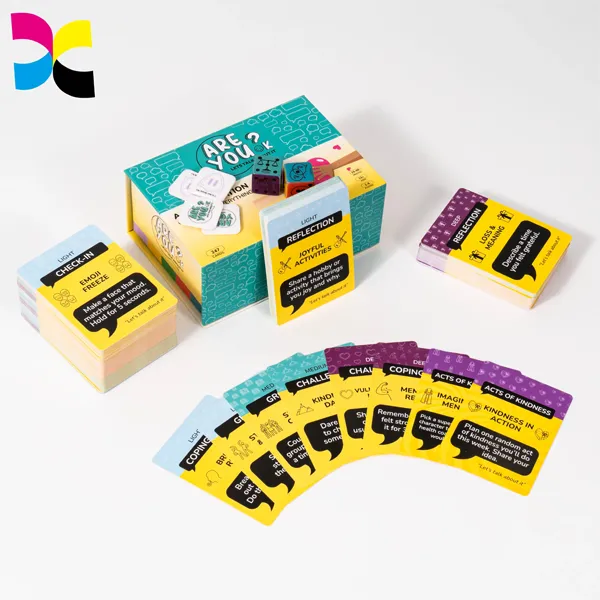
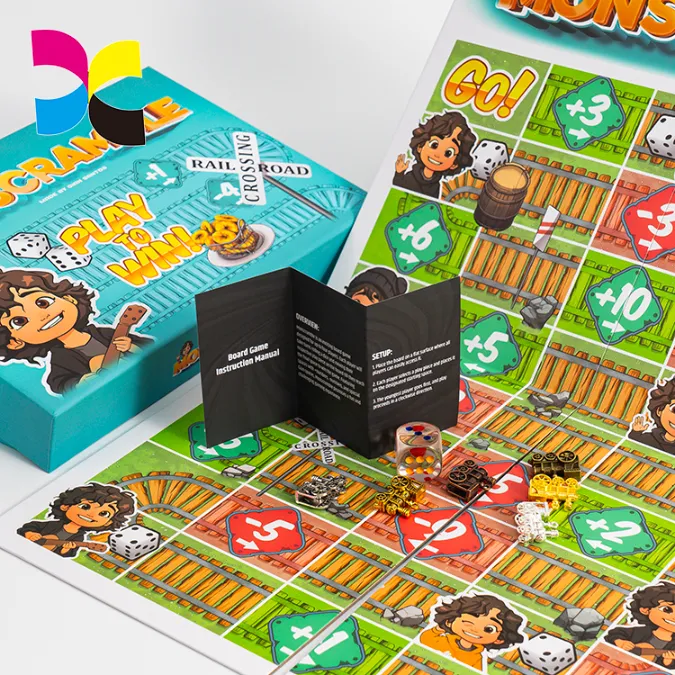
Card size sets the insert, and the insert sets the box. Le components overview maps how cards sit alongside boards, jetons, faire des dés, et emballage. Change one dimension and the others move with it, so the card spec is fixed before the box is drawn.
The same dependency runs the other way. A box that must hold a board, a screen, faire des dés, and several decks limits the card size you can pick. The components overview lists those pieces and how they fit the box, so the card decision is read with the rest of the set.
Le packaging page states the order plainly: lock the product before the box. For a deck that means the finished size, the card count, and the stack height come first, and the cavity and carton follow. A box cut for the wrong stack is the common failure, so the stack is measured rather than assumed.

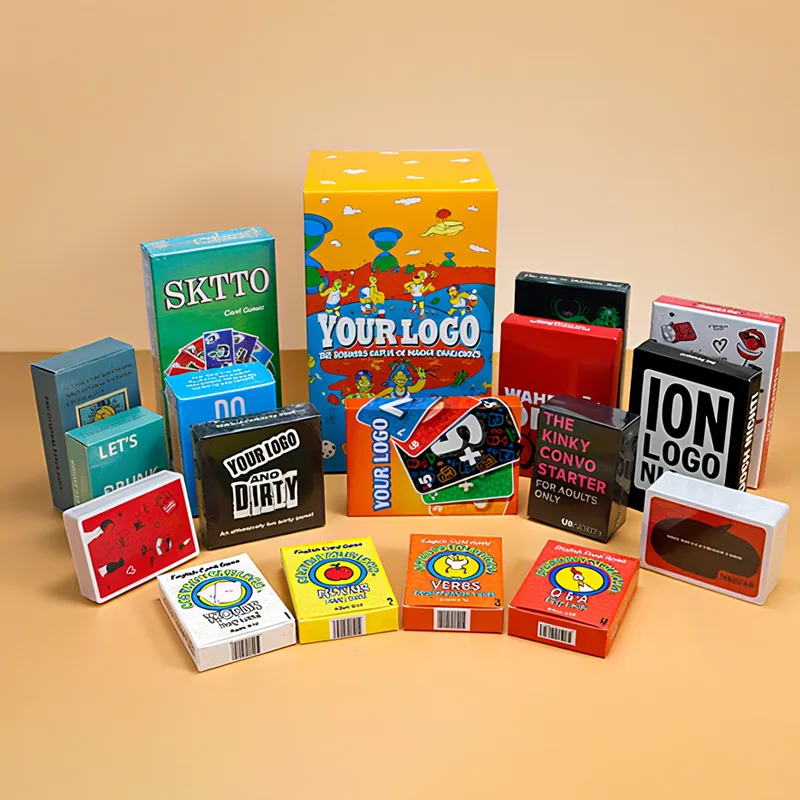
A standalone deck or an expansion uses the same logic. Le card deck product page et le card game decks category cover decks sold on their own, each with its own box and insert relationship to get right.
Build the Card Spec Sheet First
One page answers what a factory needs to quote. The fields repeat across the site’s support pages, so a publisher fills them from the references rather than inventing them. A working spec sheet records:
- Finished card size and corner radius, taken from the size reference.
- Card count per deck, including any spare cards you choose to add.
- Core type and paper weight, chosen from the materials and paper core pages.
- Finition superficielle, selected from the published finishes list.
- Print process, such as offset CMYK with any spot colors or foil.
- A version number for each print-ready file.
Le size reference lists poker at 63 x 88 mm among other formats with a corner radius, and asks you to lock size and radius before artwork. Le materials page publishes a thickness table for coated boards and labels it reference only, because actual thickness varies by mill and paper construction.
That table is what the insert is cut around. The materials page lists coated card stock at 300, 350, et 400 gsm and shows a thickness for the varnished and laminated states of each. It marks the figures as reference only, since actual thickness varies by mill and construction. A deck stacks differently at each weight, so the finished caliper and the card count set the cavity depth.
Core and finish have their own pages. Le card stock guide compares paper types, et le paper core guide covers black and blue core. UN noyau noir card keeps a clean dark edge and blocks light so the reverse does not show through.
Le file setup page sets the artwork rules: saigner, the safe area inside the trim, CMJN, et 300 PPP, with a separate mask layer for any selective finish. Send files built to those rules so the spec sheet and the artwork agree.
Bundle Cards, Box, and Insert in One Quote
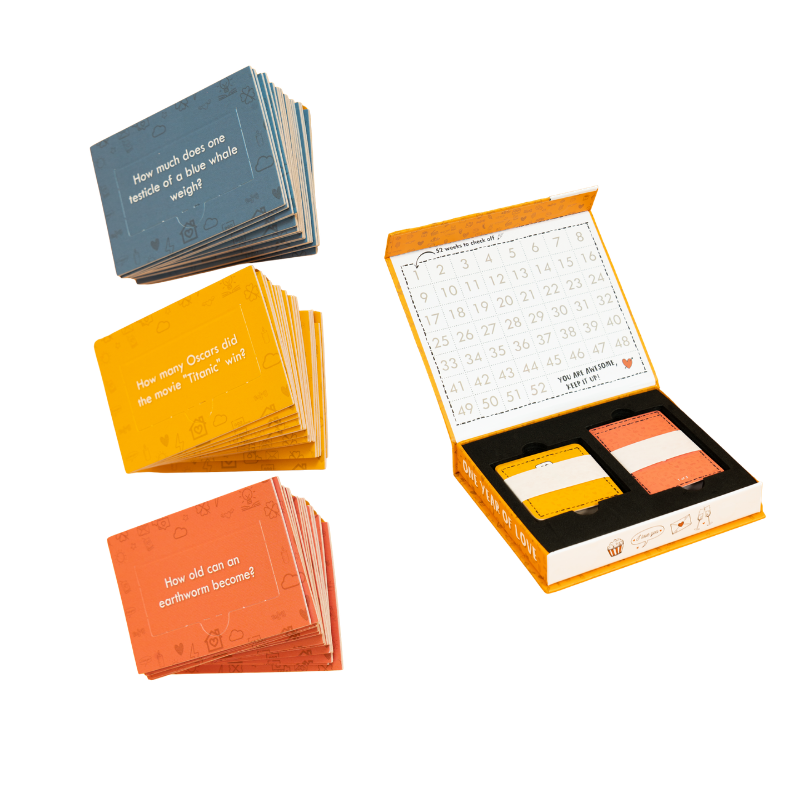
When cards, boîte, insert, and rulebook come from separate suppliers, a mismatch shows up only after production. Le buyer FAQ answers this. Card decks, rigid or folding boxes, guides, pochettes, inserts, and selected accessories can ship as one project. Compatibility is confirmed during quoting and sampling.
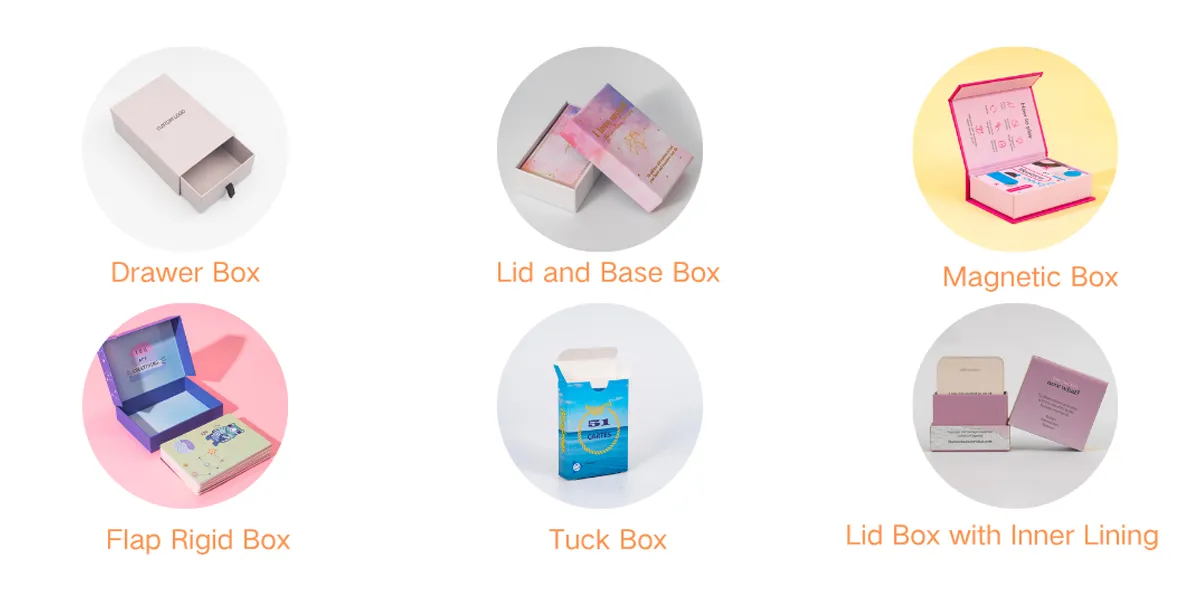
That single-quote route keeps the fit in one set of hands. Le customization page lists set and packaging design across tuck boxes, boîtes rigides, plateaux, and booklets. The packaging page asks for the full component list and the freight pack-out before the dieline is drawn. The carton is then sized around the real set rather than a guess.
Bundling also aligns color. If the card back, the box spine, and the rulebook cover share a spot color, one factory prints them together. Le offset vs digital page notes that offset reproduces PMS colors for matched brand tones.
For a game with several small decks, decide whether each gets its own box or all share one. Le memory card game et custom board game pages carry the component options, and multiple boxes raise both perceived value and shipping volume.
Control Reprints With Locked Files and Proofs
Reprints are normal. Rules change, balance shifts after playtesting, and art gets updated. The risk is mixed versions in the warehouse, so the control sits with the publisher’s files rather than with the press.
Name each print-ready file with a version and keep that name consistent. Le sampling page states that revisions to size, matériel, finition, card count, or packaging may require a new proof or sample before production begins. A version bump is the trigger to re-approve.
Lock the approved proof on your side too. A PDF proof checks layout, while a pre-production sample checks how the chosen material, imprimer, finition, and packaging work together. Keep the signed sample and the matching file version together, and reprint against that pair.
Record the approved combination somewhere your team can read years later. Note the file version, the card size and radius, the core and weight, the finish, and the box style on one line per reprint. When a reprint or an expansion comes up, that record lets you match the earlier deck instead of guessing at a spec. It gives the factory the same starting point you had.
Match Card Durability to Table Use
How players treat the cards sets the material and finish. Le finishes page describes the surface options. Gloss lamination gives a wipeable barrier. Matte lowers glare and resists fingerprints. Linen adds grip and smooth gliding. Soft-touch brings a velvety feel for collector decks.

For frequent shuffling, le paper core guide covers snap, how quickly a card returns to shape after bending, and black core for a firm, opaque card. For a game that meets spills, le paper versus plastic page compares paper and plastic decks so you can weigh feel against cleanup.
Finish and core are one specification, not two. The finishes page pairs a protective layer first, then selective effects, so the choice is made on the actual card stock and artwork rather than in the abstract.
What the Factory Checks Before Shipping
Acceptance comes from the production process, not from a guessed number. Le manufacturing page runs five quality stages, and each maps to a defect a publisher worries about.
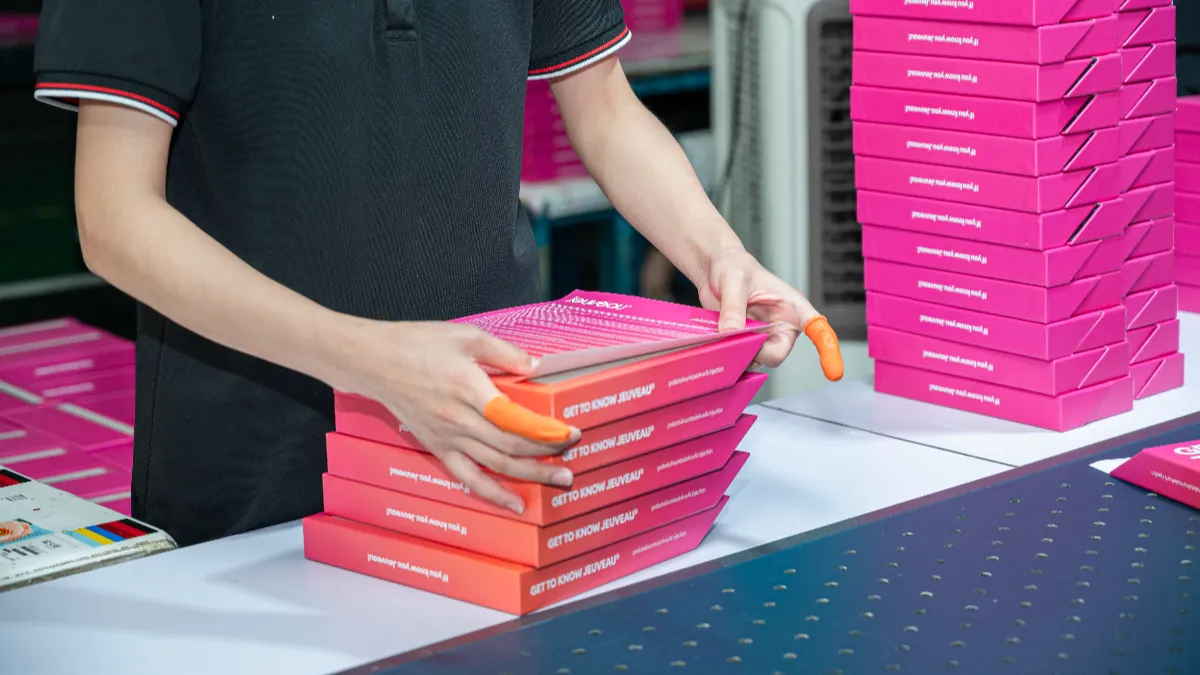
Stage one checks incoming material with a moisture meter and a caliper for even thickness across batches. Stage two matches printed color to the approved sample within a delta-E tolerance. Color difference explains what that metric measures.
Stage three inspects lamination, relâchement, déjouer, and die-cutting while the job runs. Stage four checks functional fit on boxed sets and a component list for card count and accessories. Stage five is an outgoing batch check on labels, barcodes, and carton sealing before shipping.
Ask for the matching records with delivery. The same page describes quality checks at each stage, so the batch you receive can be tied back to the proof you approved. Keep those records with the approved sample so a later reprint can be checked against the same baseline.
Foire aux questions
How many spare cards should a deck include?
Il n'y a pas de règle fixe. Spare count is your choice and belongs on the spec sheet, because it changes the stack height the insert must hold. The packaging page asks for the card count before the dieline, so settle the spares at that point.
Can I mix card sizes in one box?
Oui, but each size needs its own die and its own cavity. The buyer FAQ confirms that a combined project is settled during quoting and sampling, so mixed sizes are checked together before the run.
What triggers a new sample on a reprint?
A change to size, matériel, finition, card count, ou emballage. The sampling page says such revisions may require a new proof or sample before production, which is why the file version and the approved sample are kept together.
Should a family game use paper or plastic cards?
Match the material to how the game is played. The paper versus plastic page compares the two. The finishes page covers protective layers. A low-stakes family deck can stay on coated paper, while a travel or wet-hand game may suit plastic.
Pensées finales
Good board game card printing is a fit problem before it is a print problem. Fix the card spec, bundle the box and insert into one quote, lock file versions against an approved sample, and match the material to the table. Confirm the fit on a pre-production sample before the full run.
Send the component list and the target box size through our contact page. We check the stack, the cavity, and the reprint version against the dieline and the sample line before a run is scheduled.
Bundle a Game Card Quote