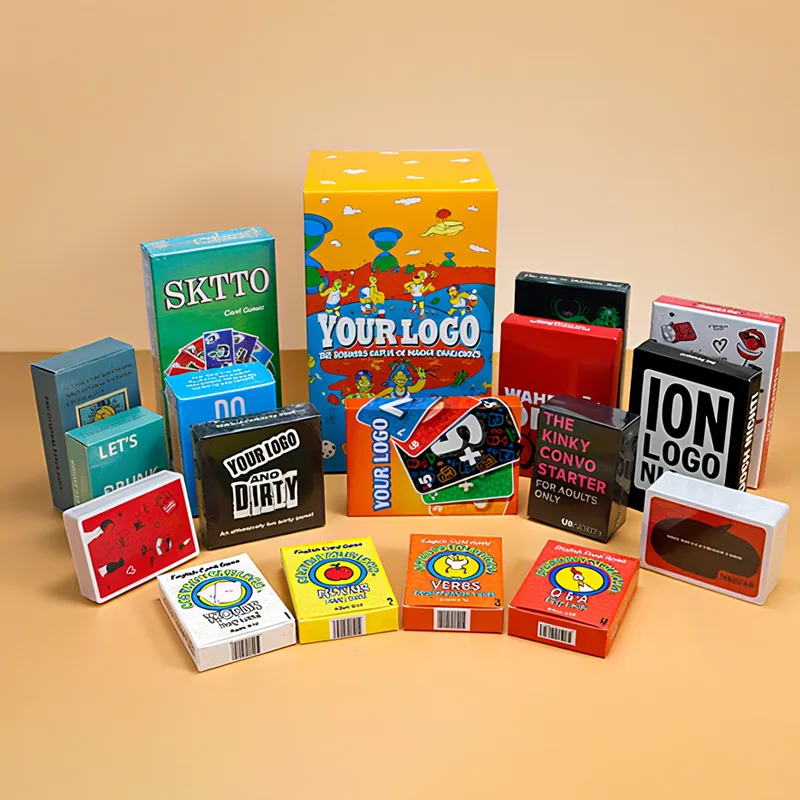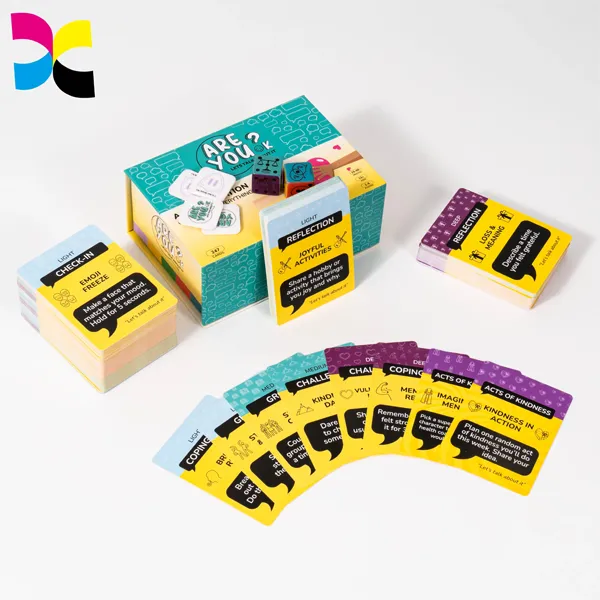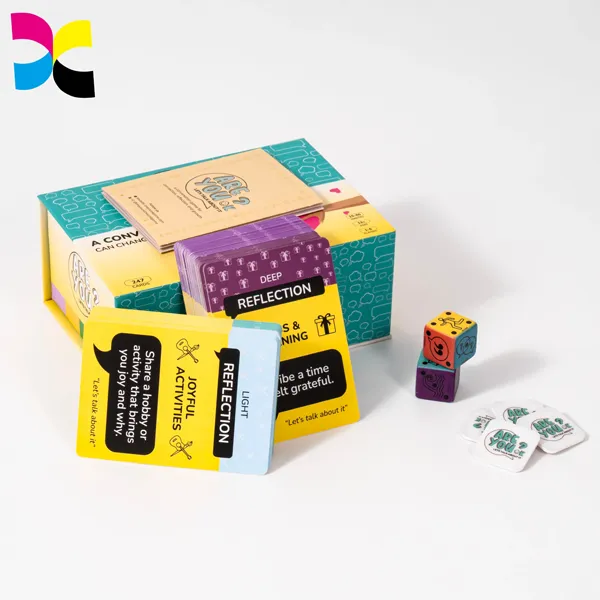
A card finish decides what the artwork looks like under a lamp and how the deck feels in a shuffle. Choosing it from a screen mockup is risky, because a photo flattens the difference between a reflective surface and a diffusing one.
This guide compares the matte and gloss options on our own finish pages using the wording published there. It covers what each surface does to light, the thickness a protective layer adds, and how to check a matte vs glossy card finishes decision before production.
Why Matte and Gloss Read Differently
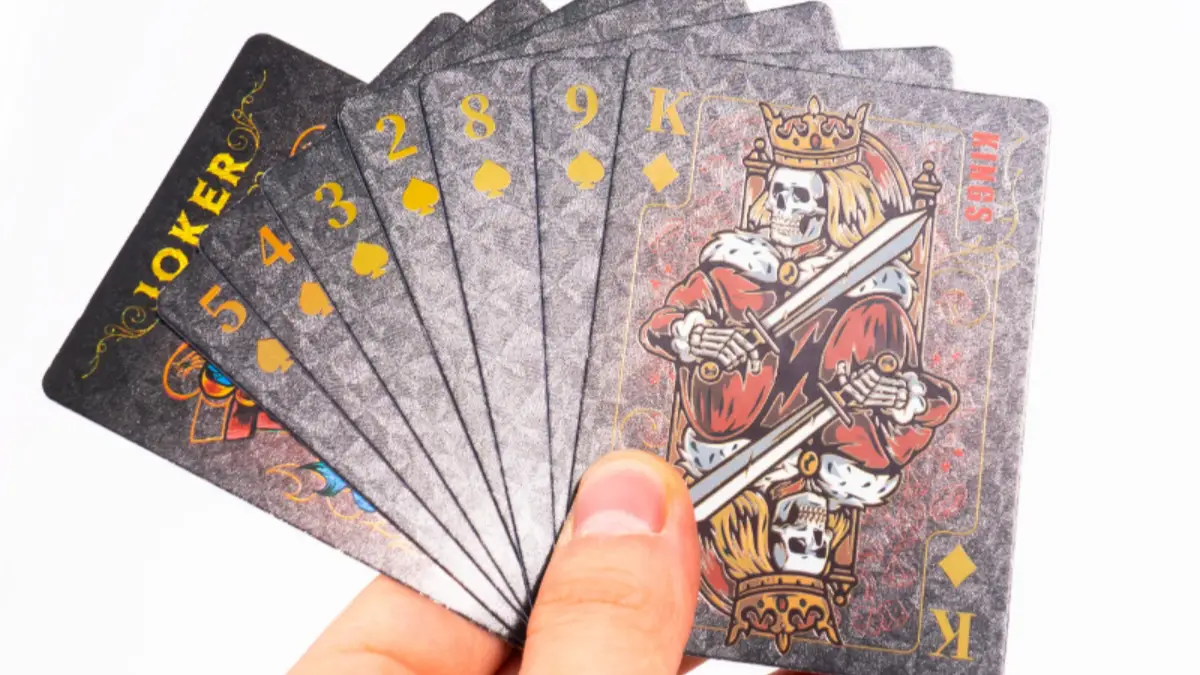
A glossy surface reflects light in one direction, so a lamp or a camera flash bounces back as a bright band. A matte surface scatters that light in many directions, so the artwork stays readable. The page on specular reflection describes the same split: glossy paints show a larger specular component, while matte paints behave almost as diffuse reflectors.
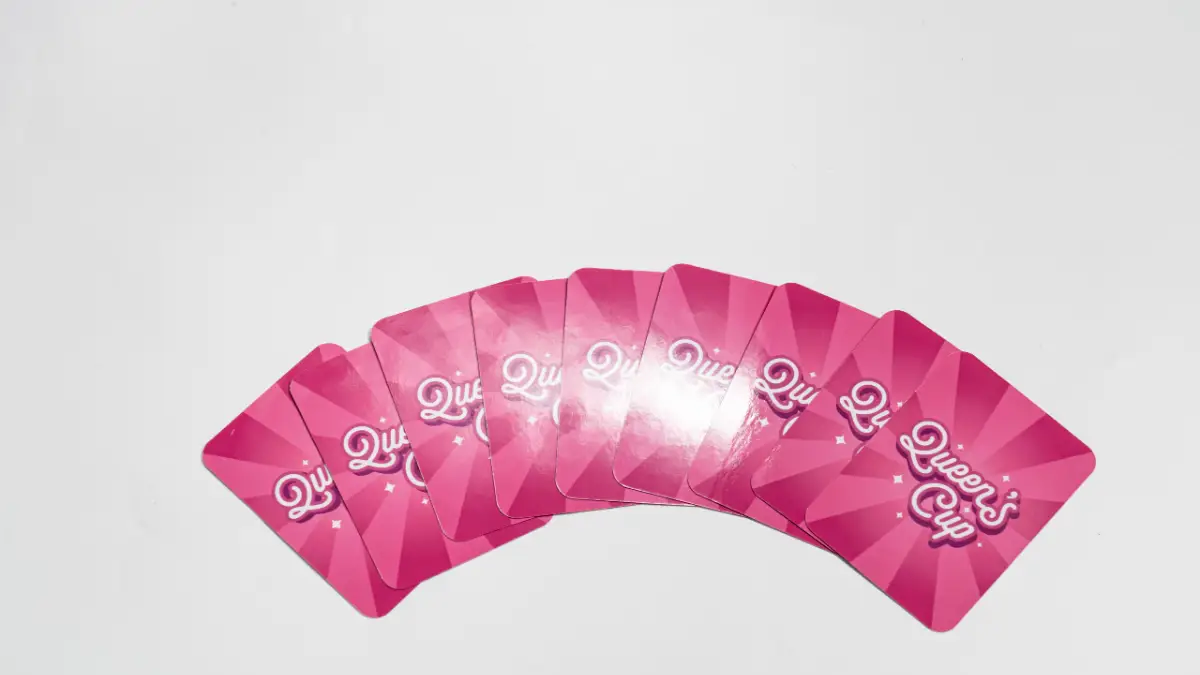
Our finish pages use matching language. Gloss lamination is listed as “vivid color saturation with wipeable barrier protection”. Matte lamination is listed as “low-glare elegance with smooth fingerprint resistance”. One pushes more color back to the eye, the other holds glare down.
Print shops measure the difference instead of eyeballing it. A gloss meter shines a beam at a fixed angle and reads the reflection at the matching angle, which turns sheen into gloss units. The glossmeter reference explains that geometry.
Matte Options: Laminação, Varnish and Film
The catalogue splits protective layers into films and coatings. A film is bonded to the printed surface, a coating is applied liquid on press and cured. Matte appears in both groups, and they do not behave the same.
- Laminação fosca is a film, described as low-glare with smooth fingerprint resistance.
- Matte varnish is a coating that keeps “natural paper tactile texture” and adds “basic rub and scuff protection”.
- Soft-touch lamination is a velvety film the page assigns to “luxury collector decks and boxes”.
- Anti-scratch film is a “toughened matte film resisting scuffs on dark, high-use surfaces”.
- Linen textured film adds a “fine woven texture providing tactile grip and smooth card gliding”. O support FAQ notes that matte lamination is a film while linen is an embossed pattern that changes grip and shuffle feel, e the linen finish guide covers the pattern.

Read those lines as the surface each layer produces, not as a durability ranking. The catalogue publishes no claim that one matte option outlasts another.
Gloss Options: Verniz, Lamination and Spot Coating
Gloss appears in the same two groups, plus a third role where a glossy layer sits on a non-glossy base for contrast.
- Gloss varnish is the lightest entry, described as a “lightweight protective coating enabling ultra-smooth casino slip”.
- Laminação brilhante is a film that adds “vivid color saturation” and a “wipeable barrier protection” superfície.
- Spot ultraviolet coating is listed as “localized gloss contrast highlighting logos and focal illustrations”.
- Raised three-dimensional ultraviolet coating is a “high-build tactile clear resin providing physical fingertip relief”, so the gloss is felt as well as seen.

Matte vs Glossy Card Finishes Compared
The table keeps to the wording on our finish pages and the figures on the materials page. Anything the site does not publish is left out rather than estimated.
| Question | Matte side | Gloss side |
|---|---|---|
| How the page describes it | Low glare, smooth fingerprint resistance | Vivid saturation, wipeable barrier |
| What it does to light | Scatters it, so highlights disappear | Reflects the source as a bright band |
| Hand feel | Velvety film, or paper texture under varnish | Ultra-smooth casino slip |
| Grip and shuffle | Linen film adds grip through an embossed pattern | Smoother face, pattern underneath still controls glide |
| Thickness at 300 GSM | 0.325 mm varnished, 0.357 mm laminated | Same table, same 0.032 mm film allowance |
| Where the page places it | Collector decks, caixas, dark high-use surfaces | Gameplay decks, color-led artwork, contrast coatings |
The lamination allowance comes from that reference table. No 300 GSM the board moves from 0.325 mm varnished to 0.357 mm laminated. The same steps are 0.382 para 0.4125 mm at 350 GSM and 0.416 para 0.458 mm at 400 GSM. Those are reference values, and actual thickness varies by mill and paper characteristics, so the current mill, GSM, thickness and finish compatibility are confirmed at quotation. The thickness guide explains how GSM, millimeters and points relate.

Choose the Finish by Card Product
Finish decisions get easier when they start from the product rather than the surface.
- Collector and trading decks. Soft-touch and anti-scratch films are the entries written for collector boxes and dark surfaces.
- Gameplay decks. Gloss varnish is the entry that mentions casino slip, and linen film is the one that mentions grip and gliding. Both describe shuffle behavior rather than looks: cartas de jogar e card game decks.
- Board game components. Boxes and cards can carry different surfaces, and the soft-touch description includes boxes. Cartas de jogo de tabuleiro e game card printing cover the combinations.
- Education and promotional cards. These are handled repeatedly and wiped, which is the case the gloss lamination wording describes with a wipeable barrier: impressão de cartão flash.
Cost is a separate decision from sheen. A finish changes the layer count and the inspection step, and both are quoted with stock and quantity. The card printing cost guide shows where that line item sits.
Combine Matte and Gloss Selectively
Our finishes page puts the layers in a fixed order. First protect the surface with a lamination or a varnish. Then emphasize with spot ultraviolet coating, frustrar, embossing or debossing. Then complete the piece with sprayed or gilded edges once the surface finish is settled.
The common combination is a matte base with localized gloss. Spot coating sits on a low-glare laminate so a logo or a focal illustration catches light while the rest of the card stays subdued. The raised option does the same job with visible relief.
Both need their own file. The page requires a separate single-color mask or layer showing only the areas that receive foil, spot coating, embossing or debossing. It also states that the final file structure is confirmed before sampling. The file setup page lists those mask rules next to bleed and color requirements.
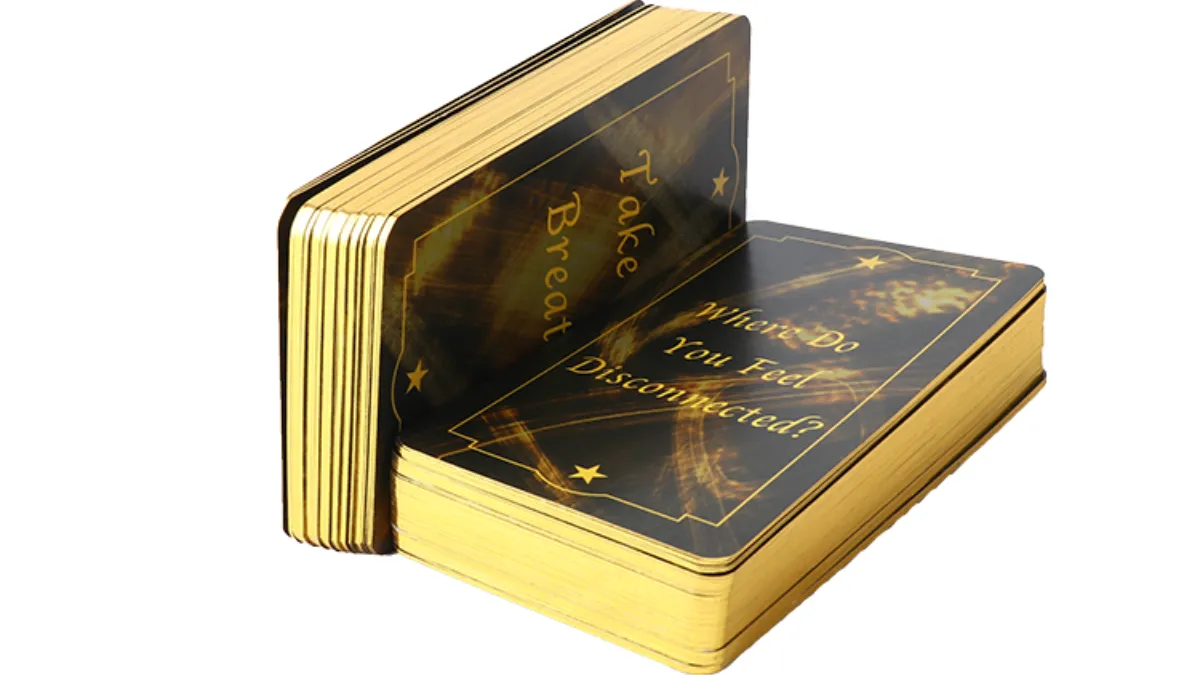
Edges come last for the same reason. Gold gilding and sprayed color are approved after the stock and the surface finish are fixed. A smooth gold edge and a matte gold edge are then two different specifications on a laminated deck.
Check the Finish Before Production
The finishes page pairs every protective layer with something to approve. For a lamination, check the film on the chosen paper and against the artwork colors, since glare and hand feel are what it controls. For a varnish, confirm gloss or matte appearance and paper compatibility. For spot coating or foil, review the mask and its registration. For embossing or debossing, review the die area and the stock thickness.
Our sampling page separates what each approval route can prove. A material sample pack shows paper, coatings and finish effects, but not your artwork, component fit or final assembly. A digital proof is typically free and confirms layout, texto, posicionamento da imagem, card order and dieline alignment. The page states plainly that it does not reflect physical paper feel, final printed color or finish texture. A pre-production sample is where print, color direction, card feel, finish alignment and box fit are checked together.
Plan the timing around that route. A typical card and box project runs at 200 sets and a single loose card run at 1,000 pieces, with custom samples quoted at 5 para 7 dias. The material sample pack may be free while international freight is paid by the buyer.
Perguntas frequentes
Is matte lamination the same as matte varnish?
Não. The finishes page lists lamination under protective films and varnish under coatings. A film is bonded to the surface and is the entry described as low-glare with fingerprint resistance. A varnish keeps natural paper texture and adds basic rub and scuff protection. The materials table shows the film route adds about 0.03 mm at 300 GSM, so the two are not interchangeable in a thickness specification.
Which finish shows fingerprints more easily?
Matte lamination is described as offering smooth fingerprint resistance, so it is the option chosen to keep handling marks less visible. Gloss lamination is described as wipeable, which means a mark is cleaned rather than hidden. Confirm either one on a physical sample against your artwork colors.
Can one card use both matte and gloss?
Sim, and that is what the spot coating entries are for. A matte laminate can carry localized gloss over a logo or a focal illustration, and the raised option adds physical relief. Send a separate single-color mask or layer for the treated areas, and expect the file structure to be confirmed before sampling.
Does a finish change how thick the card feels?
Sim, and the effect is measurable. Our reference table moves 300 GSM stock from 0.325 mm varnished to 0.357 mm laminated, with similar steps at 350 e 400 GSM. The page notes that actual thickness varies by mill and paper, so the finished caliper is confirmed with the paper mill and grade at quotation.
Considerações Finais
Matte and gloss are not a style preference with a hidden performance penalty. They are two ways of handling light, and each is available as a film or a coating with its own thickness and approval step. Decide what the surface has to do first, then pick the layer that delivers it.
Write the specification in the order our pages use: produto, stock and GSM, protective layer, then an emphasis layer with its own mask. The edge treatment comes last. Then check the finish on a physical sample before a pre-production run, because a screen cannot show glare.
Compare Matte and Gloss Samples