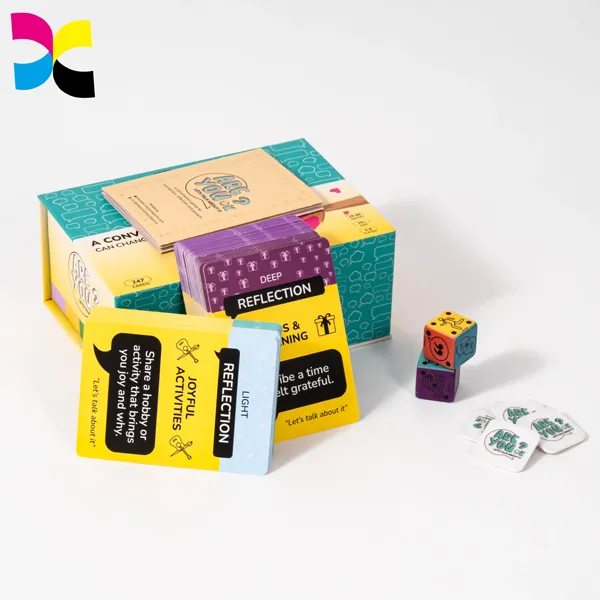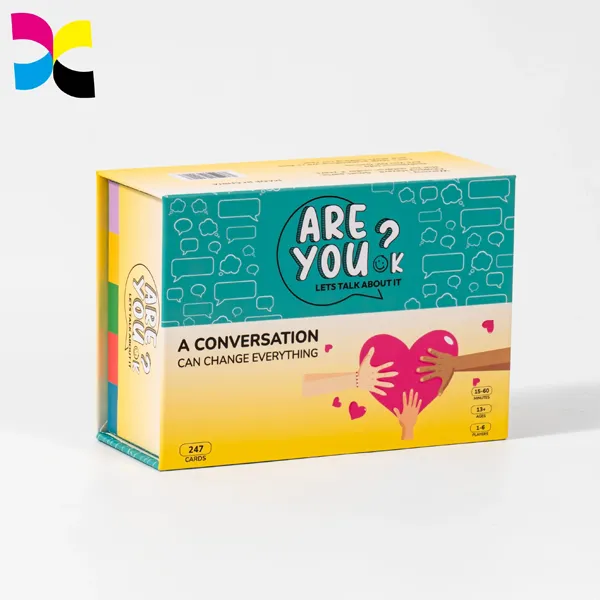
アートワーク & File Setup
Prepare every card face around the approved trim, 出血する, and safe-area guides to reduce white edges, clipped text, and unexpected color shifts.
今日は無料の見積もりを入手してください
Set Up Bleed, Trim, and Safe Areas
The bleed, trim, and safe area each control a different production risk. Use the approved dieline as the reference for every face and back.
Convert RGB artwork before export to reduce unexpected color shifts.
Use high-resolution images at final print size.
Extend background artwork beyond every trim edge.
Package linked images and outline or embed fonts where appropriate.
Card front
Place artwork, イラスト, シンボル, 番号付け, and text within the safe area. Each card may use a different front design.
Card back
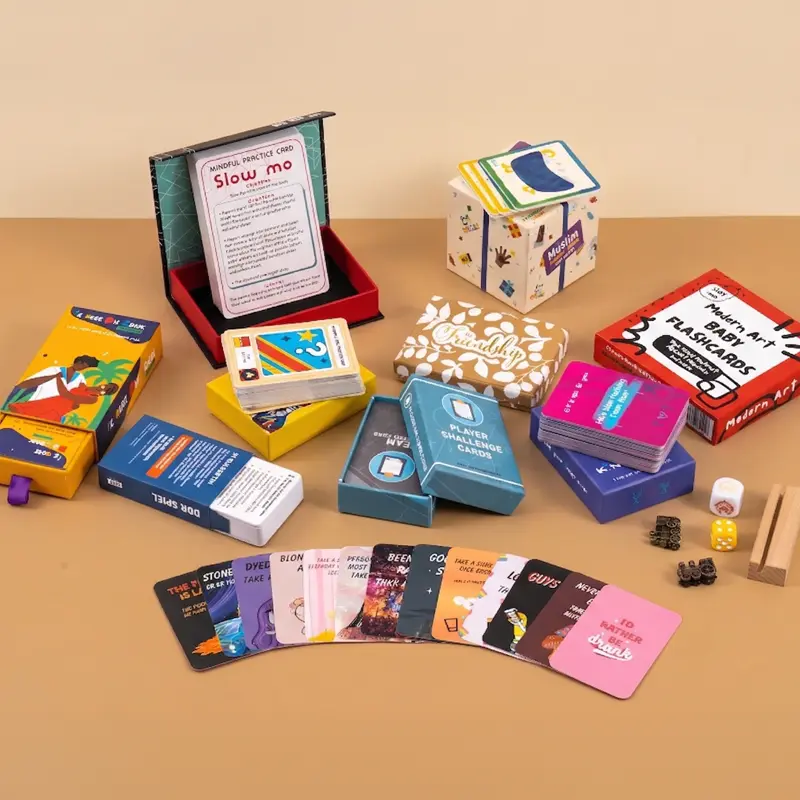
Most decks use one shared back. Multiple backs are possible, but every design still needs the same bleed and safety checks.
丸い角
Most card decks use rounded corners. Tarot and similar formats commonly use a 3–5 mm radius; confirm the final die line before artwork lock.
Organize the deck before upload
File names & order
Number card faces consistently, identify every shared or alternate back, and include duplicate designs in the final card count.
Print & reference files
Keep the approved dieline or guide separate from print artwork so trim, fold, and safe-area marks are not printed by mistake.
Selective effects
Foil, スポットUV, エンボス加工, and debossing normally need a separate mask or artwork layer. Ask us to confirm the file structure before export.
Avoid narrow uniform borders: normal die-cutting movement can make thin borders look uneven. Use a wider border or extend the artwork through the trim.
Before export
A compact preflight checklist
- Final size and corner radius match the approved dieline.
- Backgrounds extend through the 3 mmブリード.
- Text and logos remain inside the safe area.
- Images are 300 DPI at final size and colors are CMYK.
- Fonts and links are embedded, outlined, or packaged.
- Card order, 重複, shared backs, and special-finish layers are clearly identified.