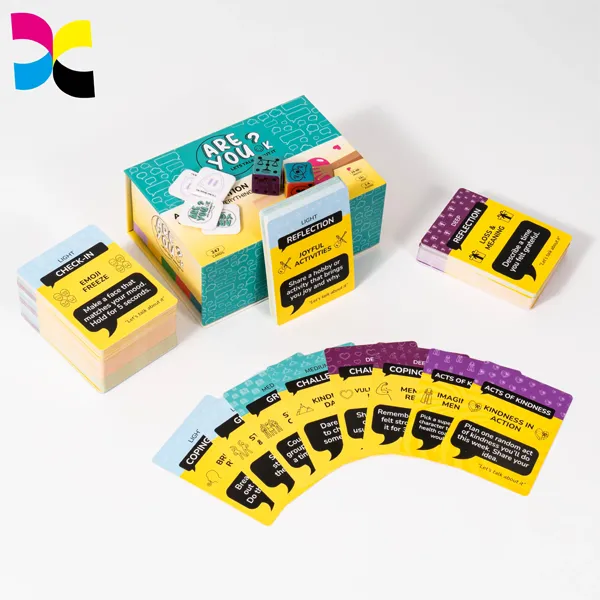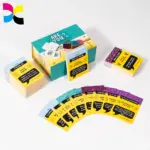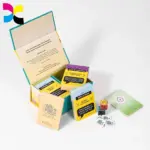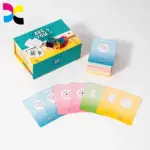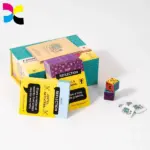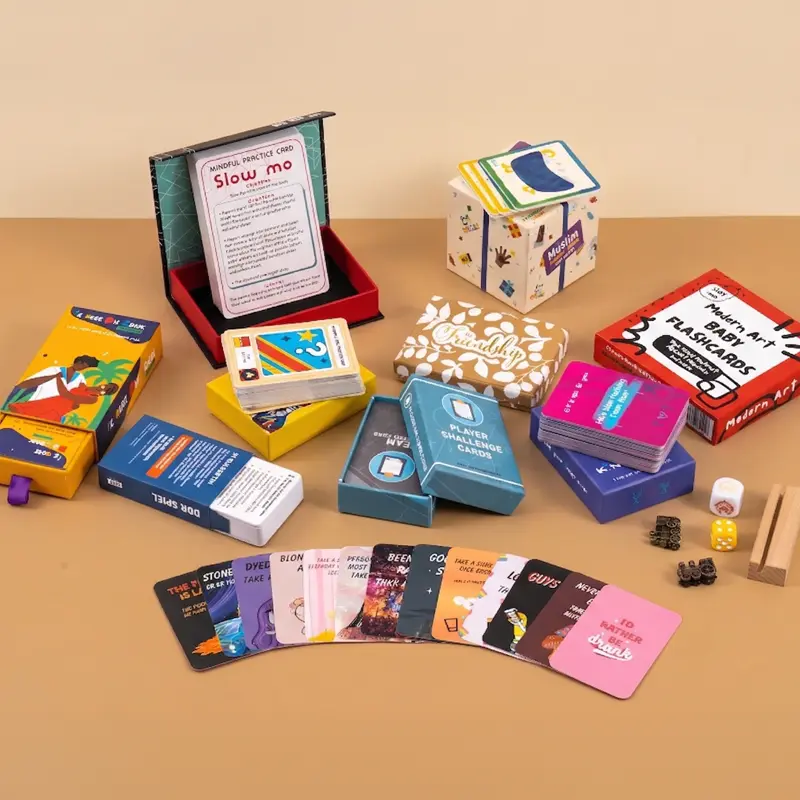
用紙の種類を選択することで、カスタム アファメーション デッキの生産マージンと小売価格決定力が決まります. 触感の品質と単価のバランスが取れていない場合、毎日の治療や教室での使用で急速に劣化する薄っぺらな素材が残ります。.
この分析では、材料密度と表面コーティングを商業生産基準に対してベンチマークします。. 信義カード印刷 標準の 300gsm ストックから耐久性の高い 400gsm のブラックコアオプションまでの仕様を評価して、物理的耐久性と最適な製造コストを調整するのに役立ちます.
アファメーションカードに紙の選択が重要な理由
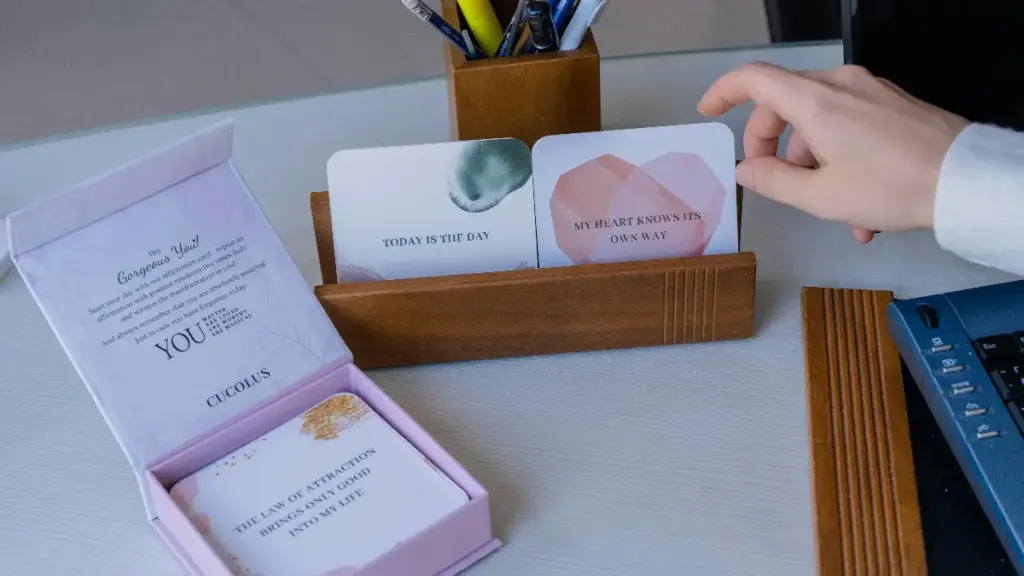
適切な論文がアファメーションデッキの寿命と市場価値を決定する. 厚手のカードストックで耐久性を確保, プレミアムな仕上げにより、テキストの読みやすさと小売での魅力が向上します。. 美学を超えて, デッキの物理的な品質が、 アファメーションカードのメリット 毎日の儀式において信頼できるツールであり続けることを保証することで、.
耐久性とカードの寿命
アファメーションカード 激しい取り扱いに耐える. 毎日のプル, 集団通過, 常にすり替えられるため、繰り返しの使用に耐えられる素材が必要です. 350gsm ~ 400gsm の厚めのカードストックは、これらの厳しい作業中に摩耗に強く、しわを防ぎます。.
印刷品質とユーザーの認識
紙の選択によって、ユーザーが印刷されたアートワークやテキストをどのように操作するかが決まります. コート紙の選択は、色の鮮やかさと画像の鮮明さに直接影響します。. 高品質のコーティングされたストックにより、テキストが鮮明で読みやすくなります。, 暗い環境でも.
ビジュアルを超えて, カードの物理的なタッチが購入の意思決定につながります. ソフトタッチやマットラミネートなどのプレミアム仕上げにより、すべてのカードの触感が向上します. この感覚的なアップグレードはデッキの小売価値を即座に高め、購入者に品質を知らせます。.
カスタム アファメーション カードの用紙の種類
正しいカードストックコアを選択すると、デッキの不透明度が決まります, 耐久性, そしてエッジ仕上げ. 材料の密度を生産量と視聴者の要件に合わせます.
| 芯材 | 内部コアの色 | 不透明度 (ライトブロック) | ベストユースケース |
|---|---|---|---|
| ホワイトコア | クリスプホワイト | 標準 (最小限の裏写り) | 高速プロトタイピング, 鮮やかな色の境界線, 予算に優しいデッキ |
| ブルーコア | ダイブルー | 高い (アクティブな遮光) | 商業小売デッキ, プロ仕様の両面印刷 |
| ブラックコア | 濃密な黒 | 最大 (100% 不透明) | プレミアムコレクターエディション, カジノグレードのデッキ, インクを多用するデザイン |
| FSC & リサイクル | クラフト / 白 | さまざま (厚さに基づいて) | 環境に配慮したブランド, 有機的な美学, 持続可能なウェルネス製品 |
白色コア紙
ホワイトコアストックはクリーンな特徴を持っています, 印刷可能な表面間の白い内層. 鮮やかな色の再現とクリエイティブなエッジ効果を実現するための頼りになる選択肢です。.
- 最適な用途: 迅速なプロトタイピングと高輝度を必要とするデッキ, きれいな境界線.
- 主な仕様: 通常 216 ~ 300gsm; サンディングまたはエンボス加工を行って白い中心を露出させることができます。.
- アドバンテージ: 優れた表面輝度を提供し、シャープな仕上がりを実現します。, 読みやすいテキスト.
ブルーコア紙
ブルーのコアには、光を遮断するように設計された染色された中心層が組み込まれています. これは高品質の業界標準です, 商業用両面デッキ.
- 最適な用途: 小売グレードのアファメーションデッキとプロフェッショナルな CMYK 印刷版.
- 主な仕様: 耐久性のある 250 ~ 400gsm の重量; 完全な不透明化を防ぐ “透けて見える。”
- アドバンテージ: コスト効率とプロフェッショナルな遮光機能のバランスを実現.
黒のコア紙
黒芯は緻密な芯材を採用, 不透明度を最大限に高めるための暗い内部層. 重いデッキを必要とするプレミアムデッキのゴールドスタンダードです。, 高級感.
- 最適な用途: プレミアムコレクターエディションと大量のインク, ハイコントラストのデザイン.
- 主な仕様: 優れた剛性; 白い継ぎ目が見えず、きれいなカットエッジを保証します。.
- アドバンテージ: 直射日光下でも完全遮光, カード表面のプライバシーを最大限に確保.
FSC認証済み & 再生紙
持続可能なオプションでは、リサイクルクラフトまたはFSC認証繊維を使用し、環境に配慮したウェルネス製品への需要の高まりに対応しています。.
- 最適な用途: サステナビリティとナチュラルを重視するブランド, 有機的な美学.
- 主な仕様: 商用耐久性基準に適合する 250 ~ 400gsm で入手可能.
- アドバンテージ: 水彩やコラージュなどのさまざまな芸術的な仕上げをサポートしながら、環境フットプリントを削減します.
スケールに合わせて構築されたプレミアム カスタム アファメーション カード
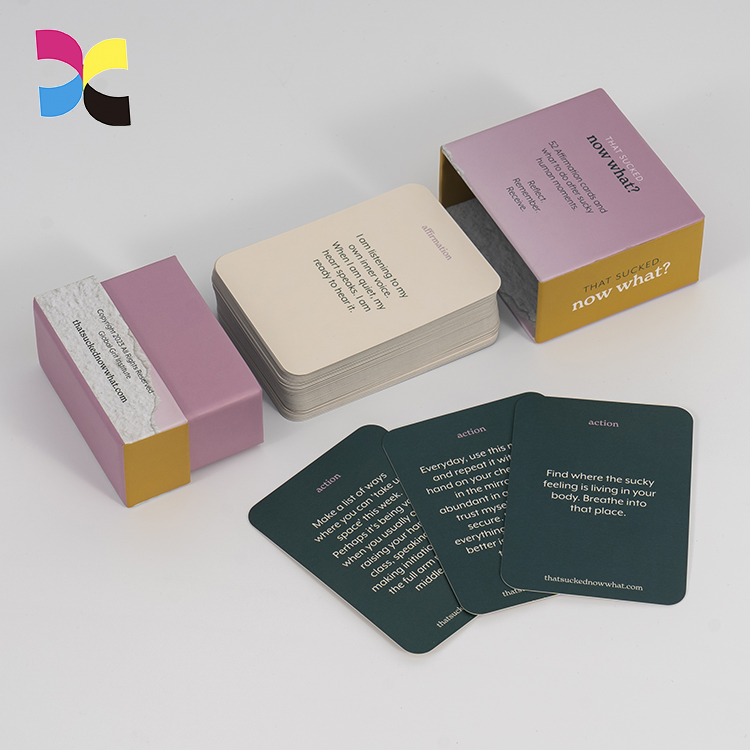
カードデッキの用紙重量オプション
カードストックの厚さによってデッキの耐久性とコストが決まります. エントリーレベルのプロモーション用の 300gsm と高級セット用の 400gsm+ のどちらを選択するかは、手触りとシャッフルの長さに直接影響します。.
| 紙重量 (GSM) | 約. 厚さ | 手触り & 柔軟性 | 市場での位置づけ |
|---|---|---|---|
| 300GSM | 0.30 mm | 軽量 & フレキシブル; シャッフルしやすい. | エントリーレベルのプロモーション & フラッシュカード |
| 320GSM | 0.31 – 0.32 mm | 標準剛性; さわやかな “スナップ” 感じる. | 中価格帯の小売用トランプ |
| 350GSM | 0.35 mm | 耐久性の高い & 硬い; 充実感がある. | プレミアムアファメーション & タロットデッキ |
| 400gsm+ | > 0.40 mm | 最大の剛性; 高級ボードって感じ. | コレクターエディション & デラックスセット |
300GSM: エントリーレベルの標準
多用途な, 110ポンドのカバーストックに相当するコスト効率の高い重量.
- 厚さ: 約0.30mm.
- 最適な用途: 販促資料, 教育用フラッシュカード, そして大量のプレゼントも.
- コアペアリング: 低価格で柔軟性と不透明性を維持するために青色のコアを使用することが多い.
320GSM: プロフェッショナル向けミッドレンジ
プロモーション品質と小売グレードの品質の間のギャップを埋めるアップグレードされた仕様.
- 厚さ: 0.31mm – 0.32mm.
- 最適な用途: 標準のトランプとプレミアム教育用ゲームデッキ.
- コアペアリング: 完全に光を遮断し、剛性を高めるために、黒のコアと組み合わせることがよくあります。.
350GSM: 耐久性の高い選択
剛性とカラーポップを優先するプロのカード作成者向けのゴールドスタンダード.
- 厚さ: 約0.35mm.
- 最適な用途: プレミアムタロットデッキ, プロのアファメーションカード, 堅固なボードゲームコンポーネント.
- アドバンテージ: 優れた表面平坦性を実現し、非常に鮮明な色再現と “スナップ” シャッフル中の感触.
400gsm+: ラグジュアリーコレクター層
極厚, 物理的な存在感と耐久性を最大限に高めるために設計された高密度ストック.
- 厚さ: 0.40mmを超える.
- 最適な用途: 豪華コレクターエディション, 耐久性の高いゲームタイル, 日常的に過酷な取り扱いにさらされる製品.
- アドバンテージ: 最大限の構造剛性と重量を提供します。, 高額な小売価格を正当化するプレミアムウェイト.
カスタム アファメーション カードの仕上げオプション
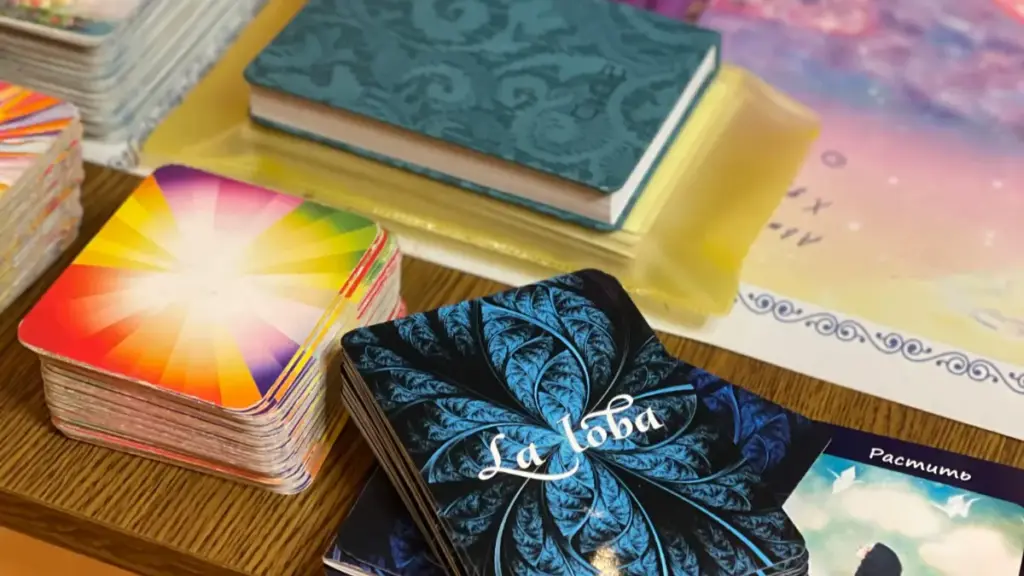
カードの仕上げは耐久性と触感を左右します. ブランドの物理的な美しさに合わせながら、激しい取り扱いから保護する適切なコーティングを選択してください.
マットラミネート
ソフトを適用します, カードストックの両面に無反射フィルムを貼る. これにより滑らかな質感が得られ、日常の摩耗からカードを保護します。.
マット仕上げによりぎらつきを軽減し、指紋が付きにくい, あらゆる照明下でもテキストを読みやすく保つ. ウェルネス ブランドは、エレガントなデザインを作成するために、このコーティングを 300 ~ 350gsm のアート紙に適用することがよくあります。, 落ち着いた外観.
グロスラミネート
光沢のある, 反射フィルムがカードをコーティングし、色の鮮やかさを高め、滑らかな表面を作り出します. 光沢仕上げは、交通量の多い環境での頻繁な取り扱いでも汚れや湿気に強く耐性があります。.
明るい, 彩度の高いデザインがこのレイヤーの下に美しく浮かび上がります. 光沢のある表面は、マットな表面よりも指紋がつきやすいことに注意してください。.
ソフトタッチ仕上げ
このコーティングはベルベットのような質感を実現します, 触感をグレードアップするスエード調の質感. プレミアムな手触りでまぶしさを軽減し、摩耗に強い, 毎日の治療習慣に完璧にフィット.
クリエイターは、ソフトタッチ仕上げと FSC 認証紙を頻繁に組み合わせて、持続可能な環境を構築します。, ハイエンドの教育製品.
スポットUV仕上げ
隆起を追加します, タイトルなどの特定のターゲット領域に光沢のあるコーティングを施す, 国境, またはブランドロゴ. この立体感の強調により、カード全体を光沢で覆うことなく、マットなベースレイヤーに対してシャープなコントラストが生まれます。.
Spot UV は、触覚的な興味を通じてユーザーを惹きつけ、大量印刷部数の知覚価値を直接的に向上させます。.
箔押し
金属箔をカードに直接プレスして、ゴールドの反射アクセントを提供します。, 銀, またはホログラフィックカラー. これらのディテールは色あせに強く、ギフトセットやプレミアムデッキの豪華な魅力を高めます。.
カード表面の箔押しとエッジの金メッキを組み合わせて、一体感を確立できます。, 高級感のある外観.
エンボス加工とデボス加工
エンボス加工によりデザインが浮き上がり、物理的な奥行きが加わります。, デボス加工により特定の要素がへこみ、微妙な凹みが作成されます。. これらの物理的なテクスチャーにより、コーティングされたカードストックを扱うときの感覚体験が強化されます。.
これらの物理的なテクスチャーと標準的なラミネートを組み合わせて保護を強化すると、ブランドのロゴと特定のアファーメーション テキストが美しく際立ちます。.
表面仕上げ比較表 & テクスチャ
| 仕上げる / テクスチャ | ビジュアル & 触覚の特徴 | デッキに最適なアプリケーション |
|---|---|---|
| 光沢 | 高光沢, 滑らかな表面, 鮮やかな色 | 画像を多用したプロモーションデッキ, 子供たち’ アファメーションカード |
| 鈍い & サテン | 光沢が低い, 写真とテキストのバランスをとる | 教育ガイドブック, 説明書カード |
| マット | フラットな外観, 光沢ゼロ, 指紋がつきにくい | 標準的な小売店のアファメーションデッキ, 毎日使える健康ツール |
| スムーズ & 羊皮紙 | 自然な風合い, 深いインク吸収 | ミニマリストカード, ジャーナリング/ライティング用に設計されたデッキ |
| レイド & リネン | 微妙, 伝統的なテクスチャーライン | プレミアムエグゼクティブギフトセット, 高級ブティックのデッキ |
| 感じた | 柔らかい, 手作り, 高級感のある触感 | 職人のスピリチュアルデッキ, エンボス加工を施した豪華なコレクター エディション |
エッジと保護仕上げ
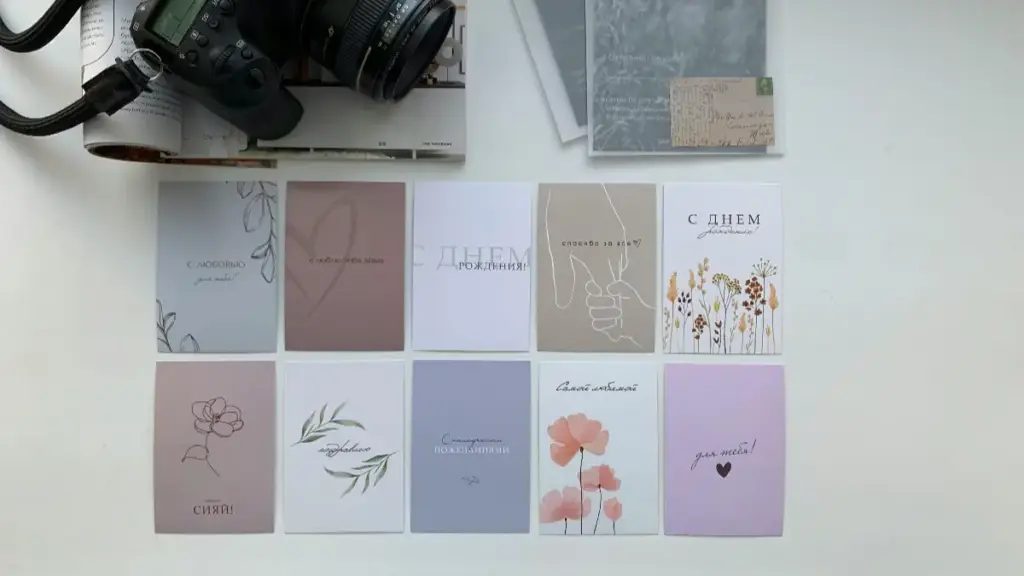
エッジと保護コーティングにより、要求の厳しい環境でも材料の寿命を延長します. これらの仕上げは湿気をブロックし、最終製品の物理的耐久性を向上させながら摩耗を防ぎます。.
色付きのエッジ
切り口に顔料または染料を塗布すると、均一な境界線が作成され、交通量の多い教育用バインダーや交通標識のパケットのほつれを防ぎます。. この仕上げにより、エッジが湿気の侵入から密閉され、湿気の多い環境や屋外にさらされた環境でも材料の寿命が延びます。. コート原紙, 光沢やシルクのような, 生徒のワークシートや案内チラシなど、頻繁に扱われるアイテムに強力な顔料接着力を提供します。.
金と銀の箔エッジ
メタリック箔押しでプレミアム感を演出, 教育証明書や交通管理レポートの変色を防ぐ反射性ボーダー. 接着プロセスではコート紙ストックに熱と接着剤を使用し、出入りの多いディスプレイフォルダーの耐久性を高めます。. この仕上げをシルクまたはサテン紙に適用すると、端が保護され、剥離することなく繰り返しの取り扱いに耐える微妙な光沢が保証されます。.
傷防止コーティング
UV ベースの傷防止コーティングは、印刷面と端に硬質ポリマー層を形成し、教育用ポスターや交通指導シートの擦り傷を防ぎます。. 印刷機はこれらのコーティングを塗布します, 紫外線で硬化させて指紋への耐性を高めます。, ダート, そして擦り傷. UV バリアントは、混雑した教室や公共のキオスクにあるアイテムを強力に保護します, ただし、コーティング後に紙に書く能力が制限される可能性があります.
耐水コーティング
水性層または UV 層が紙の表面と端に防湿層を形成し、交通地図や教育資料をこぼれや天候から保護します。. 粘土ラテックス層が細孔を埋めて固有の耐性を備えたコート紙, 全面 UV またはスポット塗布によりさらに効果が高まります。. 光沢仕上げまたはシルク仕上げで滑らかな仕上がり, チラシやパンフレット用の耐久性のあるシールで、交通量の多いシナリオでの吸収や反りを防止します。.
ブランドに適した紙と仕上げを選択する方法
紙と仕上げの選択は、業界におけるあなたの立場を直接示します。 アファメーションカード市場. 予算に合わせて, 視聴者のニーズ, 耐久性によって、デッキが安価なプロモーションとして感じられるか、プレミアムツールのように感じられるかが決まります。.
バジェットデッキとプレミアムデッキのポジショニング
予算によってベースラインが決まります, しかし、賢明な材料選択により、あらゆる段階で知覚される価値が最大化されます。.
プレミアム: 高級感のある配置にはテクスチャーが必要, マット, またはメタリック仕上げ. これらの特殊な表面は、より高い小売価格を正当化し、優れた職人技を通じて即座にブランドの名声を確立します。.
エントリーレベル: 大量の流通には、標準のコーティングされていないストックのメリットが得られます, 耐久性を備えながらコストを低く抑えます, 自然な感触.
ミッドティア: 高級市場への移行, コーティングされたストックの光沢仕上げまたはシルク仕上げにより、販促活動に最適な鮮やかな色が生成されます.
対象読者に合わせた素材の提供
物理的なマテリアルをエンドユーザーの具体的な期待に合わせる必要があります. 異なる視聴者は根本的に異なる方法でカードデッキと対話します.
- プロモーション対象者: 光沢とシルク仕上げにより彩度が向上. そのため、迅速な視覚的エンゲージメントをターゲットとした、画像を多用したプロモーション資料に最適です。.
- 教育機関および企業ユーザー: マット, 鈍い, コーティングされていない紙はぎらつきを解消します. 長時間の読み書きでも目が疲れずにサポートします。.
- 高級品消費者セグメント: リネンのような質感のある仕上がり, 感じた, またはスエードは、高品質と独占性を即座に示す触覚的な次元を追加します。.
- 環境に配慮した市場: 天然のクラフト紙や織紙には目に見える木目が表示されます. これにより、持続可能性と環境に優しい実践に焦点を当てている視聴者に生の真実性が伝わります。.
美観と耐久性のバランス
収益性の高いデッキには、視覚的なインパクトとの間の妥協が必要です, 寿命, そして製造費. 光沢コーティングが鮮やかさをもたらしながらも、, マットな代替品は、指紋や映り込みに対する優れた耐性を提供します.
予算内で耐久性を重視するなら, コーティングを落とすと、次のような印刷コストを削減できます。 20% に 30% プロフェッショナルな外観を損なうことなく. 視覚的な鮮明さを確保するために、常に物理サンプルの明るさを評価してください。, 最終製品がコアブランドアイデンティティと一致していることを確認する.
最終的な考え
予算のカードストックに落ち着いたら、初期生産コストが削減される可能性があります, しかし、最終的にはデッキの小売価値と日常寿命を破壊します。. 専用の不透明コアと組み合わせたプレミアム 350gsm ~ 400gsm ウェイトを選択することが、急速な物理的磨耗からブランドを保護する唯一の信頼できる方法です. この触感上の優位性により、より高い価格帯が即座に正当化され、競争市場でリピート購入者のロイヤルティが確保されます。.
物理的な品質を推測せず、手触りと耐久性を自分で確認してください。. カスタム仕上げとコアの不透明度を直接テストするには、物理的なサンプル キットをリクエストすることをお勧めします。. 今すぐ私たちのチームにご連絡ください OEM 仕様を計画し、次の商業印刷版の印刷を確保します。.
よくある質問
アファメーションカードに最適な紙の種類は何ですか?
しわやインクのにじみを防ぐには、プレミアムカードストックが最適です。. 交通量の多い治療や教室環境で使用されるデッキ用, 350 GSM 重量は、損傷に耐え、寿命を延ばすために必要な耐久性を提供します。.
ウェルネスデッキで最も人気のある仕上げはどれですか?
マットまたは光沢の少ない仕上げがウェルネス ブランドの業界標準です. これらのコーティングはまぶしさを軽減します, 指紋を隠す, 自然な雰囲気を保ちながら、落ち着いた美しさを提供します。, 毎日の瞑想儀式中の地に足の着いた触覚体験.
日常的に使用するデッキに最適な紙の厚さはどれくらいですか?
の厚さ 320 に 350 GSM(約0.35mm~0.40mm)は完璧なバランスを提供します. この重量により、カードが通常のシャッフルや曲げにも破れることなく耐えることができます。, 快適な取り扱いのために十分な柔軟性を保ちながら.
環境に優しいカード用紙とは?
持続可能なオプションには以下が含まれます 100% 使用済みのリサイクルカードストックまたは麻などの樹木を含まない代替品, 竹, そして綿. 大量生産向け, 農業廃棄物とストーンペーパーは、ブランドの環境フットプリントを大幅に削減しながら、優れた耐久性を提供します.
とは何ですか “黒芯” カスタムカード用の紙?
黒色のコアカードストックは、光の透過を完全に遮断する暗い内部層を備えています。. これにより完全な不透明度が保証されます, 両面アートワークの裏写りを防止. 構造的な剛性を高め、プレミアム感を生み出します。, プロのデッキのためのクリーンカットエッジ.
プレミアムカードデッキの紙はどうやって選ぶのですか??
取り扱いのニーズに基づいて 310 ~ 350 GSM の重量を選択してください. シャッフル中に完全に不透明にするために黒のコアを使用します, または鮮やかな色再現のための白芯. デッキをマットラミネートまたはスポット UV 仕上げで完成させます。.