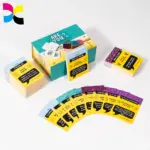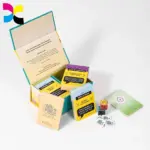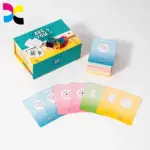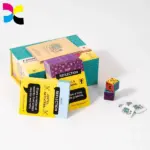
Sourcing custom math flashcards without a clear production standard creates products that fail in the classroom. Low-grade card stock, impression mal alignée, and poor cornering lead to negative reviews and unsellable inventory, directly damaging your brand’s educational authority and profit margins.
This guide covers the production side: building a set that survives daily classroom handling. It compares card stocks in the 300–350 gsm range, writable versus laminated finishes, and the proof and packaging checks to run before a bulk order.
Designing Two-Sided Layouts for Math Flashcards
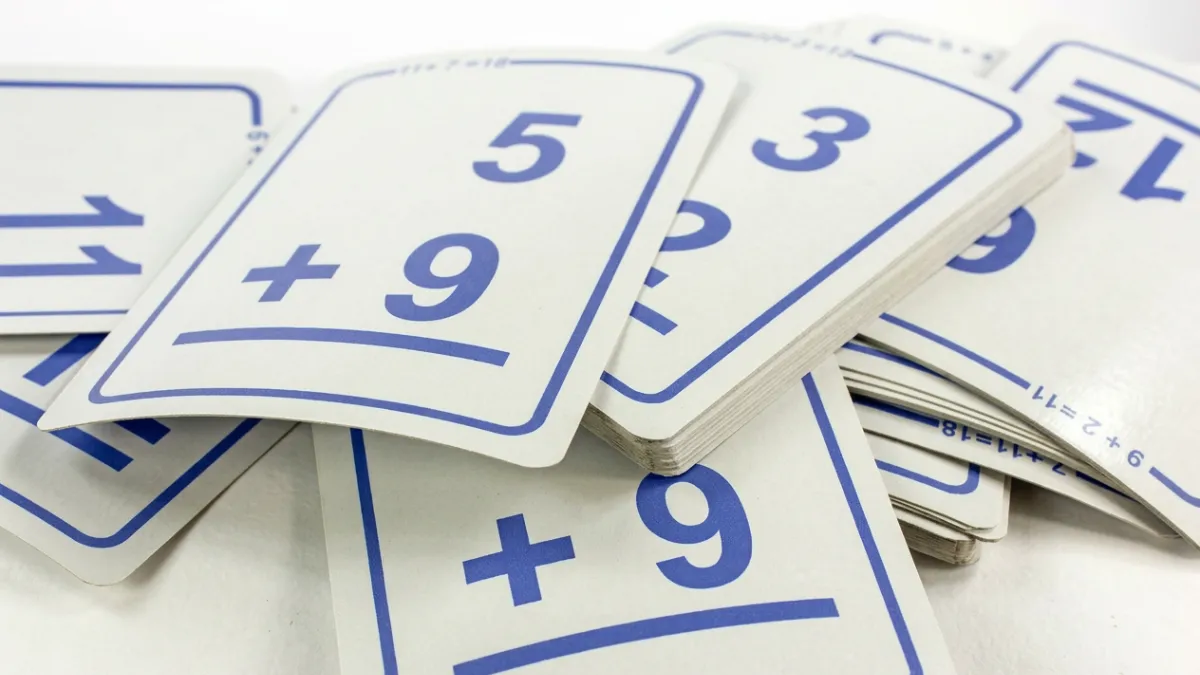
Print-ready math cards need one prompt per face, a reliable question-to-answer pairing, and type large enough to read at arm’s length.
Production layout starts where the teaching method ends. Each card must isolate a single, unambiguous idea so the learner retrieves one answer instead of reading a paragraph. The learning-science case for that rule—active recall and spaced repetition—sits in our guide on how effective flashcards are for studying.
For a print job, those methods translate into concrete artwork requirements. Fronts and backs print as two aligned layers on the same sheet, and the guillotine cut must land each question on its own answer. Number every card in the artwork file so a pairing error traces to one position, not to the whole deck.
Prompt and Answer Pairing
- One question per front: “7 × 8 = ?” asks a single thing. A mixed prompt like “7 × 8 − 3” hides which step failed.
- One answer per back: print only “56”. Worked steps belong on a separate explanation card or in the insert sheet.
- Matched card counts: require the proof to list identical counts of prompts and answers. One off-by-one shift pairs every question with the wrong answer.
Type Size and Legibility
Set problems large enough to read at arm’s length, then review the type at true card size instead of on a zoomed screen. Generous margins keep digits clear of trim lines and rounded corners. Diagrams and number lines earn space only when they explain the concept; decorative clutter slows recognition.
Proofreading the Answer Key
Ask for a numbered proof listing every prompt, its answer, and its card position, then check it against your own answer key before sign-off. A single wrong fact—say “7 × 8 = 54″—printed across thousands of decks becomes returns, refunds, and a review page full of corrections.
Taille de la carte, Grammage du papier, and Finish
Choose the size for the content, the stock for the handling, and the finish for the use case—then approve all three on a physical sample.
Sizes That Fit Math Content
Compact 3″ x 5″ cards suit drill decks a child can hold; larger 4″ x 6″ cards give room for arrays, fraction strips, and place-value grids. Le flash card dimensions guide lists standard sizes and bleed settings for artwork files. Hole-punched cards on a binder ring keep sequenced sets together, a common choice for skip-counting decks.
Paper Weight in the 300–350 gsm Range
Discuss a suitable stock in the 300–350 gsm range and approve the feel with a physical sample. Do not assume pound and gram figures are interchangeable. Per our flash card paper guide, 300 gsm maps to roughly 110 lb cover, alors que 130 lb cover lands near 350 GSM. Pick one unit, state it in the quote, and confirm it on the sample.
Finish and Write-On Surface
Gloss or matte lamination protects against spills, pocket grease, and smudging. Uncoated stock takes pencil and light marker, which suits fill-in-the-blank and student-created problem cards. The trade-off is real: an uncoated deck in a backpack scuffs faster, while a laminated card stays clean but will not take writing.
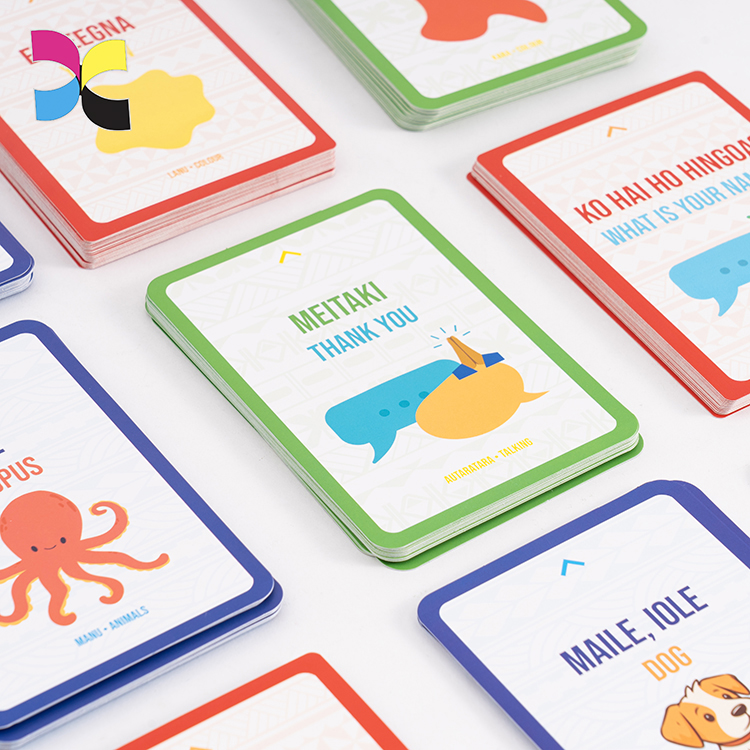
Rounded corners resist the bending that square-cut classroom cards almost always show within a term, and they are kinder to younger hands.
Check a Physical Sample Before Production
Packaging for Retail and Classroom Sales
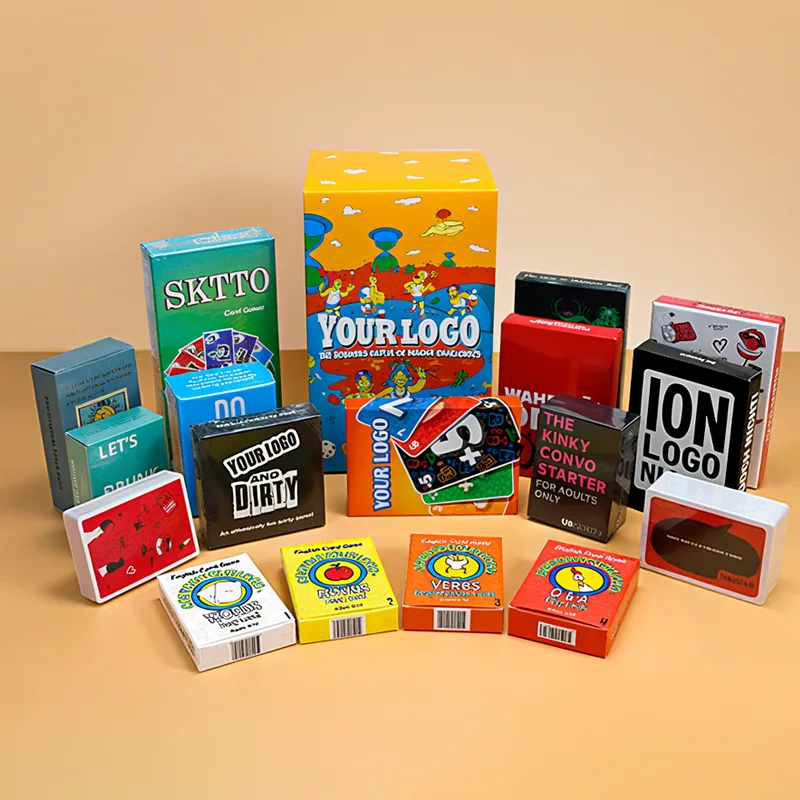
Match the box to the sales channel. Tuck boxes fit retail shelves, rigid boxes survive classroom handling, and shrink wrap serves bulk distribution.
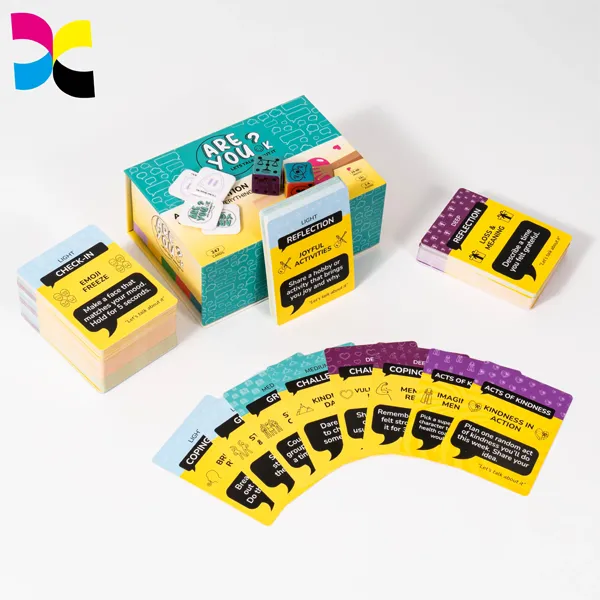
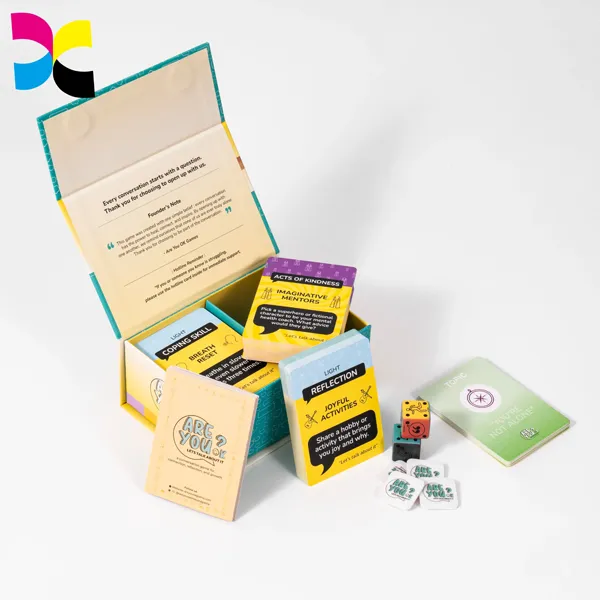
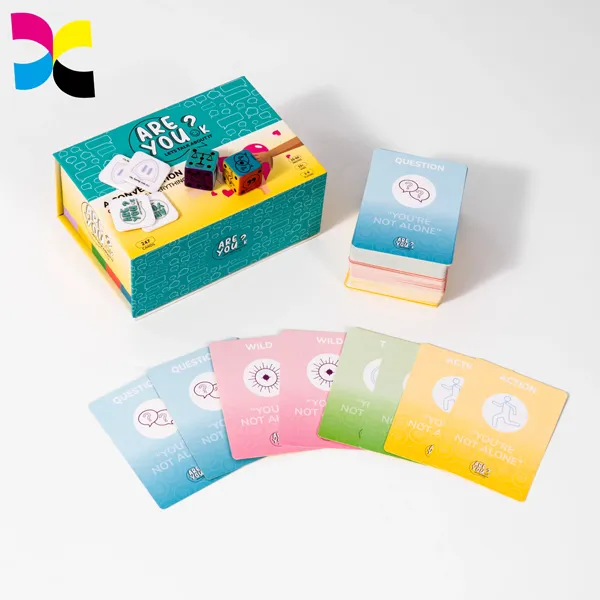
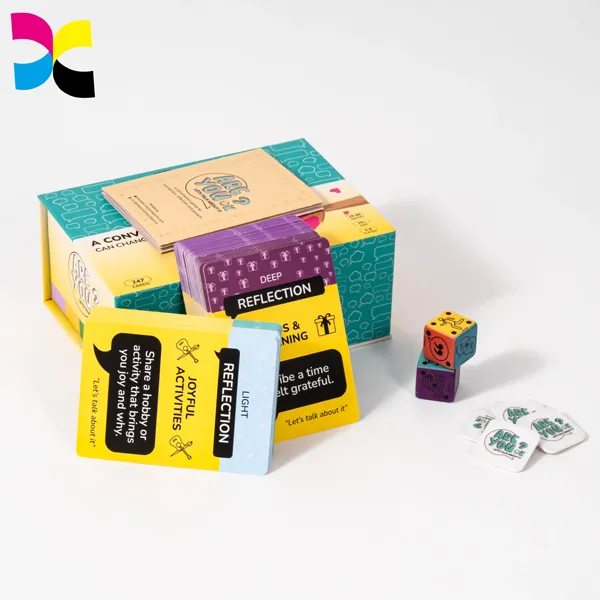
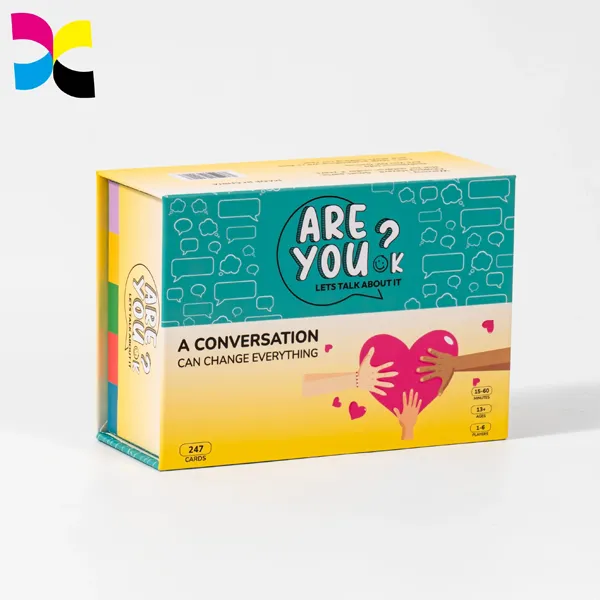
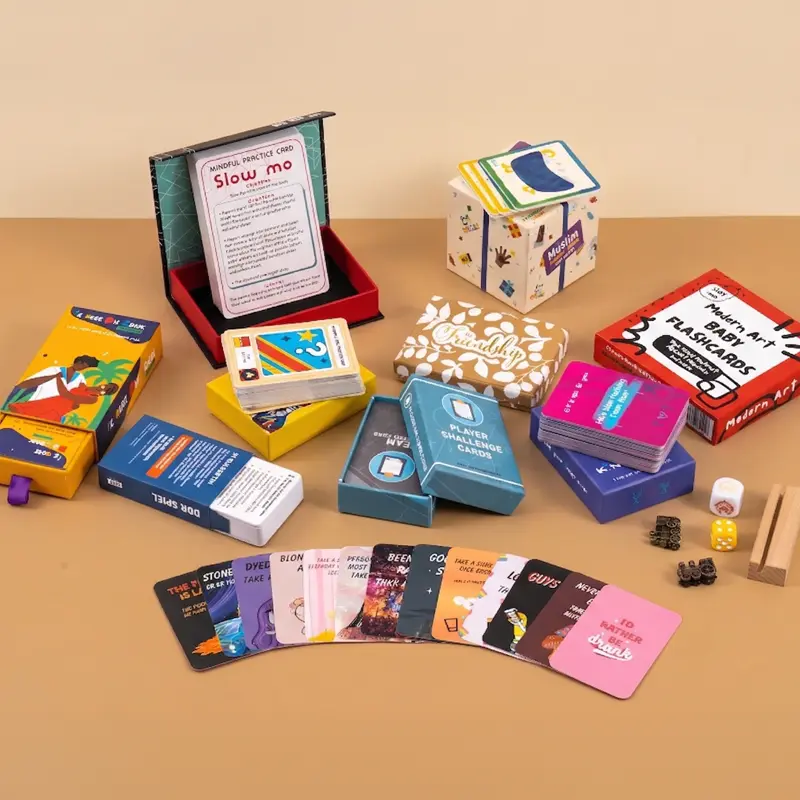
The physical box must match where the deck lives. A cheap box on a classroom shelf falls apart in weeks; a rigid box on a low-cost retail item eats the margin. Our standard custom flashcard product ships each deck in a durable rigid box, prêt pour la vente au détail, and lighter structures are available on request.
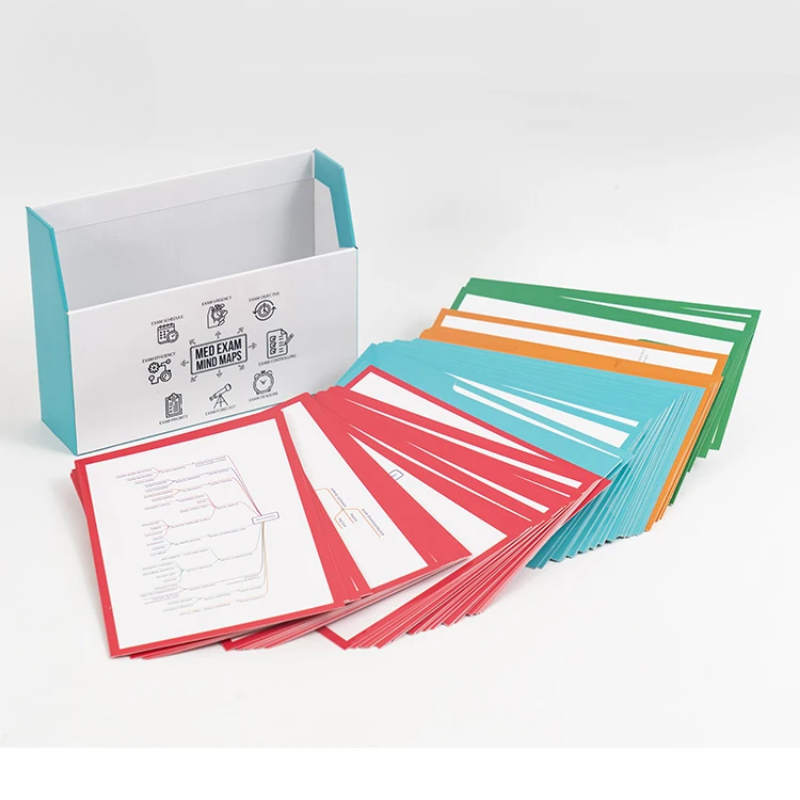
- Boîtes à ranger are the cost-effective retail standard; a hanging peg-hole version suits pegboard displays.
- Boîtes rigides handle shared classroom bins and gift-set positioning, at a higher unit cost.
- Shrink wrap or poly bags work for bulk school orders where individual packaging is unnecessary.
- Internal dividers or trays sort large curriculum sets by topic or skill level.
Print the skill, grade band, and card count on the front face. A teacher should identify a multiplication set from a shelf without reading fine print, and color-coding across a product line does that job faster than any tagline. A QR code linking to practice pages adds value without touching unit cost.
Échantillonnage, Proofing, and Mass Production
A custom deck moves through file check, proofs, approbation de l'échantillon, impression, finition, coupe, and packing. Each stage holds one decision that is yours to sign.
Prepress starts with your artwork: card layout, dielines, and bleed settings are checked before any sheet prints. Cards then run on large sheets, receive lamination or coating, and are die-cut, collated, and inserted into packaging.
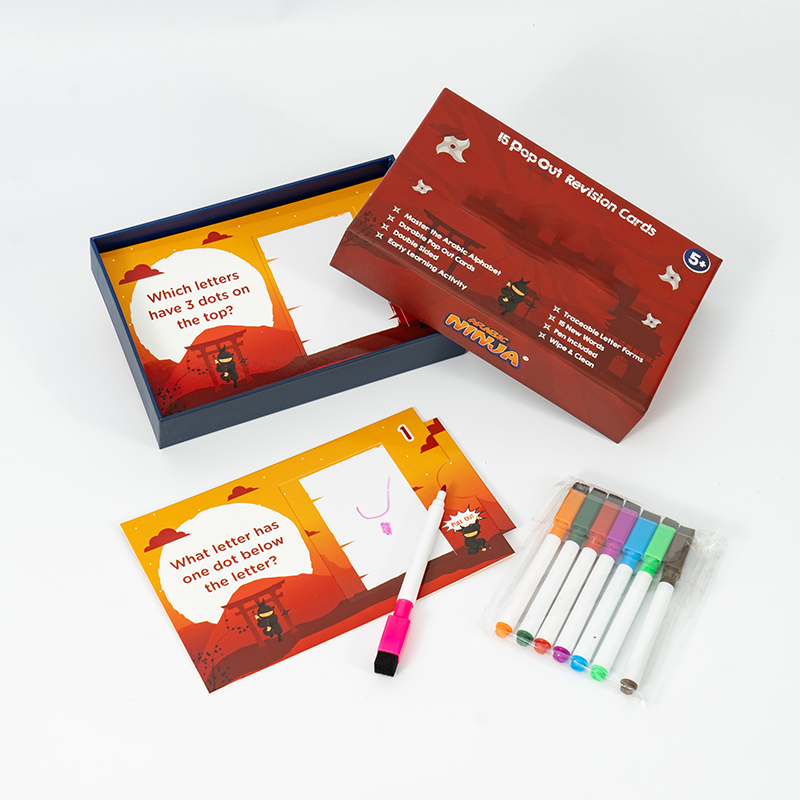
Plan the sample step into your schedule rather than skipping it to save a week. On our line, digital or dummy samples take 1–3 days and finished physical samples take 5–7 working days. Mass production then runs 10–15 working days, depending on quantity and finishing.
Quality Checks During the Run
Consistency is verified at fixed checkpoints rather than at the end of the job:
- Print alignment: front and back layers must land on the same card across the sheet, not just on the first cut sample.
- Précision des couleurs: ink is checked against the approved proof at set intervals.
- Cutting dimensions: cards are measured so every deck stacks evenly.
- Nombre de cartes: each completed deck is verified against the specified count.
Confirming Specifications and Order Minimums
Confirm the MOQ for the chosen specifications; un listed flashcard product starts at 200 ponts. Box style and finishing move that floor, so ask for MOQ, unit price, and included packaging in the same quote. Sample costs are refundable against order value on our terms.
Vetting a Card Printing Partner
Verify what a supplier can prove: current certificates for the factory, test reports for the finished product, and samples you can bend—not just logos on a homepage.
| Questions to Put to Every Supplier | What a Physical Sample Should Prove |
|---|---|
|
|
Foire aux questions
What is the minimum order for custom math flashcards?
It depends on the specification. A listed flashcard product starts at 200 ponts. Confirm the MOQ for your chosen size, action, finition, and box style when you request a quote.
Which sizes and paper weights should I choose?
3″ x 5″ and 4″ x 6″ cover most math content. For stock, discuss a weight in the 300–350 gsm range and approve the hand feel on a physical sample before the production run.
Can flashcards have a write-on surface?
Oui. Choose uncoated or matte-finish stock so students can write answers in pencil and reuse the deck. Laminated cards resist spills and smudging instead, but they do not take pencil well.
How do I verify every question matches its answer?
Number each card in the artwork and require a numbered proof pairing prompts with answers. Avant la production de masse, check that proof against your own answer key, card by card.
What files should I submit for a sample?
Send print-ready artwork with bleed on the printer’s template, with fonts embedded or outlined, plus a separate answer key. If your files are incomplete, ask the printer for layout and dieline guidance first.
Pensées finales
Classroom flashcards usually fail for production reasons, not teaching reasons: a light stock that bends, a mis-paired answer, a box that opens in a backpack. Each of those is preventable at the proof or sample stage, at almost no cost.
Define your size, your 300–350 gsm stock, the finish, and the packaging. Then request a physical sample to check print alignment, coins, and box fit before committing to a bulk run.