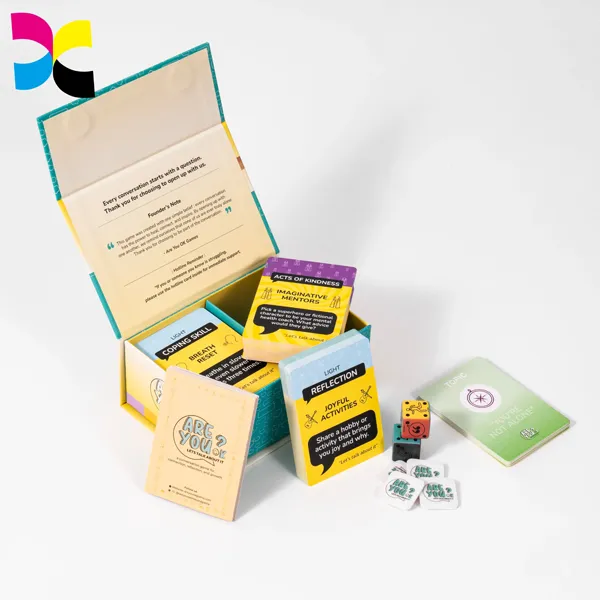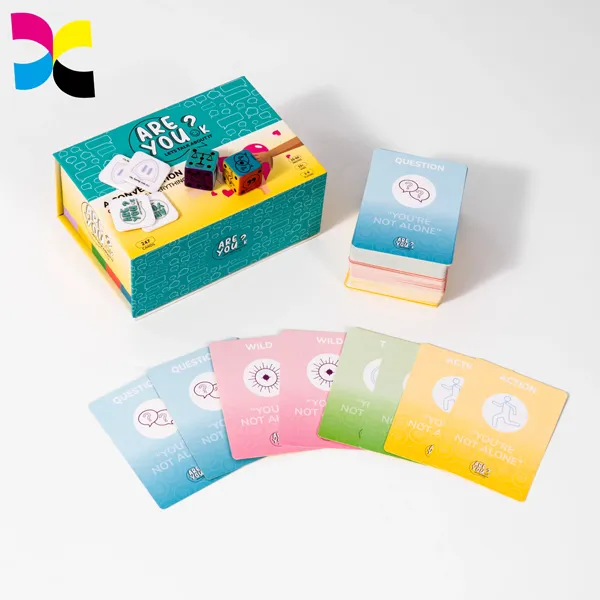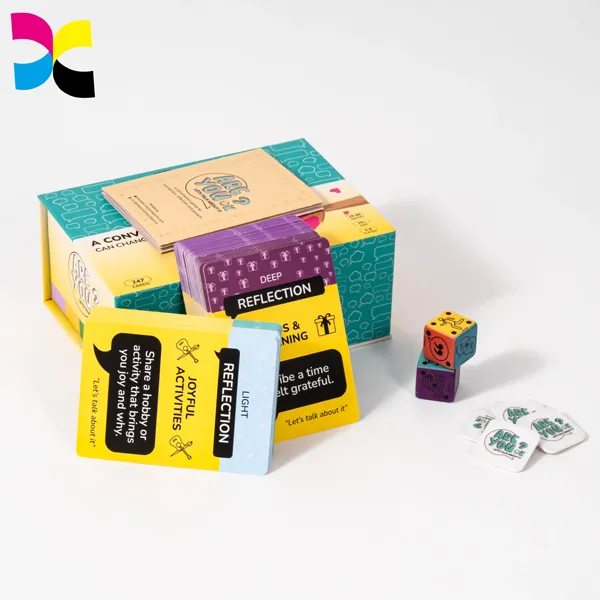
يؤدي الحصول على أوراق اللعب المخصصة بدون مواصفات تصنيع واضحة إلى أخطاء إنتاج مكلفة. عدم تطابق في قلب الورق, الانتهاء من السطح, أو يمكن أن يؤدي التسامح مع القطع إلى تحويل أصول التجزئة المحتملة إلى مجموعة من مطالبات الضمان, مما يؤدي بشكل مباشر إلى تآكل هامش ربح مشروعك ومصداقية العلامة التجارية.
يكسر هذا التحليل المعايير الفنية لإنتاج البطاقات الاحترافية. نحن نقيم كيف تحب الاختيارات المادية 300 مخزون أساسي أسود من GSM ووسادة هوائية تشطيب التعامل مع الصدمات, وكيفية التحكم في العملية مثل الطباعة الحجرية والأوفست وISO 9001 يضمن الامتثال جودة متسقة من السطح الأول إلى العشرة آلاف.
كيف يتم العرف أوراق اللعب المصنعة?
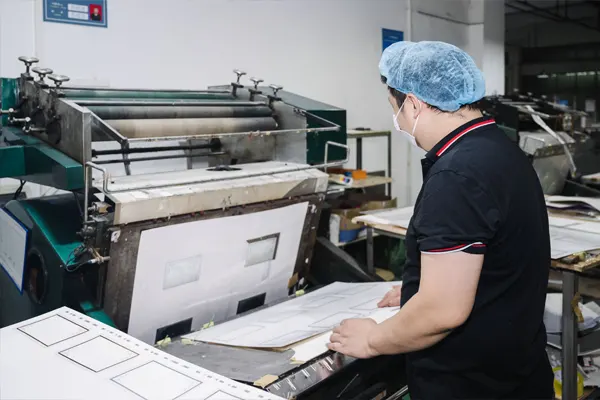
هذه العملية عالية سير العمل الآلي: تتم طباعة الورق المتخصص, المغلفة, قطع بدقة, فرزها إلى الطوابق بواسطة الآلات, ومن ثم محاصر للتوزيع.
ما قبل الطباعة, اختيار الأسهم, والطباعة
تبدأ العملية عندما يقوم العميل بتزويد العمل الفني. في مرحلة ما قبل الطباعة, يتم فحص هذه الملفات للتأكد من جودتها وترتيبها على شكل ملفات كبيرة الحجم “أوراق الوالدين” لجعل الطباعة فعالة.
اختيار الورق أمر بالغ الأهمية. يستخدم المصنعون بطاقات مخصصة ذات نواة داخلية - غالبًا ما تكون سوداء أو رمادية - والتي توفر الصلابة والعتامة اللازمتين حتى لا تتمكن من الرؤية من خلال البطاقات.
بالنسبة لمعظم الوظائف ذات الحجم الكبير, تتم طباعة الأسطح باستخدام الطباعة الحجرية الأوفست. تقوم هذه الطريقة بنقل التصميمات من لوحات الطباعة إلى البطاقات, تقديم دقة عالية وجودة متسقة عبر آلاف الطوابق.
الانتهاء, قطع, والجمعية
بعد طباعة الأوراق, إنها مغلفة بطبقة نهائية. يعمل هذا الطلاء على إغلاق الحبر وهو ضروري لمتانة السطح, شريحة, والشعور العام أثناء الخلط.
التالي, تعمل الآلات عالية السرعة على تقطيع الأوراق الكبيرة إلى بطاقات فردية وتدوير الزوايا لتنظيفها, نظرة احترافية.
في المرحلة النهائية, تقوم الأنظمة الآلية بفرز هذه البطاقات إلى مجموعات كاملة. يتم بعد ذلك تغليف الأسطح ووضعها في صناديق الثنية الخاصة بها, مما يجعلها جاهزة للشحن.
اختيار المواد المناسبة لأوراق اللعب
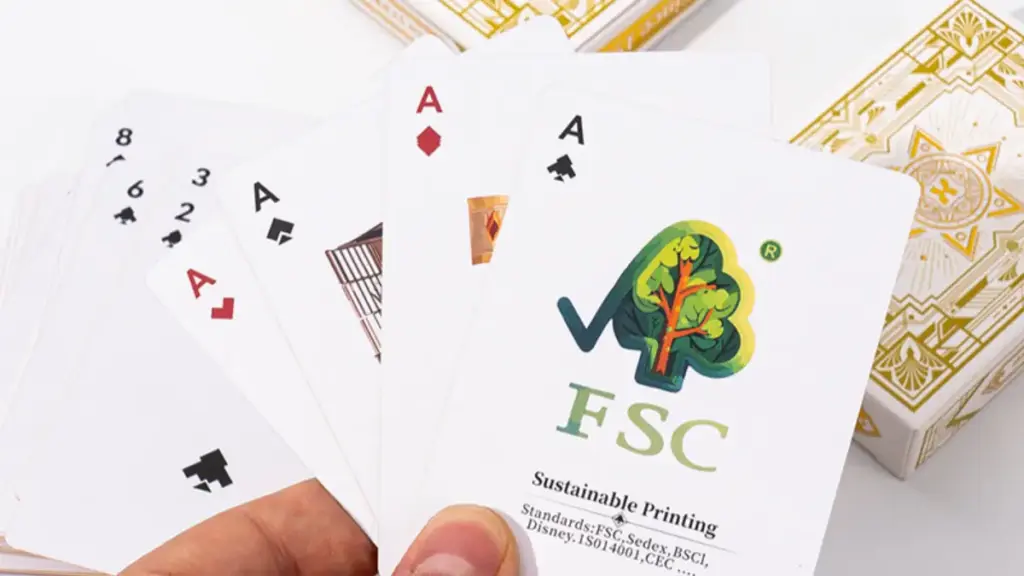
مادة البطاقة هي مقايضة. يوفر الورق إحساسًا كلاسيكيًا مع نوى مختلفة للتعتيم, بينما يمنحك البلاستيك أقصى قدر من المتانة. تعتمد المعالجة النهائية على السُمك والتشطيب.
مخزونات الورق والخيارات الأساسية
معظم أوراق اللعب ليست مجرد ورق سميك. إنها مصنوعة من طبقات ورقية متعددة مغلفة مع نواة في المنتصف. هذا اللب هو ما يوفر الصلابة و, والأهم من ذلك, العتامة لمنع الرؤية من خلال البطاقة.
- جوهر أبيض هو الخيار الأكثر اقتصادا. إنه أمر جيد بالنسبة للنماذج الأولية أو المجموعات الترويجية حيث لا يعد القليل من الشفافية بمثابة كسر للصفقة.
- جوهر أزرق هو المعيار الصناعي لمعظم ألعاب الورق التي تشتريها من المتجر. أنه يعطي توازن جيد من التعتيم, صلابة, والتكلفة.
- جوهر أسود يوفر أفضل عتامة ممكنة. إنه الخيار المتميز لطاولات الكازينو, العروض السحرية, وأي لعبة جادة لا يمكن أن تتعرض فيها لأي نزيف خفيف.
تقييم النواة السوداء مقابل. مخزون الورق الأساسي الأزرق يسمح للعلامات التجارية بموازنة ميزانيات الإنتاج مقابل أمان الأداء.
مواد البطاقات البلاستيكية والاصطناعية
تحتوي البطاقات المغطاة بالبلاستيك على قلب ورقي ولكن بها طبقة بلاستيكية رقيقة في الأعلى. وهذا يجعلها أكثر متانة ومقاومة للرطوبة من البطاقة الورقية الأساسية.
ثم لديك 100% بطاقات بلاستيكية, عادة ما تكون مصنوعة من PVC. إنها مقاومة للماء تمامًا وصعبة الانحناء أو التمزق. أنها تستمر كثيرا, أطول بكثير من البطاقات الورقية. لكنهم يشعرون بأنهم مختلفون. لديهم وميض, معالجة أكثر صرامة تفتقر إلى التقليدية “فرقعة” من سطح الورق.
القرار يأتي حقا إلى المقايضة. أنت توازن بين طول العمر المذهل 100% البلاستيك ضد المألوف, التعامل المريح مع الورق المطلي. للحصول على تفاصيل أعمق للتكلفة, أداء, والاختلافات المتانة, يمكنك التحقق من المقارنة الشاملة لدينا على الورق مقابل. أوراق اللعب البلاستيكية.
اختيار السُمك المناسب واللمسة النهائية
يتم قياس سمك البطاقة بوحدة GSM (جرام لكل متر مربع), ويؤثر بشكل مباشر على مدى متانة البطاقة وجودتها العالية. للحصول على بطاقة لعبة الجودة, 300-330 GSM هو النطاق القياسي.
يتم تطبيق تشطيب السطح على البطاقة المطبوعة وهو أمر بالغ الأهمية لكيفية التعامل مع السطح وخلطه. تشمل الخيارات الشائعة طلاءًا أساسيًا للحماية البسيطة أو لمسة نهائية ناعمة لانزلاق نظيف. يعد تشطيب الوسادة الهوائية واحدًا من أكثر الأسطح شيوعًا للطوابق عالية الأداء. يخلق غمازات صغيرة على سطح البطاقة, حبس الهواء لتقليل الاحتكاك. يؤدي هذا إلى عمليات خلط ومراوح أكثر سلاسة, مما يجعلها المفضلة في دوائر السحر والقلب.
طباعة العمل الفني للبطاقة
تعتمد طباعة البطاقات الاحترافية على طباعة الأوفست الحجرية لضمان دقة الألوان ومتانتها. أحبار خاصة, الطلاءات, والمحاذاة الدقيقة غير قابلة للتفاوض للحصول على سطح متميز.
طباعة أوفست للطوابق المميزة
عند إنتاج مجموعة خطيرة من الطوابق, الطباعة الحجرية الأوفست هي الطريقة الوحيدة للذهاب. إنه معيار الصناعة لسبب ما. تقوم العملية بنقل الحبر من لوحة معدنية إلى بطانية مطاطية ومن ثم إلى مخزون البطاقات. للجري الكبيرة, هذه الطريقة فعالة من حيث التكلفة وتنتج نتائج موحدة بشكل لا يصدق من المجموعة الأولى إلى العشرة آلاف.
لا يمكنك طباعة بطاقات احترافية على أي ورقة فقط. تتطلب الطوابق المميزة بطاقات متخصصة, عادةً ما يتم تصنيعه بنواة سوداء غير شفافة لمنعك من رؤية الفن على الجانب الآخر. بعد نفاد الحبر, يتم تطبيق طبقة واقية. يمكن أن يكون هذا الورنيش, طلاء مائي, أو لمسة نهائية من الكتان لتحسين كيفية التعامل مع البطاقات ومدة استمرارها.
دقة الألوان واتساق العلامة التجارية
مع أوراق اللعب, اللون ليس جماليًا فحسب، بل إنه عملي أيضًا. يحتاج العمل الفني إلى معايرة ألوان صارمة للحفاظ على وجه كل بطاقة, خلف, والشعار متسق عبر عملية الطباعة بأكملها. وهذا مجال آخر تتألق فيه طباعة الأوفست. توفر دقة ألوان استثنائية, وهو أمر حيوي عندما تحتاج إلى أن تبدو البطاقة رقم 52 مطابقة للبطاقة الأولى, ولإعادة الطبع بعد عام لتتناسب مع النسخة الأصلية.
تعمل معظم الشركات المصنعة للبطاقات التجارية ضمن نموذج ألوان CMYK للإنتاج. التسجيل المثالي غير قابل للتفاوض أيضًا. إذا كان الفن الأمامي والخلفي منحرفين قليلاً, سوف تبدو الحدود قبالة. إنها علامة فورية على وظيفة إنتاج رخيصة.
الأحبار الخاصة وتأثيرات الطباعة
يجب أن تكون الأحبار المستخدمة في أوراق اللعب قاسية. يجب أن تكون خفيفة السرعة وغير قابلة للنقل, لذلك لن يبهت الفن أو يفرك على يديك بعد بضع مرات من المراوغات. غالبًا ما تتميز الأسطح المتميزة بطبقات متخصصة لتعزيز الشعور. يتضمن ذلك تشطيبات الأشعة فوق البنفسجية أو الأنسجة المنقوشة مثل الكلاسيكية “الكتان” أو “وسادة هوائية” لمسة نهائية تساعد البطاقات على الانزلاق بسلاسة.
يمكن أن تضيف التأثيرات الزخرفية مثل ختم الرقائق أو النقش لمسة راقية, عادة على صندوق الثنية ولكن في بعض الأحيان على البطاقات نفسها. لكن أي تأثير خاص يكون عديم الفائدة إذا لم يكن متينًا. يجب أن تكون متوافقة تمامًا مع مخزون البطاقات والطلاء, وإلا فسوف تتلطخ, يتساقط, أو الحواف البالية.
التشطيب السطحي وملمس البطاقة
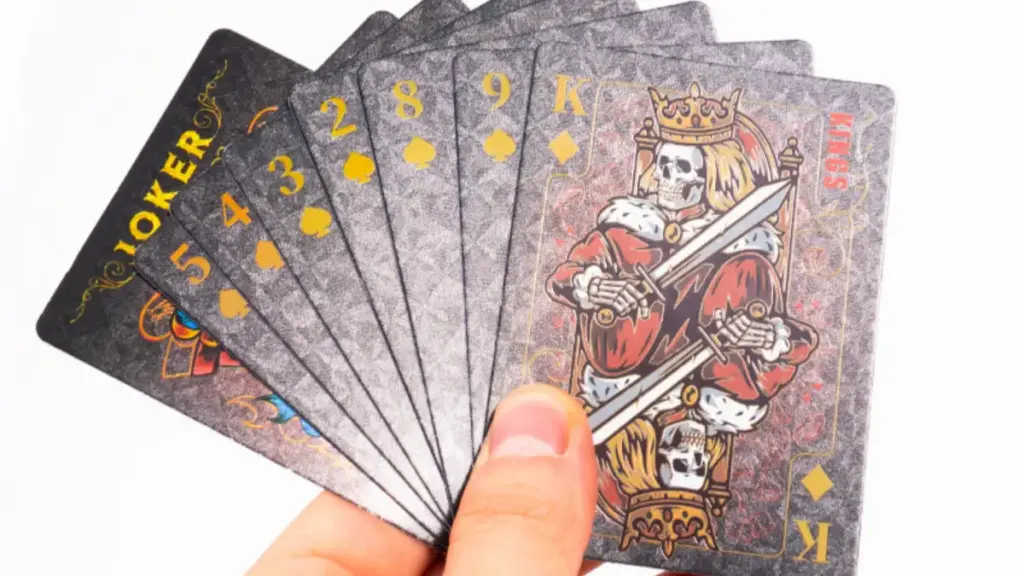
ال “يشعر” بطاقة اللعب ليست مجرد طلاء السطح. إنها نتيجة لكيفية عمل هذا التشطيب مع وزن مخزون الورق, سماكة, والتصلب.
أنواع التشطيبات الأساسية وخصائصها
إن المعالجة السطحية التي تتلقاها البطاقة بعد الطباعة هي التي تحدد خصائص التعامل معها. يوفر كل نوع من أنواع التشطيب توازنًا مختلفًا من المتانة, أنسل, والسيطرة.
- تنقش الصغيرة (وسادة هوائية / كتان): هذا هو المعيار لأي مجموعة أداء جدية. يتم ضغط السطح بغمازات صغيرة تعمل على إنشاء جيوب هوائية بين البطاقات. وهذا يقلل من ملامسة السطح ويسمح بسلاسة, انزلاق يمكن التحكم فيه, وهو أمر ضروري للتأجيج والانتشار.
- مائي & ورنيش (سلس): هذا طلاء سائل يتم تطبيقه أثناء عملية الطباعة. إنها طريقة فعالة من حيث التكلفة لحماية البطاقة, لكن الشعور مختلف. بدءًا, يمكن أن يكون أملسًا جدًا, ولكن مع مرور الوقت، من المرجح أن تبدأ في التكتل مع تراكم الزيوت والأوساخ.
- التصفيح البلاستيك: يتم ربط طبقة رقيقة من البلاستيك مباشرة بالبطاقة. هذه البطاقات متينة للغاية ومقاومة للرطوبة. للتعامل, غالبًا ما تكون زلقة جدًا أو حتى مطاطية بحيث لا تتمكن من التحكم الدقيق المطلوب في السحر أو نبض القلب.
كيف يتفاعل Finish مع مخزون البطاقات ليخلق إحساسًا
لا يمكنك تقييم النهاية بمعزل عن غيرها. يأتي أداء المعالجة النهائي للسطح من مزيج تشطيب سطحه والورق المقوى, أو المخزون, يتم تطبيقه على. يحدد السهم الخصائص الفيزيائية الأساسية للبطاقة.
وزن الورقة (تقاس بالجي إس إم) وسمك (الفرجار) تملي خصائصها الأساسية مثل الصلابة, المرونة, و “فرقعة”- مدى عودته إلى المستوى المسطح بعد الانحناء. هذه الخصائص لا تقل أهمية عن نسيج السطح.
التآزر بين هذين المكونين يخلق الشعور النهائي. على سبيل المثال, سميكة, سوف يشعر المخزون القوي ذو النهاية الناعمة الأساسية بالصلابة, جامد, وحتى عالي الكعب. أرق, يبدو المخزون الأكثر سلاسة مع تشطيب الكتان عالي الجودة أكثر مرونة واستجابة في اليدين.
قطع, فرز, ومراقبة الجودة
قطع دقيق, التجميع الآلي, والتفتيش الدقيق هي مراحل غير قابلة للتفاوض. إنهم يضمنون أن كل بطاقة في كل مجموعة متطابقة, مرتبة بشكل صحيح, وخالية من عيوب التصنيع.
| مرحلة العملية | التقنيات الرئيسية & طُرق | التركيز على مراقبة الجودة |
|---|---|---|
| قطع القالب بدقة | آلات قطع القوالب ذات القاعدة الفولاذية أو الدوارة. تخطيطات فعالة للبطاقات المتعددة على الأوراق الكبيرة. | أبعاد موحدة (± 0.2 مم التسامح), حواف ناعمة, عمل فني مركزي, تقريب الزاوية متسقة. |
| التجميع الآلي للبطاقات | آلات تجميع متعددة المحطات مزودة بمغذيات آلية وأجهزة استشعار مدمجة. | العد الصحيح للبطاقات, التسلسل الصحيح (مرتبة أو عشوائية), وتوجيه البطاقة. يمنع البطاقات المفقودة أو المكررة. |
| تقتيش & الوقاية من العيوب | أنظمة الرؤية المضمنة, فحص القالب المنتظم ومعايرة الماكينة, أنظمة تتبع الدفعات. | اكتشاف تناقضات الحجم, حواف خشنة, اختلال الطباعة, وتكوين سطح السفينة غير صحيح. |
قطع القالب بدقة
بمجرد الانتهاء من الأوراق المطبوعة وعلاجها, ينتقلون إلى مرحلة القطع. الهدف هنا بسيط ولكنه حاسم: تحويل ورقة كبيرة إلى كومة من البطاقات المتطابقة. أي انحراف في الحجم, شكل, أو أن جودة الحافة تؤثر على التعامل مع سطح السفينة بالكامل وإحساس الخلط.
- التوحيد: تقوم العملية بإنشاء بطاقات متطابقة ذات زوايا مستديرة تمامًا. سواء الطباعة الأحجام القياسية لأوراق اللعب مثل لعبة البوكر أو الجسر, تضمن الأبعاد الدقيقة خلطًا ومعالجة موثوقة.
- تكنولوجيا: تستخدم المصانع آلات قطع القوالب الدوارة ذات القاعدة الفولاذية أو عالية السرعة. تم تصميم هذه الأدوات لجعلها نظيفة, قطع دقيق من خلال أنواع مختلفة من البطاقات دون سحق الحواف.
- كفاءة: تم تصميم تخطيطات القالب لقص العديد من البطاقات من ورقة واحدة في تمريرة واحدة. يؤدي هذا إلى زيادة استخدام المواد إلى الحد الأقصى ويحافظ على تفاوتات الأبعاد الضيقة, في كثير من الأحيان في حدود ± 0.2 ملم.
- التحكم في العمليات: محاذاة صارمة للورقة, المعروف بالتسجيل, قم بتركيز العمل الفني بشكل مثالي على كل بطاقة. يقوم الفنيون بإجراء فحوصات مستمرة لجودة الحافة لاكتشاف أي مشكلات ناتجة عن تآكل القالب.
التجميع الآلي للبطاقات
بعد القطع, البطاقات الفردية هي مجرد كومة من المكونات المختلطة. التجميع هو عملية تلقائية لتجميع تلك البطاقات الفردية بشكل كامل, الطوابق المتسلسلة بشكل صحيح. للألعاب المخصصة أو TCGs, هذه الخطوة هي المكان الذي يتم فيه إنشاء القواعد المحددة للسطح فعليًا.
- تجميع سطح السفينة: تقوم آلات التجميع متعددة المحطات بتجميع الطوابق بعدد البطاقات الدقيق والتسلسل المطلوب. وهذا يضمن اكتمال كل سطح على حدة.
- فرز المنطق: يتعامل النظام مع احتياجات الفرز المختلفة. يمكنه تجميع مجموعة بطاقات قياسية مكونة من 52 بطاقة بترتيب جديد أو إنشاء توزيع عشوائي متحكم فيه لألعاب بطاقات التداول مع قواعد ندرة محددة.
- إنتاجية عالية: تقوم وحدات التغذية الآلية بسحب البطاقات من مجموعات مختلفة ووضعها في مجموعات كاملة بسرعة عالية, الحفاظ على التجميع المتسق عبر آلاف الوحدات.
- اكتشاف الخطأ: تتحقق أجهزة الاستشعار والكاميرات المدمجة من عدد كل بطاقة, هوية, والتوجيه كما تم بناء سطح السفينة. يمنع هذا النظام الأخطاء الشائعة مثل البطاقات المفقودة, التكرارات, أو بطاقات مقلوبة.
التفتيش ومنع العيوب
مراقبة الجودة ليست خطوة نهائية; تم دمجه خلال عملية القطع والمقارنة. إن منع العيوب أكثر فعالية بكثير من العثور عليها في النهاية. وينصب التركيز على صيانة الآلات, مراقبة في الوقت الحقيقي, والتتبع الكامل.
- التركيز العيب: يستهدف الفحص العيوب التي تدمر تجربة المستخدم, مثل أحجام البطاقات غير المتناسقة, حواف خشنة أو ريشية, طباعة غير محاذاة, أو محتويات سطح السفينة غير صحيحة.
- الرفض الآلي: تعمل أنظمة الرؤية المضمنة كمراقب دائم. يقومون بمسح البطاقات ضوئيًا أثناء القطع والترتيب, تحديد ورفض أي عناصر معيبة تلقائيًا قبل أن تصل إلى المجموعة.
- الصيانة الوقائية: أفضل طريقة لتجنب التخفيضات السيئة هي صيانة المعدات. فحص القالب المنتظم, شحذ الشفرة, وتعد معايرة الماكينة أمرًا أساسيًا لإنتاج جودة متسقة.
- إمكانية التتبع: ترتبط الطوابق النهائية بدفعات إنتاج محددة. إذا تم العثور على مشكلة الجودة في وقت لاحق, يسمح هذا النظام للمصنع بتتبعه مرة أخرى إلى الجهاز المحدد, مشغل, والوقت, تمكين تحليل السبب الجذري التفصيلي.
التعبئة والتغليف المخصصة وتجميع سطح السفينة
التعبئة والتغليف تفعل أكثر من مجرد حماية البطاقات. فهو يملي تجربة المستخدم, يؤمن الملحقات, ويضمن بقاء المنتج على قيد الحياة بعد الشحن. كل التفاصيل, من الصندوق المناسب إلى التغليف النهائي, يهم.
صناديق الثنية والصناديق الصلبة
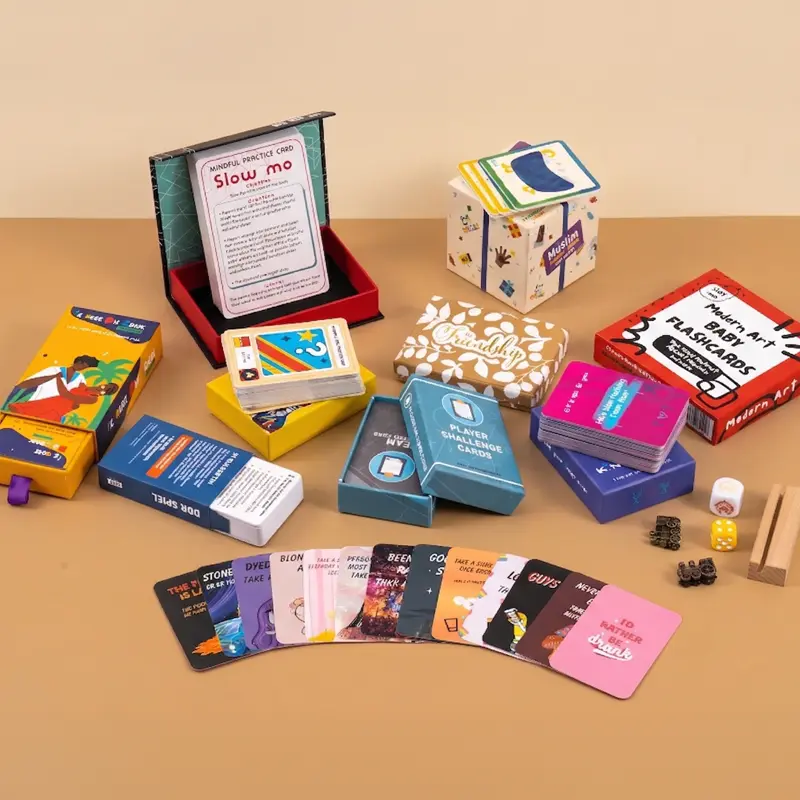
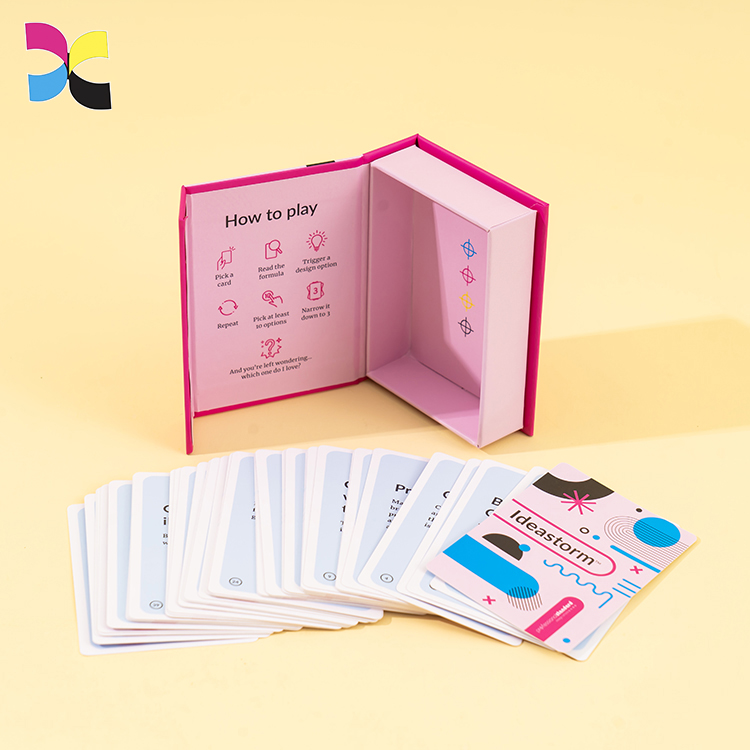
الخياران الرئيسيان هما الصناديق المثنية والصناديق الصلبة. تعتبر صناديق الثنية هي المعيار الصناعي - وهي عبارة عن علب كرتونية قابلة للطي فعالة من حيث التكلفة ومثالية لمعظم الأسطح. الصناديق الصلبة ممتازة, الإعدادات غير القابلة للطي المستخدمة لإصدارات المجمع التي تحتاج إلى حماية فائقة. الحصول على الأبعاد الصحيحة أمر بالغ الأهمية لكليهما. يجب أن يحتوي الصندوق على مخزن مؤقت داخلي يبلغ 1-2 مم حول مجموعة البطاقات. هذه الفجوة الصغيرة هي ما يتيح لك إخراج البطاقات دون الإضرار بحوافها. تلعب المادة واللمسة النهائية أيضًا دورًا مزدوجًا. الورق المقوى يحمي البطاقات, في حين أن التشطيبات مثل الطلاءات فوق البنفسجية أو ختم الرقائق تعطي جاذبية رف المنتج. التصميم نفسه يجب أن يأخذ في الاعتبار البنية المادية, مثل اللوحات الغراء واللوحات الغبار, للتأكد من أن الصندوق متماسك ويحمي محتوياته.
إدراجات, أدلة, والاكسسوارات
إذا كانت مجموعتك تتضمن أكثر من مجرد بطاقات, تحتاج إلى التخطيط لذلك. إدراجات داخلية, مصنوعة من الورق المقوى أو البلاستيك الحراري, قفل سطح السفينة وأي مكونات أخرى في مكانها. وهذا يمنع كل شيء من التحول والتلف أثناء النقل. أي مواد مطبوعة مثل بطاقات القواعد, منشورات, أو أن تكون الكتيبات مصممة بحيث تتناسب مع الأبعاد الداخلية للصندوق دون التسبب في انتفاخه. للملحقات مثل الرموز أو منصات النتيجة, من الضروري وجود مقصورات أو صواني مخصصة. إنها تحافظ على كل شيء منظمًا وتمنع القطع الصغيرة من خدش البطاقات.
التجميع النهائي والتعبئة والتغليف
تجمع مرحلة التجميع النهائية جميع المكونات معًا. تتضمن العملية تجميع البطاقات بترتيبها الصحيح, غالبًا ما يتم تغليف السطح بالتشيلو لإنشاء ختم واضح للتلاعب, ومن ثم إدخال السطح في صندوقه. للشحن بالجملة, يتم تعبئة هذه الأسطح النهائية في علب كرتون مموجة أكبر. المفتاح هنا هو تقليل المساحة الفارغة والتحكم في الرطوبة لمنع الضرر. تعد تجربة فتح العلبة في حد ذاتها جزءًا رئيسيًا من عرض العلامة التجارية. تحمل الألواح الخارجية العلامة التجارية الرئيسية, بينما يمكن للوحات الداخلية إخفاء التفاصيل أو الرسائل الصغيرة. قبل أي شيء السفن, مراقبة الجودة أمر ضروري. نحن نتحقق من عدد البطاقات, دقة الطباعة, السلامة الهيكلية للمربع, وأن وضع العلامات على الباركود صحيح.
معايير الجودة وشهادات التصنيع
تعتمد جودة تصنيع البطاقة على شهادات النظام الرسمية مثل ISO 9001 والمعايير الفنية العملية للمواد, دقة الطباعة, وأداء التعامل الجسدي.
الشهادات الرسمية للإدارة, أمان, والأخلاق
أبعد من المنتج المادي, غالبًا ما تعتمد مصداقية الشركة المصنعة على الشكل الرسمي, شهادات مدققة من طرف ثالث. توضح هذه الأنظمة التحكم في العمليات, العمليات الأخلاقية, وامتثال السوق. للمشترين, فهي طريق مختصر يمكن الاعتماد عليه لفحص النضج التشغيلي للمورد.
- ايزو 9001 (إدارة الجودة): هذا هو الأساس لأي مصنع جاد. ويؤكد وجود نظام موثق لإدارة الإنتاج, من التعامل مع ملفات العمل الفني إلى الفحص النهائي. إنه دليل على أن المورد يمكنه إنتاج منتجات متسقة, يتم تشغيل النتائج التي يمكن تتبعها بعد التشغيل.
- ايزو 14001 & FSC™ CoC (البيئية & مواد): ايزو 14001 يوضح أن المصنع يدير تأثيره البيئي (يضيع, الانبعاثات). FSC (مجلس رعاية الغابات) تتحقق شهادة سلسلة الحضانة من أن مخزون الورق يأتي من غابات تتم إدارتها بشكل مسؤول. وهذا أمر غير قابل للتفاوض بالنسبة للعلامات التجارية ذات أهداف الاستدامة.
- احذر من السكتة الدماغية (التصنيع الأخلاقي): تركز هذه الشهادة على ممارسات العمل الأخلاقية في صناعة الألعاب والترفيه, تغطية ساعات العمل, أجور, وسلامة المصنع. نظرًا لأن أوراق اللعب تُباع غالبًا كألعاب أو منتجات للأطفال, غالبًا ما يكون الامتثال لـ ICTI مطلوبًا من قبل كبار تجار التجزئة.
- جي إس في (التحقق من الأمن العالمي): يتناول هذا البرنامج أمن سلسلة التوريد, مصدر قلق رئيسي للعلامات التجارية العالمية التي تشحن منتجات عالية القيمة أو مرخصة. ويوضح أن الشركة المصنعة لديها إجراءات لمنع السرقة والتلاعب أثناء الإنتاج والخدمات اللوجستية.
- علامة CE (سلامة المنتج): للطوابق المباعة في الاتحاد الأوروبي, وخاصة تلك التي يتم تسويقها للأطفال, الامتثال CE أمر ضروري. ويشير إلى التوافق مع معايير السلامة في الاتحاد الأوروبي, تغطية الخصائص الفيزيائية والقيود المفروضة على المواد الكيميائية الخطرة.
المعايير الفنية للبطاقة وجودة الطباعة
تثبت الشهادات أن المصنع لديه أنظمة جيدة, ولكن يتم الحكم على الجودة الفنية من خلال البطاقات نفسها. هذه هي العملية, معايير غير معتمدة تفصل بين المجموعة المميزة والهبة الترويجية. ويتم تحديدها من خلال اختيارات المواد ودقة التصنيع.
البطاقات هي الأساس. تستخدم الأسطح المتميزة ورقًا مقوى مصممًا لتحقيق الصلابة المناسبة, فرقعة, والمتانة. يعد استخدام قلب أسود أو أزرق معتم بمثابة معيار رئيسي, حيث يمنع الضوء من الظهور من خلال البطاقة, وهو أمر بالغ الأهمية لمنع الغش في أي لعبة خطيرة.
دقة الطباعة والقطع لا تقل أهمية. يضمن التسجيل المحكم محاذاة الفن الموجود على الجزء الأمامي والخلفي لكل بطاقة بشكل مثالي, منع الحدود غير المستوية التي يمكن استخدامها كعلامات. تضمن إدارة الألوان إعادة إنتاج الألوان المحددة للعلامة التجارية بشكل مماثل عبر آلاف الطوابق وفي الطبعات المستقبلية. أخيراً, يجب أن تنتج عملية القطع بطاقات ذات أبعاد موحدة وسلسة, حواف خالية من الاختباء من أجل خلط نظيف وإحساس احترافي.
المعيار النهائي هو الانتهاء من السطح. خيارات مثل تنقش “وسادة هوائية” الملمس ليس فقط للعرض; فهي تخلق جيوبًا هوائية صغيرة تقلل الاحتكاك, السماح للبطاقات بالتهوئة والانتشار بسلاسة. هذه تفاصيل أداء مهمة للسحرة, عازفي القلب, ولاعبي البوكر الجادين.
كيفية اختيار الشركة المصنعة لبطاقات اللعب
يعتمد اختيار الشركة المصنعة للبطاقة على مطابقة حجم الإنتاج الخاص بها, دعم النماذج الأولية, والقدرات اللوجستية بما يتناسب مع الاحتياجات والميزانية الفعلية لمشروعك. احصل على هذا الحق من البداية.
القدرة الإنتاجية وموك
حجم مشروعك هو الذي يحدد من يجب أن تتحدث إليه. لا تضيع وقتك مع مصنع كبير الحجم لتشغيل 250 سطحًا, ولا تتوقع أن تتعامل معها طابعة رقمية صغيرة 10,000 الطوابق بكفاءة. يتعلق الأمر بإيجاد ما يناسب رأس مالك وأهدافك.
- قم بمطابقة مقياس الشركة المصنعة لمشروعك, سواء كان ذلك اختبارًا صغيرًا مكونًا من 100 مجموعة أو 5,000+ الإصدار التجاري على سطح السفينة.
- التحقق من الحد الأدنى لكمية الطلب (مو) يتوافق مع ميزانيتك. يحدد هذا الرقم استثمارك الحقيقي مقدمًا.
- التأكد من أن عمليات مراقبة الجودة الخاصة بهم يمكن أن تحافظ على الاتساق, خاصة عندما تقوم بالارتقاء إلى عمليات إنتاج أكبر.
دعم أخذ العينات والنماذج الأولية
لا تلتزم أبدًا بإجراء إنتاج ضخم بناءً على دليل رقمي وحده. إن المظهر النهائي للبطاقات ودقة ألوان الصندوق هي أشياء لا يمكنك الحكم عليها إلا من خلال منتج مادي بين يديك. الشريك الجيد يجعل هذه العملية واضحة.
- اطلب حزم العينات العامة لتقييم بطاقاتها, ينتهي, وأنواع الصناديق قبل الالتزام بأي شيء.
- أصر على نموذج أولي كامل لمرحلة ما قبل الإنتاج لسطح السفينة الفعلي. هذه هي فرصتك للموافقة على اللون, يقطع, واشعر قبل أن تكون في مأزق لآلاف الوحدات.
- تأكد من أنهم يقدمون قوالب تصميم واضحة ودعمًا لما قبل الطباعة. يساعدك هذا على تجنب أخطاء الملفات المكلفة والمستهلكة للوقت.
تواصل, مهلة, والشحن العالمي
مشاكل الإنتاج وتأخير الشحن أمر لا مفر منه. يتم تحديد جودة شريك التصنيع الخاص بك من خلال كيفية تواصله مع هذه المشكلات وإدارتها. أنت بحاجة إلى شريك يمكنه التعامل مع الخدمات اللوجستية, لا مجرد تشغيل المطبعة.
- ابحث عن شركة مصنعة لديها مدير مشروع متخصص وسجل حافل, التواصل سريع الاستجابة.
- قم بتوضيح المهل الزمنية الواقعية لكل مرحلة - بدءًا من التدقيق وحتى التسليم النهائي - وقم ببناء مخزن مؤقت في خطة الإطلاق الخاصة بك.
- تحقق من تجربتهم في الشحن إلى البلدان المستهدفة, بما في ذلك كيفية تعاملهم مع الجمارك وما إذا كانوا يقدمون خدمات تلبية الطلبات.
الأفكار النهائية
قطع الزوايا على البطاقات, الانتهاء, وقد تؤدي مراقبة الجودة إلى خفض التكاليف الأولية, ولكنه يضمن فشل المنتج في أيدي المستخدم النهائي. معايير التصنيع الموضحة هنا هي الدفاع الوحيد ضد المطبوعات المنحرفة, تخفيضات غير متناسقة, وسمعة العلامة التجارية المتضررة. الاستثمار في المهنية, عملية الإنتاج المتكاملة هي كيفية تأمين أصول جاهزة للبيع بالتجزئة.
لا تخمن المظهر النهائي لمنتجك. يمكنك التحقق من ذلك عن طريق طلب مجموعة عينات لمقارنة مخزوننا من الورق الأساسي وتشطيبات الوسائد الهوائية مباشرةً. فريقنا جاهز لبناء عرض أسعار فني بناءً على المواصفات الدقيقة لمشروعك.
الأسئلة المتداولة
كيف يتم تصنيع أوراق اللعب المخصصة بكميات كبيرة?
تبدأ العملية الآلية بالتخطيط الرقمي المسبق للطباعة وطباعة الأوفست على بطاقات مغلفة متخصصة. الأوراق المطبوعة مغلفة, علاجه, ودقة مقطوعة في بطاقات فردية. تقوم الأنظمة الآلية بعد ذلك بجمعها في مجموعات كاملة قبل التغليف النهائي لصندوق الثنية وتغليفها بالانكماش.
كيف يمنع مصنعو بطاقات اللعب البطاقات المفقودة?
تستخدم المصانع تتبعًا متعدد الطبقات: يتم قفل الأعداد الدقيقة أثناء مرحلة ما قبل الطباعة, بينما تستخدم آلات التجميع أجهزة استشعار بصرية لرفض الأكوام غير المكتملة على الفور. يتم التحقق من الطوابق المكتملة عبر مقاييس الوزن فائقة الدقة, يتم استكمالها بعمليات تدقيق يدوية عشوائية لمراقبة الجودة قبل الختم النهائي.
ما هي الآلات المستخدمة لطباعة بطاقات اللعب الاحترافية?
تعتمد عمليات التشغيل ذات الحجم الكبير على مكابس الطباعة الحجرية الأوفست للحصول على أقصى دقة للألوان, بينما تتعامل المطابع الرقمية الصناعية مع النماذج الأولية. يدمج خط الإنتاج الكامل أيضًا آلات الطلاء الدوارة المتخصصة, آلات النقش للتركيب, قواطع دوارة عالية السرعة, وأنظمة التعبئة الآلية.
لماذا نستخدم مصنعًا واحدًا متكاملًا للبطاقات والتغليف?
تعمل المنشأة المتكاملة على دمج سلسلة التوريد الخاصة بك في نقطة اتصال واحدة, القضاء على تكاليف الشحن عبر البائعين وهوامش الربح المزدوجة. يعمل الإنتاج الموازي على تسريع أوقات التسليم مع ضمان مطابقة الألوان المطلقة واتساق المواد بين صندوق الثنية والبطاقات المرفقة.
ما هي الشهادات التي يجب أن تحصل عليها الشركة المصنعة للبطاقة العالمية؟?
ابحث عن ايزو 9001 (جودة) و ايزو 14001 (البيئية) خطوط الأساس. تضمن سلسلة الحضانة FSC™ الحصول على ورق مقوى من مصادر مسؤولة, بينما في 71 يضمن الامتثال معايير سلامة الألعاب. للطباعة الأمنية المتميزة أو على مستوى الكازينو, التحقق تحت ISO 14298 ينصح بشدة.
كيف يدير المصنع تناسق الألوان عبر عمليات التشغيل?
نحن نستخدم ملفات تعريف ألوان ICC موحدة وإثباتات مادية تمت معايرتها أثناء مرحلة ما قبل الطباعة. في الإنتاج, ينشر مشغلو الصحافة مقاييس الطيف الضوئي لتحليل أشرطة الألوان في الوقت الفعلي. إن الحصول على درجات متطابقة من الورق المقوى والطلاءات الواقية يمنع حدوث اختلافات أثناء عمليات إعادة الطباعة المستقبلية.